The Growing Market for Internet of Things (IoT) Solutions in Manufacturing
Internet of Things in Manufacturing is rapidly transforming the global manufacturing industry by enabling real-time monitoring, predictive maintenance, and smarter production processes. As manufacturers pursue greater efficiency, productivity, and operational visibility, IoT technologies are becoming a critical component of digital transformation initiatives. The growing adoption of Internet of Things in Manufacturing solutions is helping organizations reduce downtime, optimize resources, and build more intelligent production environments.
Among these technologies, the Internet of Things (IoT) has emerged as one of the most impactful innovations. By connecting machines, sensors, devices, and production systems, IoT enables manufacturers to collect real-time data, monitor operations continuously, and respond quickly to changing conditions.
What began as a niche technology has evolved into a rapidly growing market that is reshaping factories worldwide. Today, IoT solutions are helping manufacturers improve performance, reduce downtime, enhance product quality, and build more intelligent production environments.
As Industry 4.0 initiatives accelerate, the demand for IoT-driven manufacturing solutions continues to expand across industries and regions.
Understanding IoT in Manufacturing –
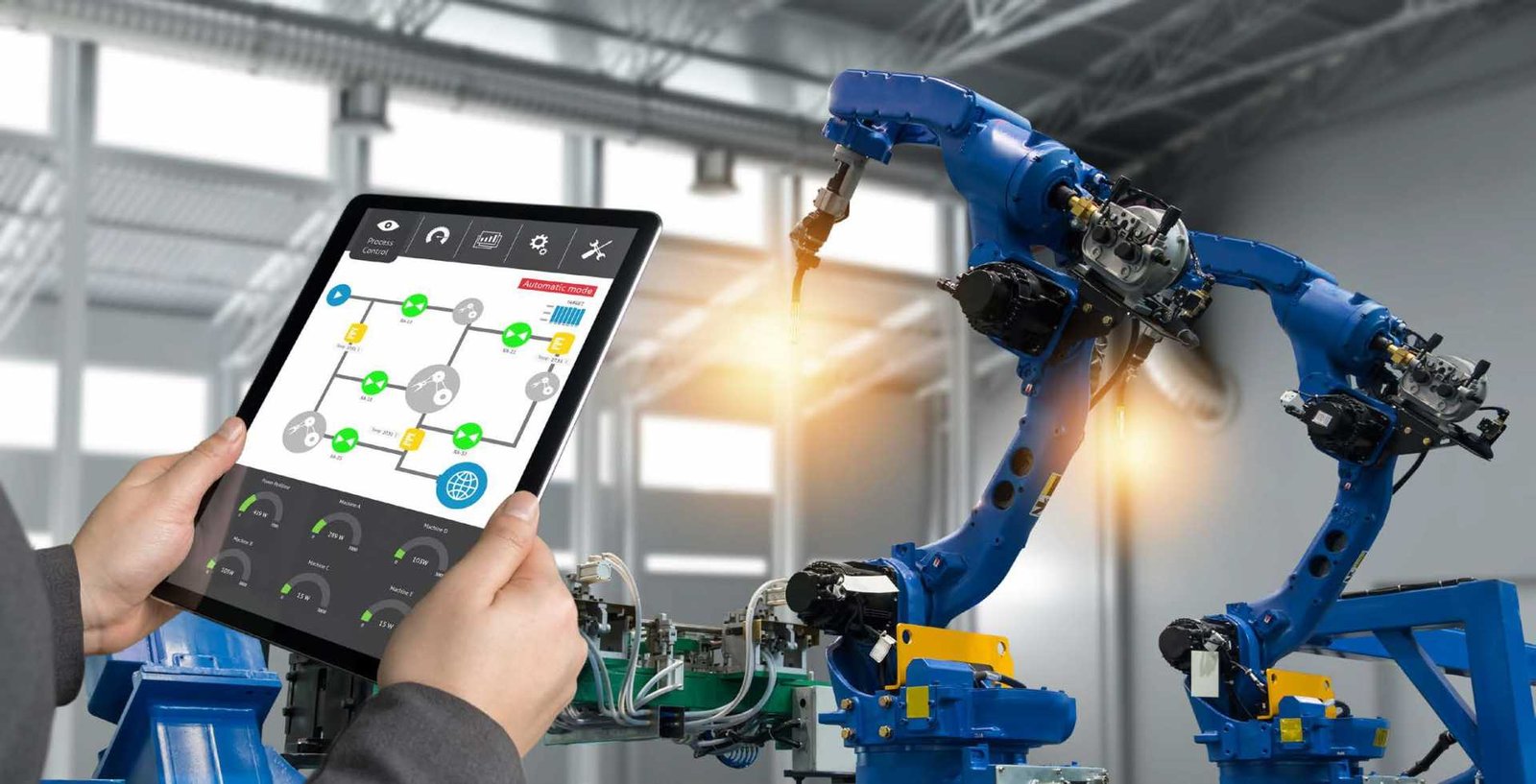
The Internet of Things refers to a network of interconnected devices capable of collecting, transmitting, and analyzing data. In manufacturing environments, these devices can include sensors, industrial equipment, production lines, robots, vehicles, and monitoring systems.
Rather than operating as isolated assets, machines become part of an integrated ecosystem that continuously shares information. This connectivity allows manufacturers to gain deeper visibility into production activities and make data-driven decisions.
For example, sensors attached to equipment can monitor temperature, vibration, pressure, and energy consumption in real time. The collected data can then be analyzed to identify inefficiencies, predict maintenance requirements, and improve operational performance.
This ability to transform physical assets into intelligent data sources is one of the primary reasons IoT adoption is growing rapidly across manufacturing sectors.
Why Manufacturers Are Investing in IoT Solutions –
Manufacturers are facing increasing pressure to improve productivity while controlling costs. Traditional production methods often rely on periodic inspections and reactive maintenance practices, which can lead to unexpected equipment failures and production disruptions.
IoT solutions address these challenges by providing continuous visibility into operations. Instead of waiting for problems to occur, manufacturers can detect issues early and take preventive action.
Several factors are driving IoT adoption:
- The need to reduce unplanned downtime
- Rising demand for operational efficiency
- Increasing focus on predictive maintenance
- Growing importance of supply chain visibility
- Demand for real-time production insights
These business requirements are encouraging organizations to invest in connected technologies that deliver measurable operational benefits.
The Role of IoT in Smart Manufacturing –
Smart manufacturing relies heavily on connected technologies, automation, and data analytics to optimize production processes. IoT serves as the foundation of this transformation by enabling communication between machines, systems, and operators.
Through connected sensors and devices, manufacturers can gain real-time insights into production performance, equipment health, and resource utilization. This information supports faster decision-making and allows organizations to respond more effectively to changing production requirements.
Instead of relying solely on historical reports, managers can monitor operations as they happen and identify opportunities for continuous improvement.
As a result, factories become more agile, efficient, and responsive to market demands.
Key Applications of IoT in Manufacturing –
IoT technology is being used across a wide range of manufacturing functions. One of the most common applications is predictive maintenance, where sensor data helps identify equipment issues before failures occur.
Another major application involves production monitoring. Real-time visibility into production lines allows managers to track performance metrics, identify bottlenecks, and improve throughput.
IoT is also improving inventory management and supply chain operations. Connected systems can automatically track materials, monitor stock levels, and optimize replenishment processes.
Other growing applications include quality control, energy management, worker safety monitoring, and asset tracking.
The versatility of IoT technology makes it valuable across virtually every stage of the manufacturing lifecycle.
Benefits Driving Market Growth –
| Benefit | Impact on Manufacturing Operations |
|---|---|
| Predictive Maintenance | Reduces unexpected equipment failures |
| Real-Time Monitoring | Improves operational visibility |
| Quality Improvement | Detects production issues earlier |
| Cost Reduction | Minimizes waste and inefficiencies |
| Energy Optimization | Lowers energy consumption |
| Asset Tracking | Enhances equipment utilization |
| Supply Chain Visibility | Improves inventory management |
| Worker Safety | Enables proactive risk monitoring |
These advantages are encouraging manufacturers to expand their investments in connected technologies.
Predictive Maintenance as a Major Growth Driver –
One of the most compelling use cases for IoT in manufacturing is predictive maintenance. Equipment failures can be costly, resulting in production delays, repair expenses, and lost revenue.
Traditional maintenance strategies often rely on fixed schedules or reactive repairs after breakdowns occur. IoT-enabled predictive maintenance takes a different approach by continuously monitoring equipment conditions.
By analyzing sensor data, organizations can identify warning signs such as abnormal vibration, temperature fluctuations, or unusual operating patterns. Maintenance teams can then address issues before they result in equipment failure.
This proactive approach improves equipment reliability while reducing maintenance costs and production interruptions.
Enhancing Supply Chain Visibility –
Modern manufacturing operations depend on complex supply chains involving suppliers, logistics providers, distributors, and production facilities. Limited visibility across these networks can create inefficiencies and increase operational risks.
IoT technology helps solve this challenge by providing real-time tracking and monitoring capabilities. Connected devices can track shipments, monitor storage conditions, and provide location data throughout the supply chain.
This visibility enables manufacturers to make more informed decisions, reduce delays, and improve inventory planning.
As supply chain resilience becomes increasingly important, IoT adoption in logistics and inventory management continues to grow.
The Impact of AI and Analytics on IoT Adoption –
The value of IoT extends beyond data collection. When combined with artificial intelligence and advanced analytics, connected systems become powerful tools for operational optimization.
AI algorithms can analyze vast amounts of IoT-generated data to identify trends, predict outcomes, and recommend actions. This allows manufacturers to move from reactive decision-making to predictive and even autonomous operations.
For example, AI can identify production anomalies, forecast equipment failures, and optimize production schedules based on real-time conditions.
The combination of IoT and AI is creating new opportunities for efficiency and innovation across manufacturing environments.
Challenges Facing IoT Implementation –
Despite its benefits, implementing IoT solutions is not without challenges. One major concern is cybersecurity. As more devices become connected, the potential attack surface expands, increasing the importance of securing networks and data.
Data management is another challenge. IoT deployments generate large volumes of information that must be stored, processed, and analyzed effectively.
Integration complexity can also slow adoption. Many manufacturers operate legacy systems that were not designed to support modern connectivity requirements.
Additionally, organizations must address workforce training needs to ensure employees can effectively use and manage IoT-enabled technologies.
Overcoming these challenges is essential for maximizing the value of IoT investments.
Future Trends in Manufacturing IoT –
The manufacturing IoT market is expected to continue evolving as technology advances. Edge computing is becoming increasingly important, allowing data processing to occur closer to production environments and reducing latency.
The deployment of 5G networks is also expected to accelerate IoT adoption by providing faster and more reliable connectivity for industrial applications.
Digital twins, which create virtual representations of physical assets, are gaining popularity as manufacturers seek more sophisticated monitoring and simulation capabilities.
At the same time, greater integration between IoT, artificial intelligence, robotics, and automation technologies will further enhance manufacturing intelligence.
These developments are expected to drive the next phase of growth in the industrial IoT market.
Conclusion –
The market for IoT solutions in manufacturing is expanding rapidly as organizations seek smarter ways to improve efficiency, productivity, and competitiveness. By connecting machines, systems, and processes, IoT provides manufacturers with unprecedented visibility into their operations.
From predictive maintenance and supply chain optimization to quality control and energy management, IoT technologies are delivering measurable business value across manufacturing environments.
While challenges related to cybersecurity, integration, and data management remain, the benefits continue to drive adoption across industries. As emerging technologies such as AI, edge computing, and 5G mature, the role of IoT in manufacturing will become even more significant.
For manufacturers pursuing digital transformation and Industry 4.0 initiatives, IoT is no longer an emerging technology—it is becoming a fundamental component of the modern smart factory.