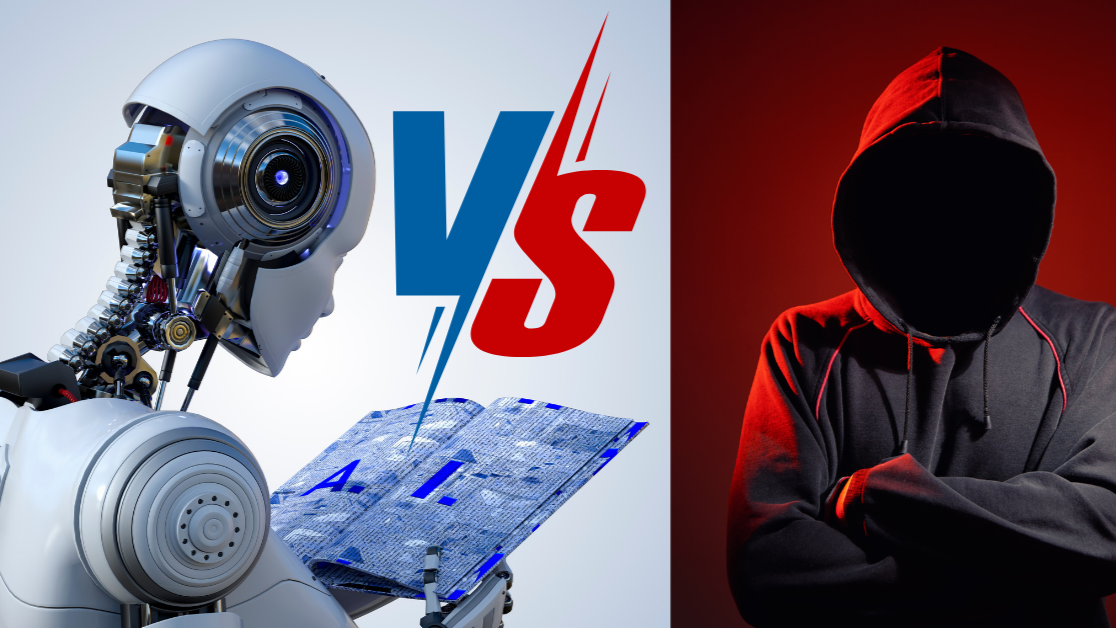
AI vs Hackers: The New Cybersecurity Arms Race
Introduction
Cybersecurity has entered a new era where artificial intelligence is transforming both digital defense systems and cyberattacks. Organizations across industries are increasingly relying on AI-powered security tools to detect threats, automate responses, and protect sensitive information. At the same time, cybercriminals are also adopting AI technologies to launch more sophisticated, adaptive, and large-scale attacks.
This growing battle between AI-driven defense systems and AI-enhanced cyber threats has created what many experts describe as a modern cybersecurity arms race. Traditional security methods are no longer sufficient in an environment where attacks evolve rapidly and hackers continuously exploit new technologies. Businesses must now defend against intelligent malware, automated phishing campaigns, deepfake scams, and AI-assisted intrusion attempts.
As artificial intelligence becomes more powerful and accessible, the competition between defenders and attackers is intensifying. Understanding how AI is reshaping cybersecurity is essential for organizations seeking to protect their digital infrastructure and maintain resilience in an increasingly connected world.
The Evolution of Cybersecurity Threats
Cybersecurity threats have evolved dramatically over the past two decades. Early cyberattacks were often simple viruses or manually executed hacking attempts targeting individual systems. Today, cybercrime has become highly organized, automated, and financially motivated.
Modern attackers use advanced tactics such as ransomware, credential theft, social engineering, distributed denial-of-service (DDoS) attacks, and zero-day exploits. The rise of cloud computing, remote work, mobile devices, and Internet of Things (IoT) technologies has expanded the attack surface for businesses worldwide.
Traditional security systems based on static rules and signature detection struggle to identify sophisticated attacks that constantly change behavior. This limitation has accelerated the adoption of AI-powered cybersecurity solutions capable of analyzing massive amounts of data in real time.
How AI is Strengthening Cybersecurity
Artificial intelligence is helping organizations improve cybersecurity by enabling faster detection, predictive analysis, and automated response mechanisms. AI systems can analyze network traffic, user behavior, login patterns, and system activity to identify unusual behavior that may indicate a cyberattack.
Machine learning algorithms continuously learn from new data, allowing security platforms to recognize emerging threats that traditional tools might miss. Instead of relying solely on predefined attack signatures, AI-based systems can identify anomalies and suspicious activities proactively.
One of the major advantages of AI in cybersecurity is speed. Human analysts may take hours or days to investigate large volumes of security alerts, while AI systems can process millions of events within seconds. This rapid analysis helps organizations respond to threats before they cause significant damage.
AI also improves endpoint protection by identifying malicious software behavior in real time. Advanced security platforms use behavioral analytics to detect ransomware activity, unauthorized access attempts, and unusual file modifications.
Additionally, AI-powered automation reduces the burden on cybersecurity teams by handling repetitive tasks such as threat monitoring, alert prioritization, and incident response.
How Hackers are Using AI
While organizations use AI to strengthen security, cybercriminals are also leveraging artificial intelligence to improve attack efficiency and sophistication. AI tools enable hackers to automate phishing campaigns, bypass security controls, and create highly convincing scams.
One of the most concerning developments is AI-generated phishing attacks. Traditional phishing emails often contained grammatical errors or generic messaging, making them easier to identify. AI can now generate highly personalized and professionally written phishing emails that closely mimic legitimate communication.
Hackers are also using AI for password cracking and credential attacks. Machine learning algorithms can analyze password patterns and predict commonly used credentials more efficiently than traditional brute-force methods.
Deepfake technology represents another growing threat. Cybercriminals can create realistic audio or video impersonations of executives, employees, or public figures to manipulate victims into transferring money or disclosing sensitive information.
AI-powered malware is becoming increasingly adaptive as well. Some advanced malware variants can modify their behavior dynamically to avoid detection by traditional antivirus systems.
The Growing AI Cybersecurity Arms Race
The relationship between AI and cybersecurity has become a constant cycle of innovation and countermeasures. As defenders develop smarter security systems, attackers create more advanced techniques to bypass them. This ongoing competition is driving rapid changes in the cybersecurity landscape.
Organizations are investing heavily in AI-driven threat intelligence platforms that can predict potential attacks before they occur. Meanwhile, hackers continue experimenting with AI tools capable of identifying vulnerabilities, automating exploits, and evading detection systems.
This arms race is particularly challenging because cybercriminals often require fewer resources than defenders. Attackers only need to find one weakness to succeed, while organizations must secure every possible entry point.
The speed of AI development also creates uncertainty. New AI capabilities emerge rapidly, making it difficult for security teams, regulators, and businesses to keep pace with evolving threats.
Key Areas Where AI is Transforming Cybersecurity
| AI in Cybersecurity | Benefits for Organizations | Risks from Cybercriminals |
|---|---|---|
| Threat Detection | Faster identification of attacks | AI-assisted evasion techniques |
| Behavioral Analytics | Detects unusual user activity | Mimicking legitimate behavior |
| Phishing Detection | Identifies malicious emails | AI-generated phishing campaigns |
| Incident Response | Automates threat mitigation | Automated large-scale attacks |
| Malware Analysis | Detects evolving malware patterns | Self-adapting malware |
| Identity Verification | Enhances authentication systems | Deepfake impersonation attacks |
| Vulnerability Management | Predicts security weaknesses | Automated vulnerability discovery |
Challenges of Using AI in Cybersecurity
Despite its advantages, AI is not a perfect cybersecurity solution. AI systems depend heavily on data quality, training models, and proper configuration. Poorly trained algorithms can generate false positives or fail to identify genuine threats.
Another major concern is adversarial AI attacks, where hackers intentionally manipulate AI systems to produce incorrect results. Attackers may attempt to poison training datasets or exploit weaknesses in machine learning models.
AI implementation also requires significant computational resources and cybersecurity expertise. Smaller organizations may struggle to adopt advanced AI security systems due to budget or skill limitations.
Privacy concerns represent another challenge. AI-based security tools often analyze massive amounts of user and behavioral data, raising questions about data protection and ethical usage.
Furthermore, overreliance on automation can create risks if organizations reduce human oversight. Human expertise remains essential for interpreting complex threats and making strategic security decisions.
The Role of Human Cybersecurity Experts
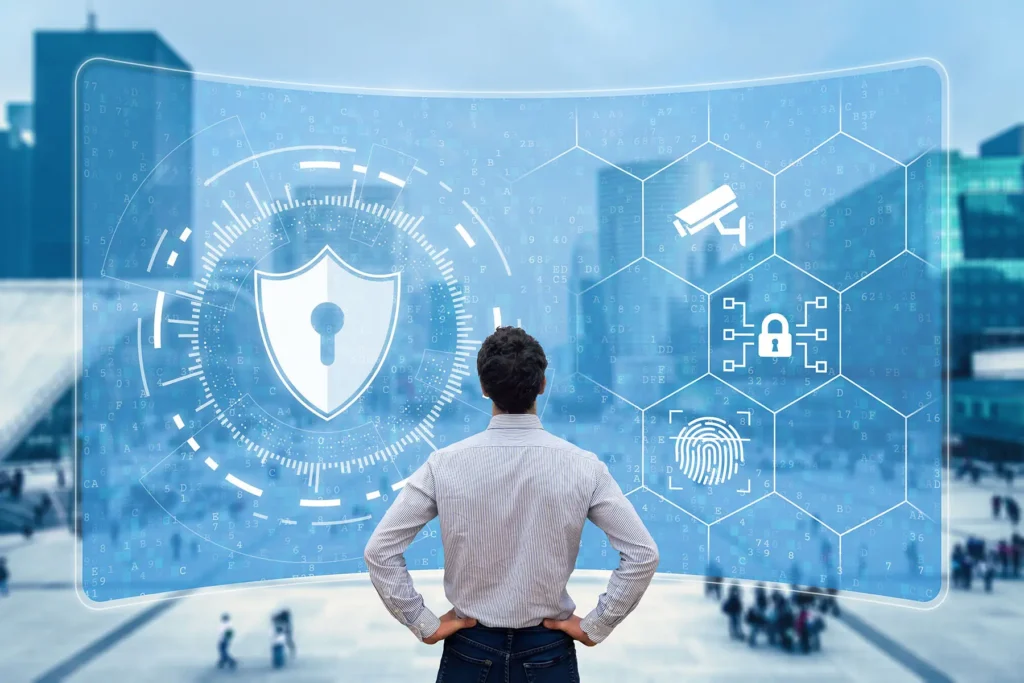
Although AI is transforming cybersecurity operations, human expertise remains critical. AI can process data and identify patterns quickly, but human analysts provide contextual understanding, strategic thinking, and decision-making capabilities that machines cannot fully replicate.
Cybersecurity professionals are responsible for investigating complex incidents, managing security policies, conducting threat hunting, and responding to emerging attack strategies. Human teams also play an essential role in ethical decision-making and regulatory compliance.
The future of cybersecurity will likely involve collaboration between AI systems and human experts rather than complete automation. Organizations that combine intelligent technologies with skilled security professionals will be better positioned to defend against evolving threats.
Future Trends in AI and Cybersecurity
The future of cybersecurity will be heavily influenced by advancements in artificial intelligence, quantum computing, and automation technologies. AI-driven security operations centers (SOCs) are expected to become more autonomous, enabling real-time threat response with minimal manual intervention.
Predictive cybersecurity will also gain importance. AI systems will increasingly forecast potential attack patterns based on behavioral data, industry trends, and global threat intelligence.
At the same time, cybercriminals will continue adopting advanced AI capabilities to improve social engineering attacks, automate reconnaissance, and target vulnerabilities more efficiently.
Governments and regulatory bodies are also expected to introduce stricter AI governance frameworks to address ethical concerns, privacy protection, and responsible AI usage in cybersecurity.
Conclusion
The battle between AI-powered cybersecurity systems and AI-enhanced cyber threats has created a new digital arms race that continues to reshape global security strategies. Artificial intelligence offers organizations faster threat detection, improved automation, and stronger predictive capabilities. However, hackers are simultaneously using the same technologies to launch more sophisticated and scalable attacks.
As cyber threats become increasingly intelligent, businesses can no longer rely solely on traditional security approaches. Organizations must adopt adaptive cybersecurity strategies that combine AI-driven tools, skilled professionals, employee awareness, and proactive risk management.
The future of cybersecurity will depend on how effectively defenders can innovate faster than attackers. In this rapidly evolving technological landscape, staying ahead requires continuous learning, investment, and resilience against the growing power of AI-driven cybercrime.