Introduction
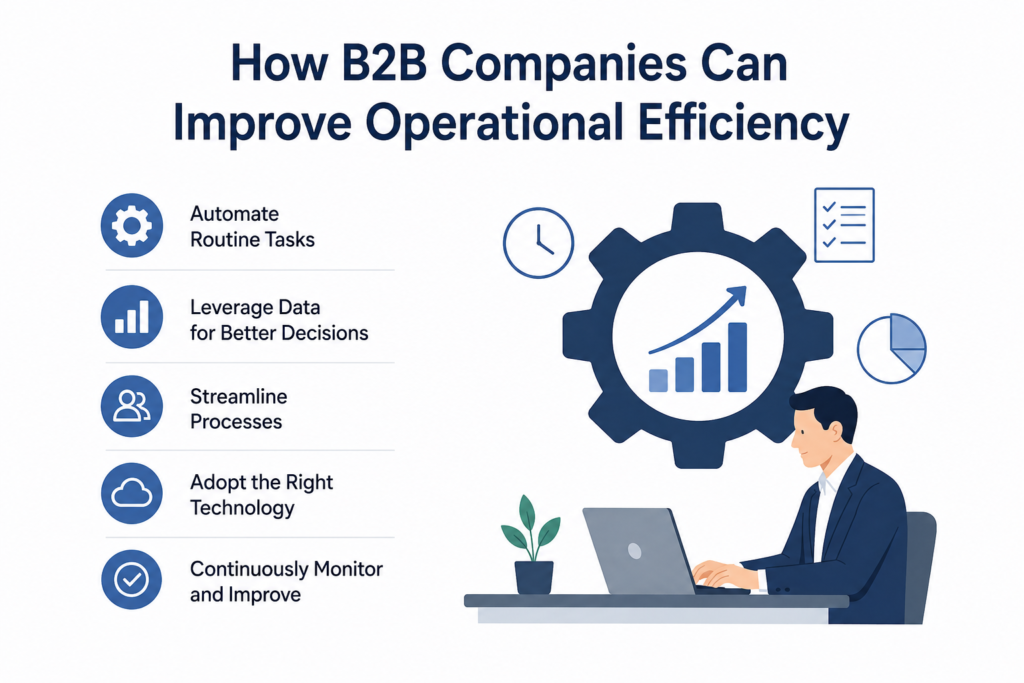
Operational efficiency has become one of the most important priorities for B2B companies in today’s highly competitive business environment. As industries continue to evolve through digital transformation, automation, and changing customer expectations, organizations are under constant pressure to improve productivity while reducing operational costs. Businesses that operate efficiently can respond faster to market changes, serve clients more effectively, and maintain stronger profitability over the long term.
For B2B companies, operational efficiency is not simply about cutting expenses. It is about optimizing processes, improving collaboration, reducing delays, enhancing decision-making, and creating systems that allow teams to work smarter rather than harder. Companies that successfully improve efficiency are better positioned to scale operations, increase customer satisfaction, and remain competitive in rapidly changing markets.
Modern organizations are now leveraging technology, automation, analytics, and workforce optimization strategies to streamline operations across departments. From sales and customer service to supply chain management and IT operations, every area of the business plays a role in improving overall efficiency.
Understanding Operational Efficiency in B2B Businesses
Operational efficiency refers to a company’s ability to deliver products or services while minimizing wasted time, resources, and effort. In B2B environments, operational inefficiencies can lead to delayed projects, poor customer experiences, increased operational costs, and reduced profitability.
Unlike B2C businesses, B2B organizations often deal with more complex workflows, longer sales cycles, enterprise-level client expectations, and multiple internal approval processes. This complexity makes operational efficiency even more critical.
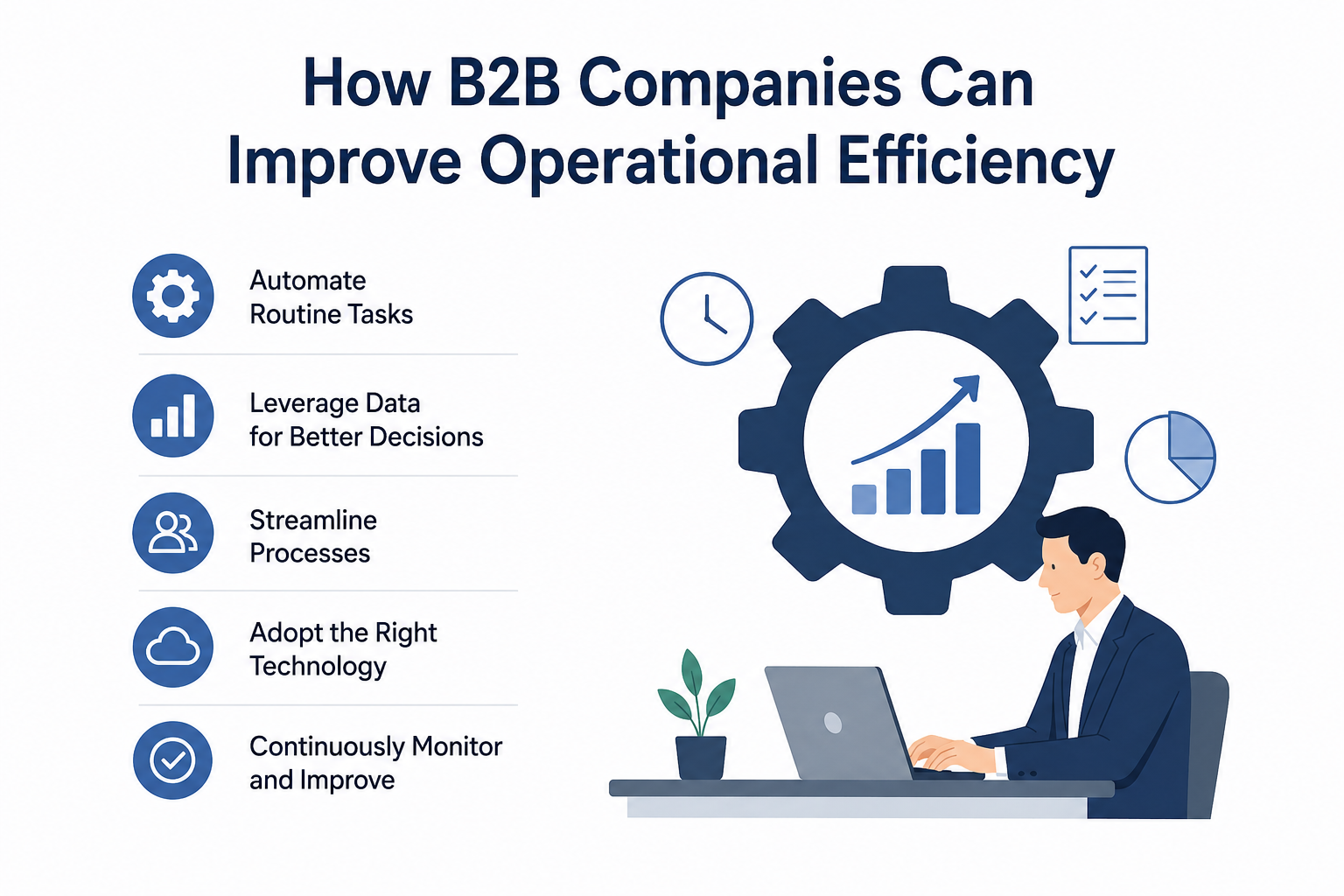
Efficient B2B companies typically focus on:
- Streamlining internal workflows
- Improving communication between teams
- Automating repetitive tasks
- Reducing manual errors
- Enhancing customer service processes
- Improving resource utilization
- Accelerating decision-making
Businesses that consistently optimize operations can achieve higher productivity while maintaining service quality and business agility.
Automation Is Driving Modern Business Efficiency
Automation has become one of the most effective ways for B2B companies to improve operational performance. Many organizations still rely heavily on manual processes that consume valuable employee time and increase the likelihood of errors.
By implementing automation tools, businesses can reduce repetitive administrative work and allow employees to focus on more strategic responsibilities. Automation improves speed, accuracy, consistency, and scalability across operations.
Common areas where B2B companies use automation include:
- Invoice and billing management
- Employee onboarding
- Customer relationship management
- Sales pipeline tracking
- Marketing campaigns
- IT infrastructure monitoring
- Inventory and supply chain management
Automation not only reduces operational costs but also improves overall employee productivity and customer responsiveness.
Improving Communication Between Departments
Poor communication is one of the biggest causes of operational inefficiency in B2B organizations. When departments operate in silos, businesses often experience duplicated work, project delays, inconsistent information, and slower decision-making.
Efficient companies prioritize cross-functional collaboration by ensuring teams can share information quickly and work toward common business goals. Modern collaboration platforms, project management tools, and communication systems are helping organizations improve internal coordination.
Businesses can improve communication efficiency by:
- Using centralized collaboration platforms
- Encouraging cross-department meetings
- Standardizing reporting systems
- Improving workflow transparency
- Reducing unnecessary approval layers
Stronger communication helps teams work more effectively while minimizing operational bottlenecks.
Data-Driven Decision Making Improves Performance
Modern B2B companies generate large amounts of operational and customer data. However, businesses that fail to analyze this data effectively often miss opportunities for improvement.
Data analytics allows organizations to identify inefficiencies, measure performance, forecast trends, and optimize business strategies. Real-time insights help leaders make faster and more informed decisions.
Companies are increasingly using analytics to:
- Track operational KPIs
- Monitor employee productivity
- Analyze customer behavior
- Improve supply chain efficiency
- Forecast sales performance
- Identify workflow bottlenecks
Data-driven businesses are often more agile and capable of adapting quickly to changing market conditions.
Investing in Employee Productivity and Training
Technology alone cannot improve operational efficiency without skilled and engaged employees. Businesses must ensure that teams have the knowledge, tools, and support needed to work efficiently in modern digital environments.
Employee training plays a critical role in improving productivity and reducing operational errors. Organizations that continuously invest in workforce development create more adaptable and high-performing teams.
Important areas for employee development include:
- Digital skills training
- Process improvement education
- AI and automation literacy
- Leadership development
- Time management strategies
- Collaboration and communication skills
Employees who understand business systems and workflows can contribute more effectively to operational success.
Streamlining Business Processes Is Essential
Many B2B companies continue to operate with outdated workflows that slow productivity and increase operational complexity. Over time, businesses often accumulate unnecessary processes, approvals, and manual tasks that reduce efficiency.
Regular process evaluation helps organizations identify areas where operations can be simplified or optimized. Streamlined workflows improve speed, consistency, and customer satisfaction.
Businesses should regularly review:
- Approval processes
- Project management workflows
- Customer onboarding procedures
- Procurement systems
- Internal reporting structures
- Service delivery operations
Simplifying business processes reduces operational friction and improves organizational agility.
Cloud Technology Enhances Business Flexibility
Cloud computing has become a critical driver of operational efficiency for modern B2B organizations. Cloud-based systems improve accessibility, scalability, collaboration, and business continuity while reducing infrastructure management costs.
Cloud platforms allow employees to access business applications and data from anywhere, making remote and hybrid work models more effective. Businesses can also scale resources quickly without major infrastructure investments.
Benefits of cloud adoption include:
- Faster system deployment
- Improved collaboration
- Reduced IT maintenance costs
- Enhanced remote accessibility
- Better disaster recovery capabilities
- Increased operational scalability
Cloud technology enables businesses to operate more flexibly and efficiently in rapidly changing environments.
Customer Experience Directly Impacts Operational Efficiency
Operational efficiency is closely connected to customer experience. Delayed responses, poor communication, inconsistent service delivery, and inefficient support systems can negatively affect client relationships and business growth.
Efficient customer service processes improve satisfaction while reducing operational strain on support teams. Businesses are increasingly using AI-powered support systems, CRM platforms, and self-service portals to improve service delivery.
B2B companies can improve customer-related efficiency by:
- Automating customer support workflows
- Improving response times
- Using centralized CRM systems
- Providing proactive communication
- Personalizing client interactions
Satisfied clients are more likely to remain loyal and contribute to long-term business growth.
Cybersecurity and Risk Management Are Operational Priorities
As businesses become more digitally connected, cybersecurity is becoming a major operational concern. Cyberattacks, system downtime, and data breaches can significantly disrupt operations and create financial losses.
Operational efficiency depends heavily on maintaining secure and stable business systems. Companies must invest in cybersecurity strategies that protect critical infrastructure and business continuity.
Key cybersecurity priorities include:
- Employee security training
- Data protection policies
- Multi-factor authentication
- Cloud security management
- Regular system monitoring
- Incident response planning
Strong cybersecurity practices help organizations avoid costly disruptions and maintain operational stability.
Leadership Plays a Critical Role in Operational Efficiency
Operational improvement requires strong leadership and organizational alignment. Business leaders must create a culture focused on continuous improvement, innovation, accountability, and collaboration.
Efficient organizations encourage employees to identify operational challenges and suggest process improvements. Leaders who support adaptability and innovation are more likely to build agile and high-performing businesses.
Effective leadership strategies include:
- Setting clear operational goals
- Encouraging process innovation
- Supporting employee development
- Investing in modern technology
- Promoting accountability
- Measuring performance consistently
Leadership commitment is essential for sustaining long-term operational improvements.
The Future of Operational Efficiency in B2B
As technology continues to evolve, operational efficiency will become increasingly driven by artificial intelligence, predictive analytics, automation, and intelligent business systems. Companies that embrace digital transformation will be better equipped to manage complexity, improve productivity, and scale operations effectively.
Future-focused B2B companies are already investing in:
- AI-powered business automation
- Predictive operational analytics
- Smart workflow management systems
- Real-time performance monitoring
- Digital collaboration platforms
- Intelligent customer engagement tools
Businesses that continuously optimize operations will gain stronger competitive advantages in the years ahead.
Conclusion
Operational efficiency is no longer just a cost-management strategy for B2B companies — it is a key driver of growth, scalability, customer satisfaction, and long-term success. In today’s competitive business landscape, organizations must continuously improve workflows, strengthen communication, adopt modern technologies, and empower employees to work more effectively.
Automation, cloud computing, data analytics, cybersecurity, and workforce development are all playing major roles in helping businesses optimize operations. However, successful operational improvement requires more than technology alone. It also depends on strong leadership, strategic planning, and a culture focused on continuous improvement.
B2B companies that prioritize operational efficiency will be better prepared to adapt to market changes, meet customer expectations, and achieve sustainable business growth in an increasingly digital and competitive world.