Introduction: IT as the Foundation of Generative AI in B2B-
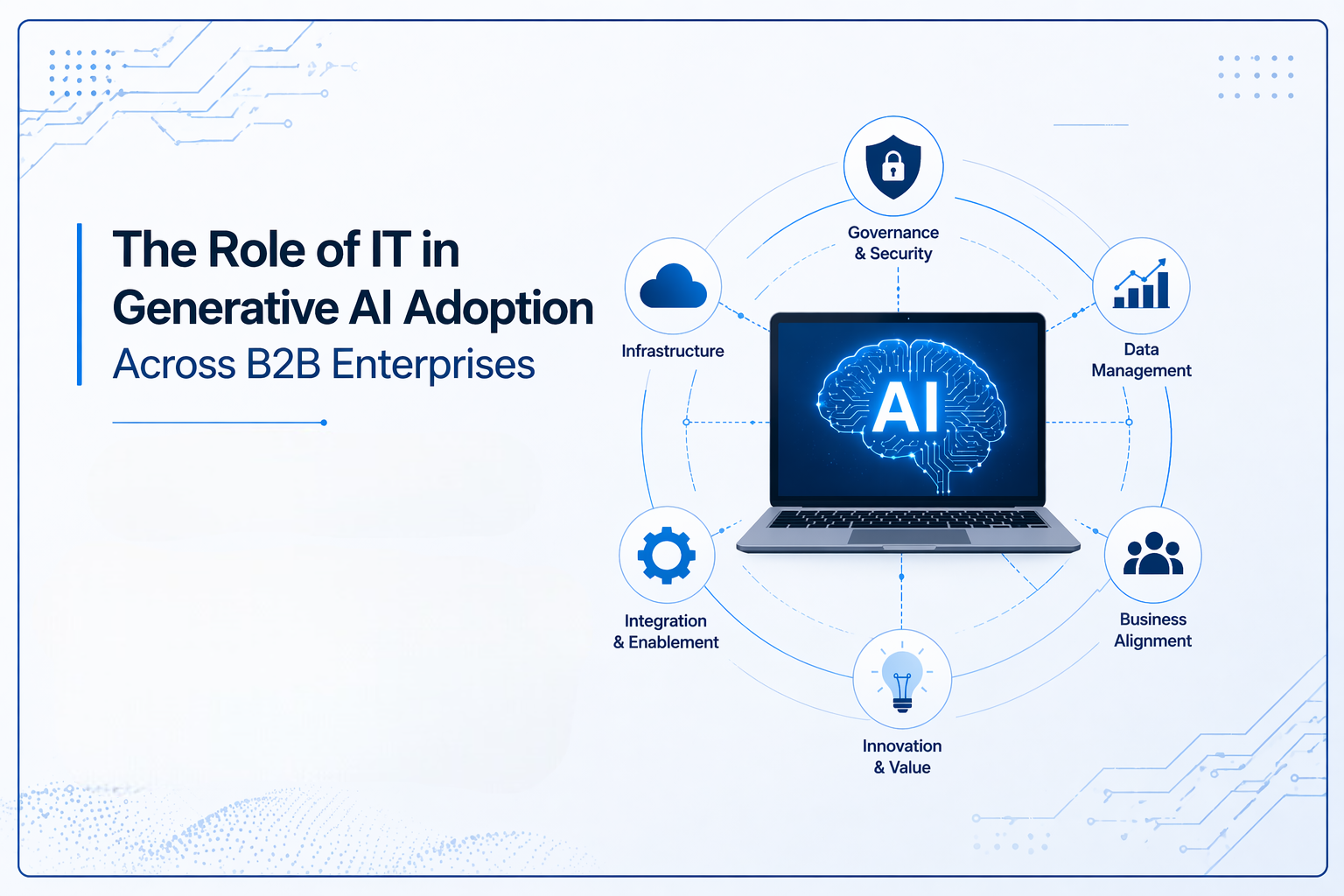
Generative AI has rapidly shifted from experimental technology to a core business driver in B2B enterprises. Tools like ChatGPT are no longer limited to content generation—they now influence decision-making, automation, and customer engagement. In this transformation, IT departments play a foundational role by enabling infrastructure, ensuring system integration, and maintaining operational stability. Without a strong IT backbone, generative AI adoption can become fragmented and inefficient. Enterprises rely on IT to align AI initiatives with business goals while managing risks and scalability challenges. IT teams also evaluate vendors, select platforms, and ensure compatibility with existing enterprise systems. As B2B environments are complex, integrating AI requires careful planning and architecture design. IT acts as the bridge between innovation and execution, ensuring AI delivers measurable value. Additionally, governance and compliance fall under IT’s responsibility, especially in regulated industries. This makes IT not just a support function but a strategic enabler of AI transformation.
- Establishes infrastructure for AI deployment
- Integrates AI tools with enterprise systems
- Aligns AI strategy with business objectives
- Ensures scalability and performance
IT Infrastructure and Scalability for Generative AI –
The success of generative AI in B2B enterprises depends heavily on robust IT infrastructure. AI models require significant computational power, storage, and network capabilities, which IT teams must design and maintain. Cloud platforms such as Amazon Web Services and Microsoft Azure have become essential in supporting scalable AI deployments. IT ensures that these platforms are optimized for performance, cost-efficiency, and security. In addition, enterprises must handle large volumes of structured and unstructured data, which requires advanced data pipelines and storage solutions. IT teams also implement APIs and microservices to enable seamless AI integration across departments. Scalability is critical, as AI adoption often starts small but expands rapidly across the organization. Without proper infrastructure planning, companies risk performance bottlenecks and high operational costs. IT also plays a key role in monitoring system health and ensuring uptime for AI-driven applications. Ultimately, infrastructure is the backbone that determines the success or failure of generative AI initiatives.
- Designs scalable cloud and hybrid infrastructure
- Manages high-performance computing resources
- Implements data pipelines and storage systems
- Ensures system uptime and reliability
Data Management and Governance in Generative AI –
Data is the fuel that powers generative AI, and IT is responsible for managing this critical resource. In B2B enterprises, data comes from multiple sources, including CRM systems, supply chains, and customer interactions. IT teams ensure data quality, consistency, and accessibility, which directly impact AI performance. Governance is another crucial aspect, as organizations must comply with regulations and protect sensitive information. IT establishes data policies, access controls, and encryption mechanisms to maintain security and privacy. Furthermore, bias in data can lead to inaccurate or unethical AI outputs, making data validation a key responsibility. IT teams also implement data lifecycle management to ensure relevance and accuracy over time. Integration of data across systems is essential for generating meaningful AI insights. Without proper data governance, generative AI can produce unreliable results and expose businesses to risks. Therefore, IT plays a central role in building a trustworthy AI ecosystem.
- Ensures data quality and consistency
- Implements data security and access controls
- Manages compliance and regulatory requirements
Security, Risk Management, and Ethical Considerations –
As generative AI becomes more embedded in B2B operations, security and risk management become critical concerns. IT teams must protect AI systems from cyber threats, data breaches, and misuse. Frameworks from organizations like National Institute of Standards and Technology provide guidelines for managing these risks. Generative AI also introduces new challenges, such as deepfakes, misinformation, and intellectual property concerns. IT must implement safeguards to prevent unauthorized use and ensure accountability. Ethical considerations are equally important, as AI decisions can impact customers, employees, and partners. IT teams work closely with leadership to establish ethical guidelines and governance frameworks. Monitoring AI outputs and maintaining transparency are key responsibilities. Risk management also includes evaluating third-party AI vendors and ensuring compliance with enterprise standards. By addressing these challenges, IT ensures that generative AI is used responsibly and securely.
- Implements cybersecurity measures for AI systems
- Manages risks related to data and AI misuse
- Ensures compliance with security frameworks
Driving Innovation and Business Value Through IT –
Beyond infrastructure and security, IT plays a strategic role in driving innovation through generative AI. B2B enterprises use AI to automate processes, enhance customer experiences, and generate insights for decision-making. IT teams identify use cases where AI can deliver the highest value, such as sales automation, predictive analytics, and content generation. They also collaborate with business units to implement AI solutions effectively. Continuous improvement is essential, as AI models need regular updates and optimization. IT ensures that systems evolve with changing business needs and technological advancements. Additionally, IT fosters a culture of innovation by enabling experimentation and pilot projects. Measuring ROI and performance metrics is another critical responsibility. By aligning AI initiatives with business goals, IT transforms generative AI into a competitive advantage. This strategic role highlights the growing importance of IT in modern B2B enterprises.
- Identifies high-impact AI use cases
- Drives process automation and efficiency
- Enhances customer experience and engagement
- Measures ROI and business outcomes
Conclusion –
Generative AI is reshaping the B2B landscape, but its success depends largely on the strength and strategy of IT within an organization. From building scalable infrastructure to ensuring data governance, security, and ethical use, IT serves as the backbone of AI adoption. It bridges the gap between advanced technology and practical business applications, enabling enterprises to unlock real value. As tools like ChatGPT continue to evolve, the role of IT will only become more critical in guiding their implementation and impact. Organizations that invest in strong IT capabilities will be better positioned to leverage generative AI for innovation, efficiency, and competitive advantage.