Introduction: The Evolution of IT Infrastructure-
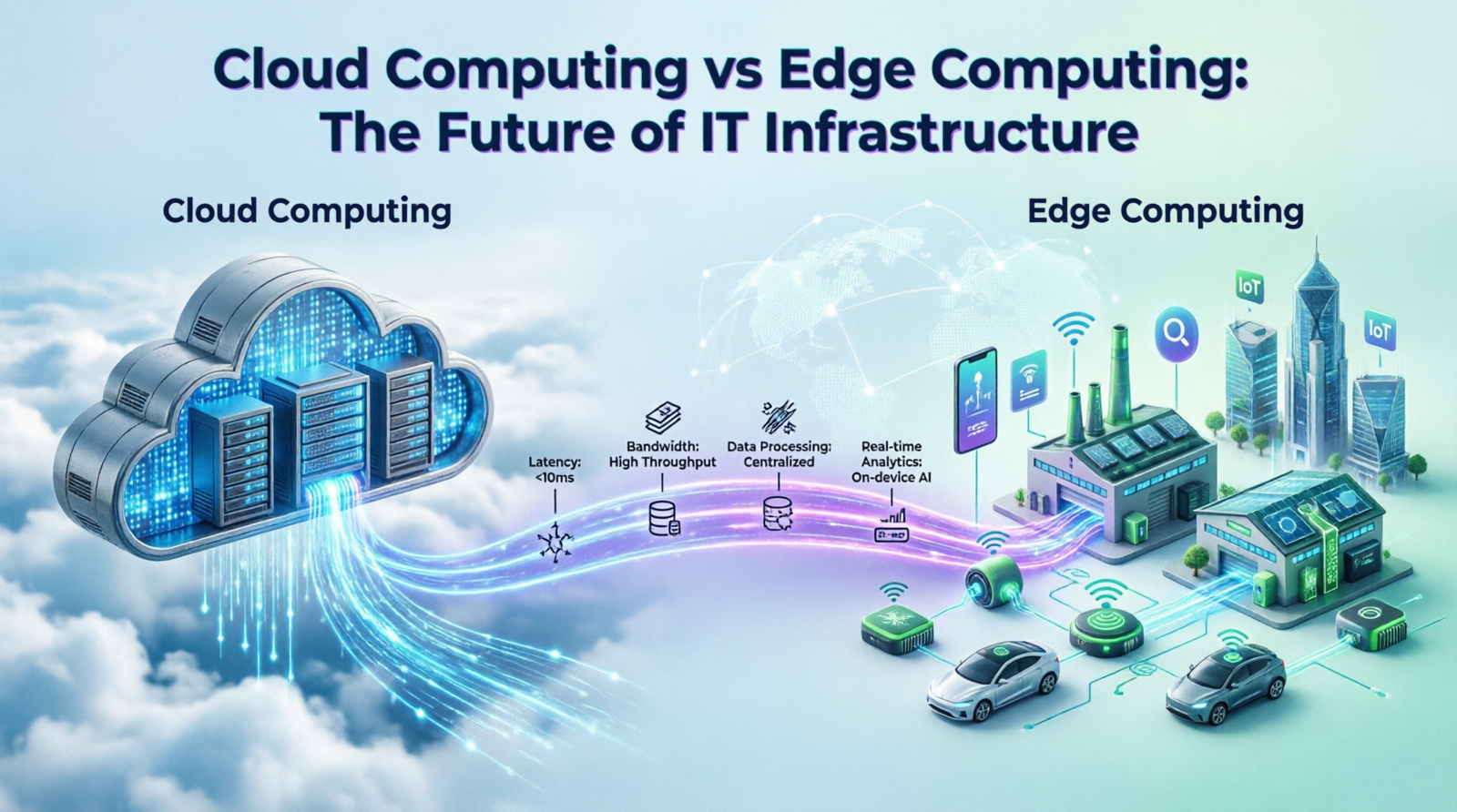
The rapid growth of digital technologies has transformed how organizations design and manage IT infrastructure. Two dominant paradigms—cloud computing and edge computing—are now shaping the future of enterprise systems, especially in B2B environments. Cloud computing, powered by platforms like Amazon Web Services, enables centralized data storage and processing at massive scale. In contrast, edge computing processes data closer to its source, reducing latency and enabling real-time decision-making. IT teams must evaluate both approaches to determine the best fit for their business needs. As data volumes grow and applications become more complex, relying on a single model is often insufficient. Instead, organizations are moving toward hybrid strategies that combine cloud and edge capabilities. This shift is driven by the need for speed, efficiency, and scalability.
- Highlights the evolution of IT infrastructure
- Introduces cloud and edge computing models
- Explains the need for modern infrastructure strategies
Cloud Computing: Centralized Power and Scalability-
Cloud computing has become the backbone of modern IT infrastructure, offering unmatched scalability and flexibility. Organizations use cloud platforms such as Microsoft Azure to store data, run applications, and manage workloads without investing in physical hardware. This centralized model allows businesses to scale resources on demand, making it ideal for large-scale operations. IT teams benefit from reduced maintenance, automated updates, and global accessibility. Cloud computing also supports advanced technologies like AI, big data analytics, and machine learning. However, it relies heavily on internet connectivity, which can introduce latency issues for time-sensitive applications. Despite this limitation, cloud infrastructure remains essential for handling massive data processing and long-term storage. It also enables seamless collaboration across geographically distributed teams.
- Provides centralized data storage and processing
- Enables on-demand scalability and flexibility
- Reduces hardware and maintenance costs
- Supports advanced technologies like AI and analytics
Edge Computing: Real-Time Processing and Low Latency-
Edge computing addresses the limitations of cloud computing by processing data closer to where it is generated. This approach is particularly useful for applications that require real-time responses, such as IoT devices, autonomous systems, and industrial automation. IT infrastructure at the edge reduces latency by minimizing the distance data must travel. It also decreases bandwidth usage by filtering and processing data locally. Edge computing is becoming increasingly important in B2B industries like manufacturing, logistics, and healthcare. IT teams deploy edge devices and micro data centers to support these operations. This model enhances performance and reliability, especially in environments with limited connectivity.
- Enables real-time data processing
- Reduces latency and improves performance
- Minimizes bandwidth usage
Cloud vs Edge: Key Differences and Strategic Integration –
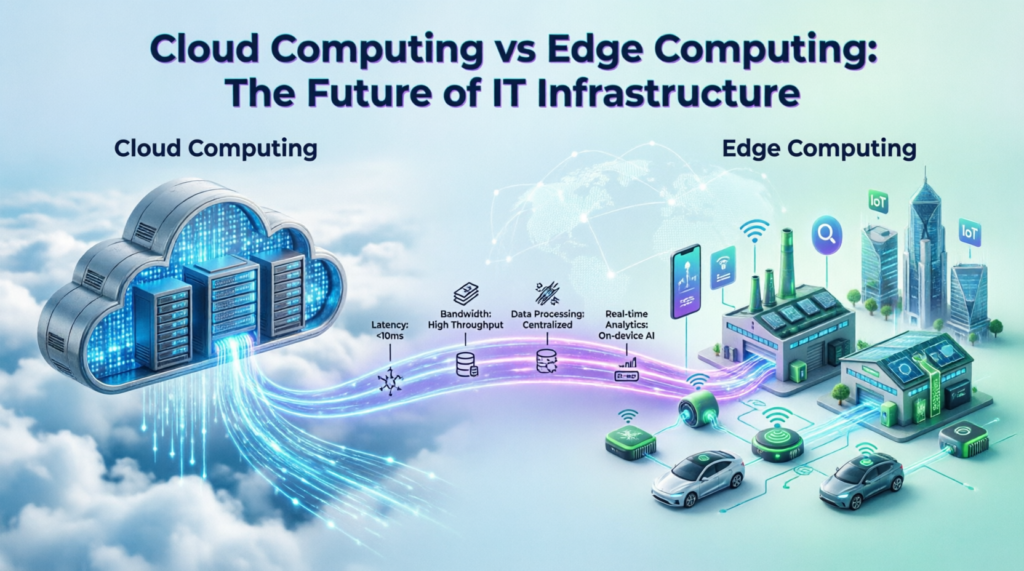
While cloud and edge computing serve different purposes, they are not mutually exclusive. Cloud computing excels in centralized processing, scalability, and long-term storage, whereas edge computing focuses on speed and real-time insights. IT teams must carefully evaluate use cases to determine which model is more appropriate. For example, data-intensive analytics may be better suited for the cloud, while time-critical operations benefit from edge computing. Increasingly, organizations are adopting a hybrid approach that integrates both models. This allows them to leverage the strengths of each while minimizing their limitations. Integration requires robust IT architecture, including APIs and secure data pipelines.
- Compares centralized vs decentralized processing
- Highlights strengths of cloud and edge models
- Encourages hybrid infrastructure strategies
- Requires integration through APIs and systems
Future Trends: The Convergence of Cloud and Edge Computing-
The future of IT infrastructure will be defined by the convergence of cloud and edge computing. Emerging technologies such as 5G, AI, and IoT are accelerating this integration. Faster connectivity enables seamless communication between cloud and edge systems, creating a unified ecosystem. IT teams will play a crucial role in designing architectures that balance performance, cost, and security. Automation and AI-driven management tools will simplify the operation of hybrid environments. Security frameworks will also evolve to address the challenges of distributed systems. As businesses become more data-driven, the demand for real-time insights will continue to grow. This will further drive the adoption of edge computing alongside cloud solutions.
- Highlights convergence of cloud and edge technologies
- Explores impact of 5G, AI, and IoT
- Emphasizes hybrid and unified ecosystems
Conclusion–
Cloud computing and edge computing are both essential components of modern IT infrastructure, each offering unique advantages. While cloud computing provides scalability, flexibility, and centralized processing, edge computing delivers speed, real-time insights, and reduced latency. Together, they form a powerful combination that addresses the diverse needs of B2B enterprises. IT teams must adopt a strategic approach to integrate these models and maximize their benefits. As technology continues to evolve, the convergence of cloud and edge will redefine how businesses operate and compete. Organizations that invest in hybrid infrastructure will be better equipped to handle future challenges and opportunities. Ultimately, the future of IT infrastructure lies in balancing centralized and decentralized systems to create efficient, scalable, and resilient environments.