Introduction: IT Infrastructure as the Backbone of Modern B2B Enterprises-
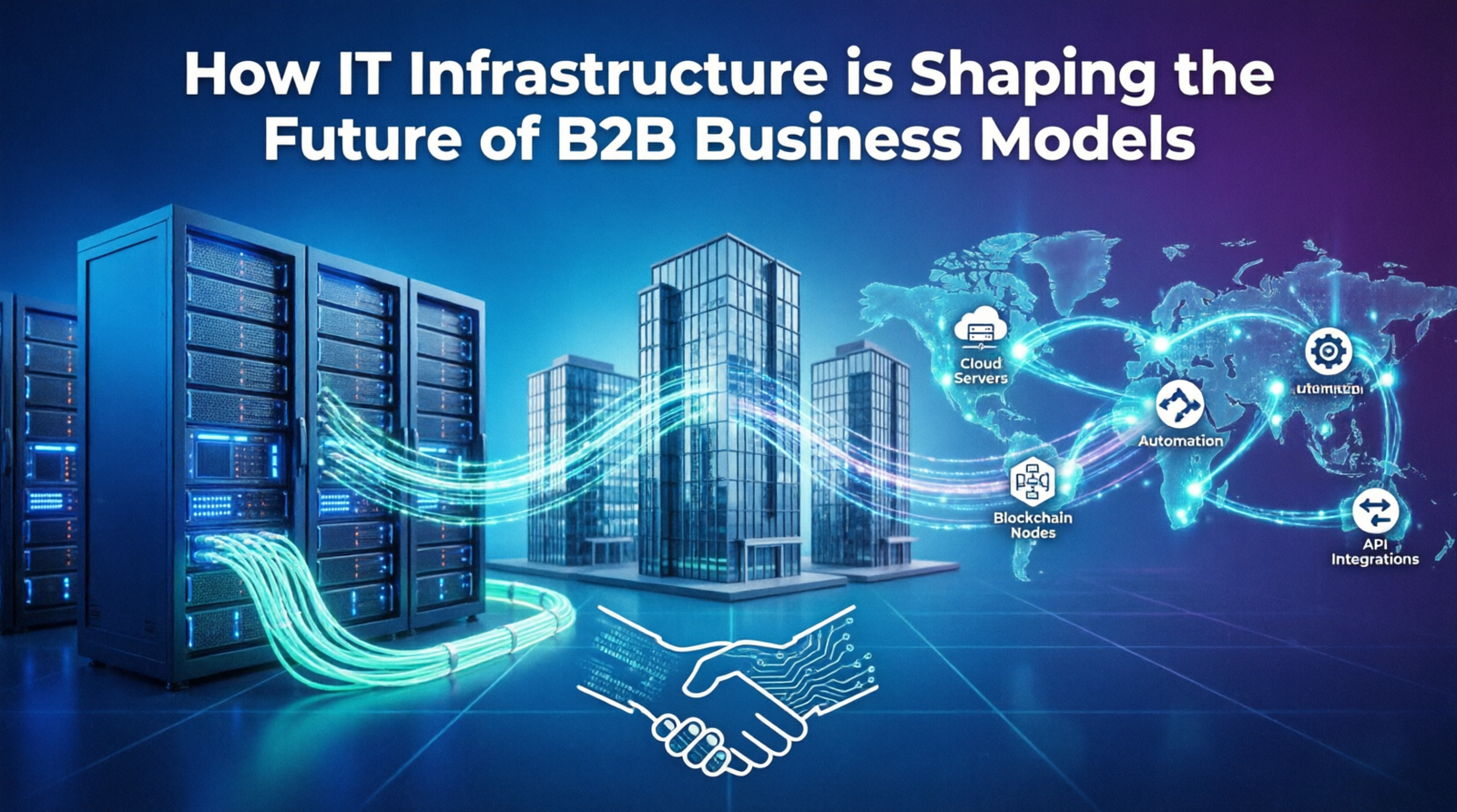
In today’s digital-first economy, IT infrastructure has become the foundation upon which modern B2B business models are built. Organizations are no longer relying solely on traditional systems; instead, they are adopting agile, scalable, and cloud-driven environments to remain competitive. IT infrastructure includes servers, networks, cloud platforms, and enterprise software that collectively support business operations. Companies increasingly depend on solutions from providers like Amazon Web Services to ensure flexibility and performance. This transformation allows B2B enterprises to move faster, innovate continuously, and respond to market demands in real time. IT teams play a crucial role in aligning infrastructure with strategic goals. As business ecosystems become more interconnected, infrastructure must support seamless collaboration and data exchange. Without strong IT infrastructure, companies risk inefficiency and lost opportunities. It is no longer just a support system but a key driver of growth and innovation. This shift is fundamentally reshaping how B2B organizations operate and compete.
- Provides the foundation for digital operations
- Enables scalability and flexibility in business models
- Supports real-time data processing and decision-making
Cloud Computing and Scalability in B2B Models-
Cloud computing has revolutionized how B2B companies design and scale their business models. Instead of investing heavily in physical infrastructure, organizations now leverage cloud platforms such as Microsoft Azure to access computing resources on demand. This shift allows businesses to scale operations quickly without significant upfront costs. IT infrastructure built on the cloud supports global expansion and remote operations. It also enables faster deployment of applications and services, reducing time-to-market. B2B companies can experiment with new ideas and pivot strategies more efficiently. Additionally, cloud infrastructure supports integration with partners and clients, creating a more connected ecosystem. IT teams ensure that cloud environments are optimized for performance, security, and cost management. As demand fluctuates, cloud scalability becomes a critical advantage. This flexibility is transforming traditional B2B models into dynamic and adaptive systems.
- Reduces capital expenditure on physical infrastructure
- Enables on-demand scalability and flexibility
- Supports global operations and remote access
Data-Driven Business Models Enabled by IT Infrastructure-
Data has become one of the most valuable assets in B2B enterprises, and IT infrastructure plays a vital role in managing and utilizing it. Modern infrastructure supports the collection, storage, and analysis of vast amounts of data from multiple sources. Advanced analytics and AI tools, including ChatGPT, help businesses generate insights and improve decision-making. IT teams design data pipelines and ensure data quality, security, and accessibility. This enables companies to adopt data-driven business models that focus on predictive analytics and customer insights. Real-time data processing allows organizations to respond quickly to market changes. Data integration across systems enhances visibility and collaboration. Without robust infrastructure, data cannot be effectively leveraged. IT ensures that data becomes a strategic asset rather than a challenge. This shift is driving innovation and competitive advantage in B2B markets.
- Supports large-scale data collection and storage
- Enables advanced analytics and AI integration
- Improves decision-making through real-time insights
Automation, Integration, and Digital Ecosystems-
Automation and integration are key elements of modern B2B business models, and IT infrastructure makes them possible. Enterprises are increasingly adopting automation tools to streamline processes and reduce manual effort. Integration technologies such as APIs allow different systems to communicate seamlessly, creating unified digital ecosystems. Companies use enterprise platforms like SAP to manage complex operations and workflows. IT infrastructure supports these integrations by ensuring reliability and performance. Automation improves efficiency, reduces errors, and lowers operational costs. It also enables businesses to focus on strategic activities rather than routine tasks. Digital ecosystems allow companies to collaborate with partners, suppliers, and customers more effectively. IT teams play a crucial role in designing and maintaining these systems. As a result, B2B models are becoming more interconnected and efficient.
- Automates repetitive business processes
- Enables seamless system integration through APIs
- Supports digital ecosystems and partnerships
Security, Resilience, and Future Readiness-
As B2B business models evolve, security and resilience have become critical priorities for IT infrastructure. Cyber threats are increasing in complexity, requiring advanced security measures and continuous monitoring. IT teams implement frameworks and solutions to protect data and systems from breaches. Infrastructure must also be resilient to ensure business continuity during disruptions. This includes disaster recovery, backup systems, and redundancy. Companies often adopt security standards from organizations like National Institute of Standards and Technology to strengthen their defenses. Future-ready infrastructure must also support emerging technologies such as AI, IoT, and edge computing. IT plays a key role in preparing organizations for these advancements. By investing in secure and resilient infrastructure, businesses can maintain trust and stability. This ensures long-term success in an increasingly digital world.
- Implements advanced cybersecurity measures
- Ensures business continuity and disaster recovery
- Supports compliance with security standards
Conclusion-
IT infrastructure is no longer just a technical necessity—it is a strategic driver shaping the future of B2B business models. From enabling cloud scalability to supporting data-driven decision-making, IT infrastructure empowers organizations to innovate and compete effectively. It facilitates automation, integration, and the creation of digital ecosystems that enhance efficiency and collaboration. At the same time, it ensures security and resilience in an increasingly complex digital landscape. As technologies continue to evolve, the role of IT infrastructure will only grow in importance. B2B enterprises that invest in modern, scalable, and secure infrastructure will be better positioned to adapt to change and seize new opportunities. Ultimately, IT infrastructure is the backbone of transformation, driving growth, innovation, and long-term success in the B2B sector.