Understanding What AI Really Does in Business
Artificial Intelligence is extremely powerful at analyzing data and identifying patterns that humans may never notice. It can process massive datasets, detect trends, and make predictions with high accuracy. However, this predictive ability is fundamentally based on existing data, meaning AI is essentially learning from the past to estimate the future. In B2B environments, this helps with forecasting demand, optimizing campaigns, and improving operational efficiency. But prediction is not the same as innovation. Many businesses mistakenly assume that because AI is advanced, it can also create breakthrough ideas. In reality, AI operates within boundaries defined by training data and algorithms. It does not “think” or “imagine” in the human sense. This distinction is critical for companies adopting AI tools. While AI can suggest what is likely to happen next, it cannot decide what should exist next. That responsibility still belongs to humans who understand context, emotion, culture, and business vision. Innovation begins where data ends, and this is where human intelligence still dominates.
Key Capabilities of AI in Business
- Analyzes large datasets faster than humans
- Identifies patterns and trends from historical data
- Improves forecasting and predictive analytics
- Automates repetitive decision-making processes
- Optimizes marketing, sales, and operations efficiency
- Supports data-driven business decisions
Why Prediction Alone Cannot Drive Innovation
Prediction helps businesses reduce uncertainty, but it does not create something fundamentally new. Many companies today rely heavily on predictive analytics for marketing campaigns, customer segmentation, and product recommendations. While these tools improve efficiency, they often lead to incremental improvements rather than breakthrough innovation. If every decision is guided purely by what data suggests is “most likely,” businesses risk becoming predictable and similar to competitors. True innovation often comes from breaking patterns, not following them. For example, disruptive products or new market categories rarely emerge from historical data alone. They are created when humans challenge assumptions and imagine possibilities that do not yet exist. AI may tell you what customers are currently doing, but it cannot tell you what customers might want in a completely new way of thinking. This limitation is why companies that rely only on predictive systems often struggle to differentiate themselves in competitive markets.
Limitations of AI Prediction
- Relies only on past and existing data
- Cannot imagine completely new categories
- Favors safe, statistically likely outcomes
- Struggles with uncertainty and ambiguity
- Lacks intuition and creative risk-taking
- Reinforces existing market patterns instead of breaking them
The Human Role in Creating True Innovation
Human creativity is not just about generating ideas—it is about connecting unrelated concepts, challenging norms, and imagining future possibilities that do not yet exist. In B2B industries, innovation often comes from understanding customer pain points at a deeper level than data alone can reveal. Humans bring context, emotional intelligence, and lived experience into decision-making, which AI lacks. For example, founders and product teams often create solutions based on intuition, customer conversations, and industry insight rather than purely data-driven suggestions. These human-driven decisions are what lead to entirely new product categories and business models. AI can assist in refining these ideas, but it cannot originate them in a meaningful strategic sense. Creativity also involves taking risks, something AI is not designed to do. Businesses that rely solely on AI-generated recommendations may optimize existing systems but fail to create disruptive innovations. The strongest companies are those that combine analytical intelligence with human imagination.
What Humans Bring to Innovation
- Ability to imagine future possibilities beyond data
- Emotional understanding of customer needs
- Intuition built from experience and context
- Ability to take strategic risks
- Creativity in connecting unrelated ideas
- Vision for building entirely new markets
Why AI-Driven Businesses Still Need Human Thinking
As AI becomes more integrated into business workflows, there is a growing risk of over-reliance on automation and data-driven decisions. While AI improves speed and efficiency, it cannot define long-term vision or strategic direction. Businesses still need humans to ask the right questions, not just analyze the answers. Leadership, creativity, and strategic thinking remain essential for guiding AI systems effectively. Without human direction, AI can optimize processes but may not align with meaningful business goals. Many successful companies today use AI as a support system rather than a decision-maker. They rely on AI for insights but depend on human judgment for final decisions. This balance ensures that innovation is not limited to algorithmic predictions. In competitive industries, companies that combine AI efficiency with human creativity tend to outperform those that rely on automation alone. The future of business is not AI replacing humans, but AI amplifying human thinking.
Why Human Thinking Still Matters
- Defines long-term vision and strategy
- Ensures decisions align with real business goals
- Adds context to AI-generated insights
- Drives innovation beyond data limitations
- Balances automation with creativity
- Prevents over-dependence on algorithms
The Future: Collaboration Between AI and Human Creativity
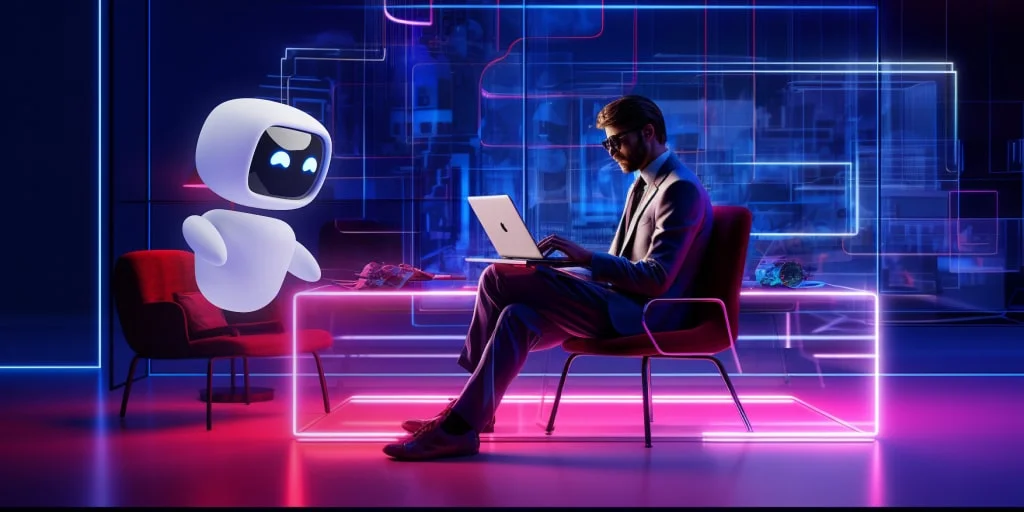
The most successful future businesses will not choose between AI and humans—they will combine both. AI will continue to evolve as a powerful tool for analysis, prediction, and automation, while humans will remain the source of creativity, imagination, and strategic direction. This collaboration will define the next generation of innovation across industries. Instead of replacing human roles, AI will shift them toward higher-level thinking, such as strategy, creativity, and problem-solving. Businesses that understand this balance will be better positioned to innovate and adapt in rapidly changing markets. Human creativity will guide AI toward meaningful outcomes, while AI will handle complexity and scale. This partnership creates a powerful synergy where data and imagination work together. Companies that fail to integrate both will either become too rigid (over-data-driven) or too inefficient (over-human-dependent). The future belongs to organizations that can merge intelligence with imagination.
Future of AI + Human Collaboration
- AI handles data, speed, and automation
- Humans drive creativity and innovation
- Combined systems improve decision-making quality
- Businesses become more adaptive and resilient
- Innovation becomes faster and more structured
- Competitive advantage comes from integration, not replacement
Conclusion
AI is exceptional at predicting patterns and optimizing decisions based on historical data, but it cannot create true innovation on its own. Innovation requires imagination, risk-taking, emotional intelligence, and the ability to challenge existing assumptions—all of which remain uniquely human strengths. While AI continues to transform industries through automation and intelligence, it functions best as a tool that enhances human capability rather than replacing it. The businesses that will lead the future are those that understand this balance: using AI for precision and efficiency while relying on human creativity for vision and breakthrough ideas.