For years, conversations around technology and work have followed a familiar pattern. Every major technological shift has been accompanied by the same question: will technology replace people?
We saw it during industrial transformation, then during digital transformation, and now again in the age of artificial intelligence. Headlines often focus on disruption, automation, and changing job markets. Some predict massive workforce replacement, while others imagine entirely autonomous organizations operating with minimal human involvement.
But when businesses move beyond headlines and begin implementing AI in real environments, a different picture starts to emerge.
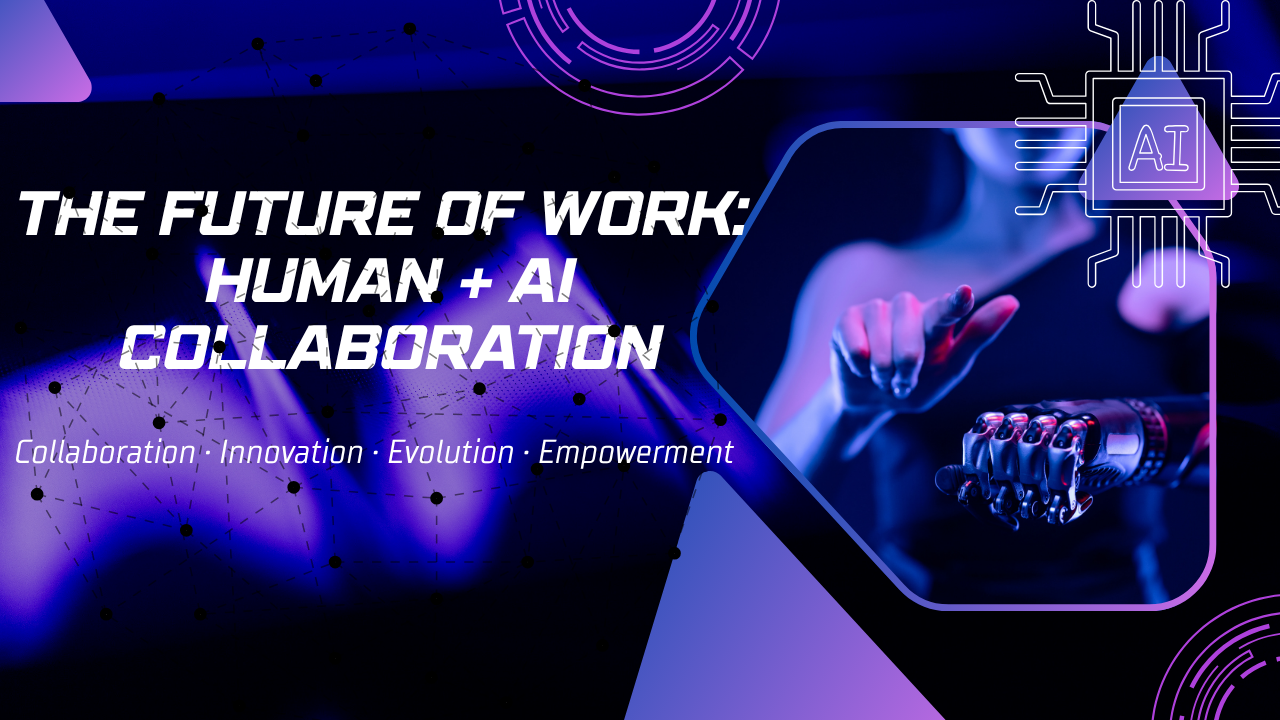
The future of work does not appear to be moving toward humans versus machines. Instead, it is increasingly becoming humans working alongside intelligent systems.
This distinction matters because it changes how businesses think about growth, productivity, talent, and innovation. AI is not simply introducing new tools into workplaces, it is changing how work itself is structured. It is shifting teams away from repetitive execution and creating more space for strategic thinking, creativity, decision-making, and relationship building. For B2B organizations especially, this shift is becoming impossible to ignore. The conversation is no longer whether AI will become part of the workplace.
It already has.
The more relevant question is how businesses can build environments where human capability and artificial intelligence strengthen one another rather than compete.
Work has always evolved alongside technology
There is a tendency to view AI as something entirely unprecedented, but history tells a different story. Every generation of work has been shaped by new systems.
Machines reduced physical labour.
Computers accelerated information processing.
The internet transformed communication.
Cloud platforms connected teams globally.
None of these changes eliminated human work entirely. Instead, they changed where human effort created the most value.
Jobs evolved.
Skills evolved.
Business expectations evolved.
Artificial intelligence appears to be creating a similar shift.
What makes AI different is that it interacts with tasks previously associated with knowledge work, writing, analysing information, generating ideas, summarizing data, identifying patterns and supporting decisions. This naturally creates concern.
If machines can perform parts of cognitive work, where do people fit?
The answer increasingly seems to be in areas that require context, judgment, emotional understanding, strategic thinking, and adaptability. The future workplace is unlikely to remove humans from processes. It is more likely to redesign what humans spend time doing.
Productivity is being redefined
For a long time, productivity was often measured by visible output.
More emails sent.
More meetings completed.
More reports generated.
More hours worked.
But businesses are beginning to recognize that activity does not necessarily create value.
Teams today operate in environments filled with information overload. Employees spend large portions of their time switching between platforms, searching for information, responding to repetitive requests, preparing updates, and performing administrative tasks.
AI is creating opportunities to reduce this operational burden. Imagine a marketing team that spends hours compiling campaign reports every week. AI can organize data, identify trends, summarize findings, and surface recommendations. That does not remove marketers from the process, it allows them to focus on interpreting results and building strategy.
Consider sales teams. Instead of manually preparing account research and follow-up notes, AI can support preparation and provide insights before conversations happen.
Customer teams can spend less time categorizing tickets and more time understanding customer relationships. The role of people shifts from execution toward impact.
Productivity becomes less about volume and more about value creation.
The rise of augmentation, not replacement
One of the most useful ways to understand the future of work is through the idea of augmentation.
Augmentation means improving human capability rather than replacing it. Businesses already operate this way in many areas.
Calculators did not eliminate accountants.
Design software did not eliminate designers.
Search engines did not eliminate researchers.
Technology changed how those professionals worked. AI appears to be creating a similar evolution. When repetitive and structured work becomes easier, people gain more capacity for complex thinking. Employees can spend more time solving problems. Leaders can focus more on decisions than information gathering. Teams can move faster without increasing workload. Organizations that understand this distinction are approaching AI differently.
Instead of asking, “Which jobs can be replaced?”
They are asking:
“How can every role become more effective?”
That mind-set creates stronger adoption and better long-term outcomes.
Human skills are becoming more valuable, not less
One of the biggest misconceptions about AI is that technical capability alone will define future success.
In reality, many traditionally human strengths are becoming more important. As AI becomes increasingly capable of generating outputs, competitive advantage begins shifting toward areas machines struggle to replicate.
- Critical thinking.
- Communication.
- Creativity.
- Judgment.
- Empathy.
- Collaboration.
- Leadership.
- Contextual understanding.
These capabilities influence how organizations make decisions and build relationships. This becomes especially important in B2B environments where outcomes often depend on trust and long-term partnerships.
Technology can generate information.
People create alignment.
Technology can suggest actions.
People create conviction.
Technology can accelerate work.
People create meaning.
Organizations that invest only in AI tools without investing in people may discover that efficiency alone is not enough.
Building workplaces where humans and AI work together
The businesses creating the strongest results from AI are not treating it as a side experiment. They are redesigning workflows intentionally. That means identifying where AI adds speed and where humans add judgment. Successful collaboration often happens when responsibilities become clearer.
AI supports information processing.
Humans guide decisions.
AI handles repetitive tasks.
Humans manage relationships.
AI creates possibilities.
Humans provide direction.
This balance allows organizations to increase capacity without sacrificing quality. It also changes leadership.
Leaders increasingly need to think beyond managing people and start designing systems of collaboration.
The question becomes less about headcount and more about capability.
The future of work is becoming more human, not less
At first glance, that idea sounds contradictory. How could workplaces become more human while AI becomes more powerful?
But when routine work decreases, people often gain more opportunities to focus on what humans do best.
- Creating.
- Connecting.
- Leading.
- Questioning.
- Innovating.
Businesses that embrace this shift thoughtfully may discover that AI does not reduce the importance of people. It increases the importance of uniquely human contribution. The future of work will not belong to organizations that simply automate the most processes. It will belong to organizations that combine technology with human strengths in ways that create better decisions, better experiences, and better outcomes. Because the most successful workplaces of the future are unlikely to be powered by humans alone or AI alone. They will be built through collaboration between both.
And that future is already taking shape.