Physical Address
304 North Cardinal St.
Dorchester Center, MA 02124
Physical Address
304 North Cardinal St.
Dorchester Center, MA 02124

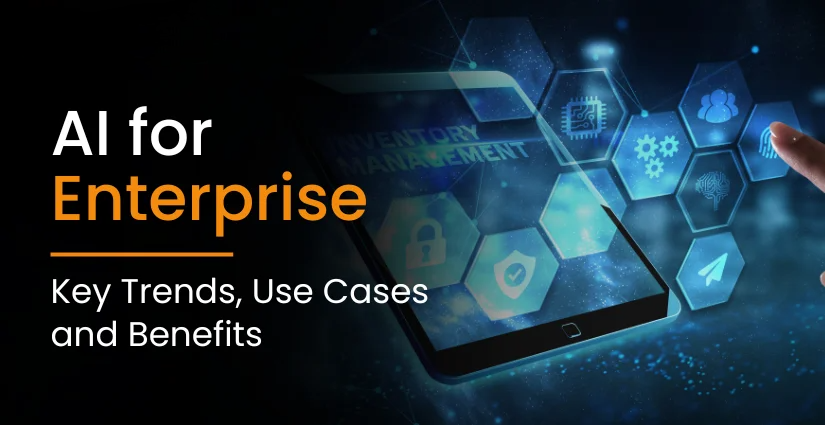
The global enterprise software industry is undergoing one of the biggest transformations in modern business history. Artificial Intelligence is no longer considered an experimental technology used only by large technology companies. Today, AI has become a central business requirement for enterprises across industries such as finance, healthcare, retail, logistics, manufacturing, education, and cybersecurity. Organizations are demanding software products that do more than simply manage workflows or store information. Modern businesses expect software platforms to think intelligently, automate operations, analyze massive datasets, and provide strategic insights in real time. This growing demand is reshaping the B2B software market and forcing vendors to redesign their products around AI-driven experiences. Companies that fail to integrate AI features into their software solutions risk losing enterprise customers to more innovative competitors. As businesses become increasingly data-driven, enterprise clients now see AI as essential for improving efficiency, reducing operational costs, and staying competitive in rapidly evolving markets.
For many years, enterprise software primarily focused on digitizing business operations and improving workflow management. Traditional systems were designed to collect, organize, and display data while depending heavily on human decision-making. However, modern enterprises now face far greater complexity due to global competition, remote work, rising customer expectations, and massive data generation. Businesses can no longer rely only on static software systems that require manual analysis and repetitive human input. AI-powered software introduces intelligence into enterprise operations by automating tasks, predicting outcomes, identifying trends, and improving decision-making processes. This shift is transforming software from passive tools into active business assistants capable of delivering strategic value. Companies increasingly prefer software solutions that can continuously learn and adapt based on user behavior and operational data. Enterprise buyers are now evaluating software products not only for functionality but also for their ability to deliver automation, personalization, and predictive intelligence. This transition represents a fundamental evolution in enterprise technology infrastructure.
Modern enterprises operate in highly competitive environments where speed, efficiency, and innovation determine long-term success. Organizations are under constant pressure to reduce costs while improving productivity and customer satisfaction. AI-powered software helps businesses meet these demands by automating repetitive tasks and enabling employees to focus on higher-value activities. In customer support, AI chatbots can respond instantly to thousands of customer queries simultaneously. In finance, AI systems detect fraudulent transactions within seconds. In cybersecurity, machine learning algorithms monitor networks continuously and identify suspicious behavior before attacks occur. Marketing teams use AI to analyze customer behavior and deliver personalized campaigns that improve engagement and sales. Human resource departments are also leveraging AI-driven recruitment tools to streamline hiring processes. These capabilities allow enterprises to operate faster and more intelligently than traditional systems allow. As competition intensifies globally, businesses increasingly view AI integration as a survival strategy rather than a luxury investment. Companies that fail to adopt intelligent technologies risk losing market share to more technologically advanced competitors.
One of the biggest reasons enterprise organizations demand AI features is the growing importance of real-time business intelligence. Modern companies generate enormous amounts of data every second from customers, supply chains, financial systems, websites, mobile apps, and connected devices. Manually analyzing this information is becoming nearly impossible for human teams alone. AI-powered software can process vast datasets instantly and provide actionable insights that help businesses make faster and more accurate decisions. Predictive analytics systems can forecast customer behavior, inventory demands, market trends, and operational risks with remarkable speed. Enterprise leaders now expect software platforms to proactively identify opportunities and problems before they impact the business. Real-time intelligence allows organizations to respond quickly to changing market conditions and customer expectations. This demand for immediate insights is driving widespread adoption of AI across industries. Software providers that cannot deliver intelligent analytics and automation are increasingly viewed as outdated in today’s enterprise market.
The rapid rise of enterprise AI demand has intensified competition among SaaS and enterprise software companies worldwide. Vendors are now racing to integrate AI-powered capabilities into their products to attract enterprise clients and investors. AI assistants, intelligent search systems, predictive analytics dashboards, automation tools, and recommendation engines are becoming standard features in modern software platforms. Technology companies understand that enterprise buyers increasingly compare products based on AI functionality instead of traditional features alone. This trend is forcing both startups and established software providers to invest heavily in AI research and development. Large enterprise software companies are partnering with AI firms or developing proprietary AI models to maintain market leadership. Smaller startups are positioning themselves as AI-first companies to differentiate their products in crowded B2B markets. The competition to deliver smarter enterprise software is accelerating innovation at unprecedented speed. As AI adoption continues growing, software companies that fail to evolve may struggle to survive in the future digital economy.
The integration of AI into enterprise software is also transforming workplace structures and operational strategies. Businesses are increasingly using AI tools to automate administrative work, customer interactions, data processing, and workflow management. This allows organizations to operate with smaller but more productive teams. Employees are now expected to work alongside AI systems rather than compete against them. In many companies, AI acts as a digital assistant that improves employee efficiency instead of fully replacing human workers. However, the rise of automation is also changing skill requirements across industries. Enterprises are increasingly hiring professionals with expertise in AI management, data analysis, automation systems, and strategic problem-solving. The future workforce will likely require stronger technical and analytical skills as AI becomes embedded into daily business operations. Companies that successfully combine human creativity with AI-driven efficiency may achieve significant long-term advantages in productivity and innovation.
| Feature | Traditional Software | AI-Powered Software |
|---|---|---|
| Customer Support | Manual responses and ticket systems | AI chatbots and virtual assistants |
| Data Analysis | Static reporting dashboards | Predictive and real-time analytics |
| Workflow Management | Manual task execution | Intelligent process automation |
| Cybersecurity | Reactive threat response | AI-powered threat prediction |
| User Experience | Generic interfaces | Personalized recommendations |
| Productivity | Human-dependent operations | Automated optimization systems |
| Decision-Making | Based on historical reports | Real-time AI-driven insights |
| Business Scalability | Requires larger teams | AI-assisted operational scaling |
Enterprise clients are demanding AI features in every software product because businesses today operate in a fast-moving, data-driven, and highly competitive environment. Traditional software systems are no longer enough to meet the growing expectations for speed, automation, intelligence, and real-time decision-making. AI-powered platforms help enterprises improve productivity, reduce costs, strengthen cybersecurity, personalize customer experiences, and make smarter strategic decisions. As AI technology continues advancing, enterprise organizations are increasingly viewing intelligent software as essential for long-term business success rather than optional innovation. This shift is transforming the global B2B software industry and redefining how companies build, sell, and use enterprise technology.