Introduction
Artificial Intelligence (AI) is rapidly transforming industries across the world. From automating business processes and improving customer experiences to powering advanced analytics and cybersecurity systems, AI has become one of the most influential technologies of the modern era. Companies are investing heavily in AI to gain competitive advantages, improve operational efficiency, and accelerate innovation.
However, as AI adoption continues to grow, concerns surrounding privacy, bias, misinformation, security, and accountability are also increasing. Governments and regulatory bodies worldwide are recognizing the need to establish rules and frameworks that ensure AI technologies are developed and used responsibly. As a result, AI regulation is becoming one of the most important forces shaping the future of the technology industry.
The introduction of AI regulations is not only influencing how organizations build AI systems but also changing how businesses manage data, security, compliance, transparency, and risk management. For technology companies, adapting to evolving regulatory requirements is becoming essential for long-term success.
Why Governments Are Regulating AI
AI technologies have the potential to impact nearly every aspect of society. While AI offers enormous opportunities for innovation, it can also create serious risks if left unregulated. Governments are increasingly focused on protecting consumers, ensuring fairness, and preventing harmful uses of AI systems.
Several major concerns are driving global AI regulation efforts.
Data Privacy Risks
AI systems depend heavily on large volumes of data to function effectively. This often includes sensitive customer information, financial records, personal behavior data, and biometric information. Without proper safeguards, businesses may misuse or improperly store this data, creating major privacy risks.
Governments are implementing stricter data protection laws to ensure organizations collect and use data responsibly.
Algorithmic Bias and Discrimination
AI models can unintentionally produce biased outcomes if they are trained on inaccurate or unbalanced datasets. Biased AI systems may discriminate in areas such as hiring, lending, healthcare, and law enforcement.
Regulators want businesses to ensure AI systems operate fairly and transparently without harming specific groups or communities.
Misinformation and Deepfakes
The rise of generative AI has increased concerns about fake content, manipulated media, and misinformation campaigns. Deepfake videos, AI-generated images, and automated misinformation can create social, political, and financial risks.
Governments are now considering laws to regulate synthetic media and require transparency for AI-generated content.
Cybersecurity and National Security Concerns
AI technologies can also be used for cyberattacks, automated hacking, surveillance, and malicious activities. Many governments see AI regulation as necessary to protect national security and critical infrastructure.
As AI capabilities become more advanced, security oversight is becoming a major regulatory priority.
The Impact of AI Regulation on Technology Companies
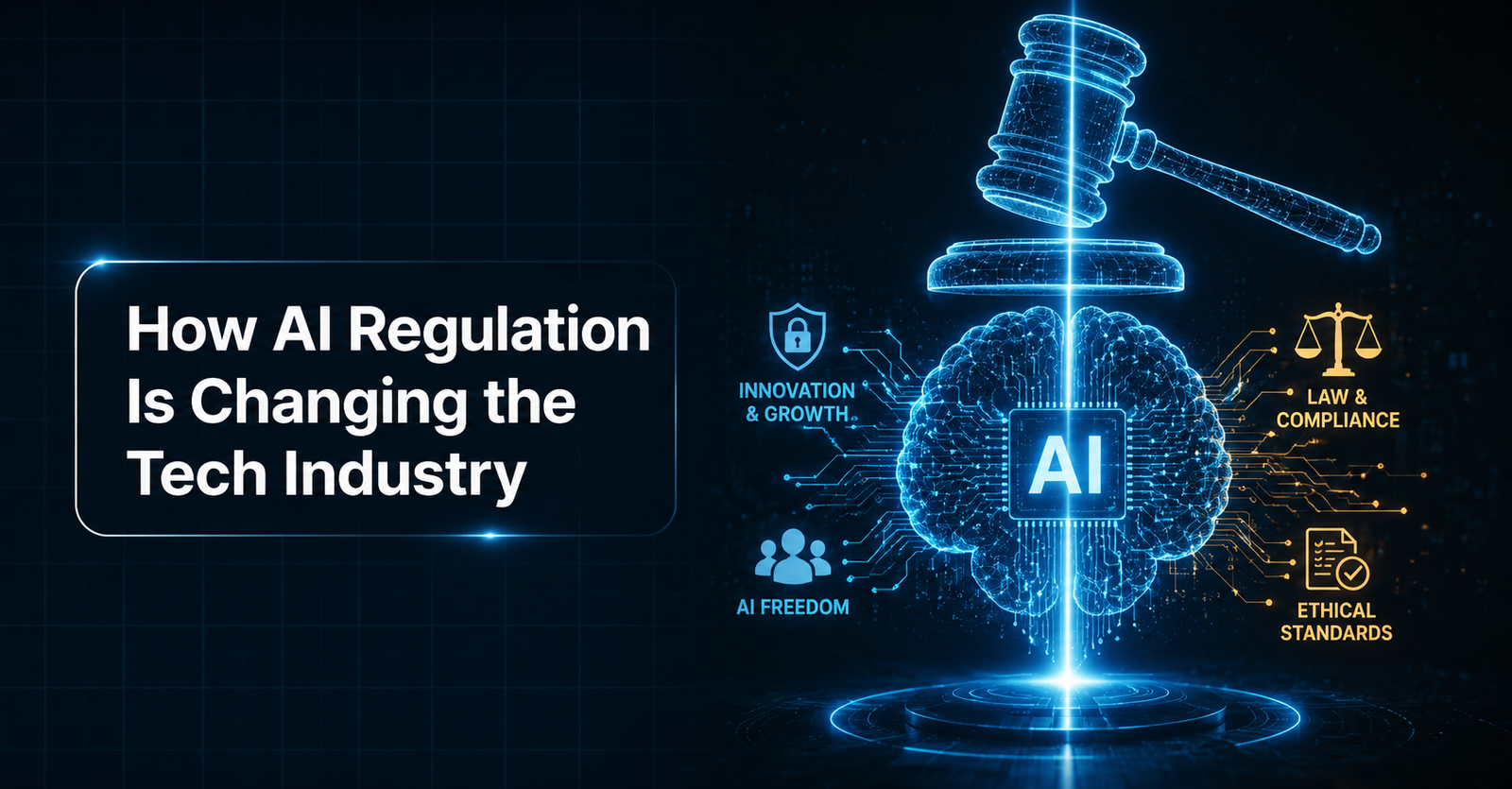
AI regulation is significantly changing how technology companies operate. Businesses can no longer focus solely on innovation and product development; they must also ensure compliance with legal and ethical standards.
This shift is affecting multiple areas of the tech industry.
Increased Focus on AI Governance
Organizations are now building internal AI governance frameworks to manage compliance, accountability, and risk assessment. AI governance involves establishing policies, processes, and oversight mechanisms that ensure AI systems operate responsibly.
Many companies are creating dedicated AI ethics teams and compliance departments to monitor AI development practices.
AI governance strategies often include:
- Risk assessment procedures
- Bias testing frameworks
- Data privacy controls
- Human oversight policies
- Compliance reporting systems
Technology companies that fail to establish strong governance practices may face regulatory penalties and reputational damage.
Changes in AI Development Processes
Regulatory requirements are forcing companies to redesign how AI models are developed and deployed. Businesses now need to incorporate ethical and compliance considerations throughout the AI lifecycle.
This includes:
- Improved data validation
- Transparent model documentation
- Explainable AI systems
- Continuous monitoring
- Security testing
- Responsible data collection practices
AI developers are increasingly required to document how models are trained, what data sources are used, and how decisions are made.
As regulations become stricter, software engineering teams must work more closely with legal, compliance, and security departments.
Growing Demand for Explainable AI
One of the biggest regulatory challenges for AI systems is transparency. Many advanced AI models operate as “black boxes,” meaning users cannot easily understand how decisions are made.
Regulators are pushing companies to adopt Explainable AI (XAI), which helps businesses provide clear explanations for AI-driven decisions.
Explainability is especially important in industries such as:
- Healthcare
- Banking
- Insurance
- Human resources
- Government services
For example, if an AI system denies a loan application or recommends medical treatment, businesses may need to explain how that conclusion was reached.
Explainable AI helps organizations:
- Build customer trust
- Improve accountability
- Detect errors more easily
- Meet compliance standards
- Reduce legal risks
As a result, transparency is becoming a key design requirement for modern AI systems.
Rising Compliance Costs for Businesses
AI regulation is also increasing operational and compliance costs for technology companies. Organizations must invest in legal expertise, governance frameworks, cybersecurity measures, and monitoring systems to remain compliant.
Compliance-related investments may include:
- AI auditing tools
- Data protection infrastructure
- Risk management systems
- Employee compliance training
- External legal consultations
For smaller businesses and startups, these additional costs can create financial challenges. Some companies may struggle to compete with larger organizations that have greater regulatory resources.
However, businesses that proactively invest in compliance may gain stronger market credibility and customer trust over time.
Impact on Innovation and Product Development
Some industry leaders argue that excessive regulation could slow innovation by creating barriers for AI development. Strict approval processes and compliance requirements may delay product launches and increase development complexity.
Startups, in particular, may face challenges navigating evolving regulatory environments while trying to innovate quickly.
At the same time, supporters of regulation believe that responsible oversight is necessary to prevent harmful AI applications and encourage safer innovation.
Well-designed regulations can actually benefit the industry by:
- Increasing public trust in AI technologies
- Reducing unethical AI practices
- Encouraging higher-quality development standards
- Creating clearer operational guidelines
In many cases, regulation is pushing businesses to develop more reliable and trustworthy AI systems.
The Role of Global AI Regulations
Different countries are taking different approaches to AI regulation, creating a complex global compliance landscape for multinational businesses.
Some regions are prioritizing strict oversight and consumer protection, while others are focusing more on innovation and economic competitiveness.
Global AI regulation efforts often focus on areas such as:
- Data privacy
- AI transparency
- Risk classification
- Consumer rights
- Bias prevention
- Security standards
For international technology companies, managing compliance across multiple jurisdictions is becoming increasingly complicated.
Businesses operating globally must continuously monitor regulatory developments and adapt their AI strategies accordingly.
How AI Regulation Is Affecting Consumers
AI regulation is not only impacting businesses—it is also changing the consumer experience.
Stronger AI regulations can help consumers by:
- Protecting personal data
- Reducing discriminatory AI practices
- Increasing transparency
- Improving digital security
- Preventing misinformation
Consumers are becoming more aware of how AI influences their daily lives. As a result, trust and transparency are becoming major competitive advantages for businesses.
Organizations that demonstrate responsible AI practices are more likely to build long-term customer loyalty.
Emerging Trends in AI Compliance
As AI technologies continue evolving, several important regulatory trends are beginning to shape the future of the industry.
AI Auditing and Certification
Businesses may soon face mandatory AI audits to verify compliance with ethical and security standards. Independent certification programs could become common across high-risk industries.
Risk-Based AI Regulation
Governments are increasingly classifying AI systems based on risk levels. High-risk applications such as healthcare diagnostics or autonomous systems may face stricter oversight than low-risk AI tools.
Stronger Data Governance Requirements
Future regulations will likely introduce stricter rules regarding data collection, storage, consent management, and cross-border data transfers.
Greater Accountability Standards
Organizations may be required to maintain clear accountability structures for AI-related decisions and operational risks.
These trends indicate that AI compliance will become a permanent part of enterprise technology strategy.
Preparing Businesses for the Future of AI Regulation
Technology companies must take proactive steps to prepare for evolving AI regulations rather than waiting for enforcement actions.
Businesses should focus on:
- Building strong AI governance frameworks
- Investing in explainable AI technologies
- Conducting regular compliance audits
- Training employees on AI ethics and regulations
- Strengthening cybersecurity protections
- Improving data privacy management
Organizations that prioritize responsible AI development will be better prepared to adapt to future regulatory changes.
AI regulation should not be viewed solely as a legal burden. It can also serve as an opportunity to improve operational quality, customer trust, and long-term sustainability.
Conclusion
AI regulation is rapidly reshaping the technology industry. As governments introduce new laws and compliance standards, businesses must adapt to a future where responsible AI development is just as important as innovation itself.
Regulations addressing privacy, transparency, bias, accountability, and cybersecurity are forcing technology companies to rethink how AI systems are designed, deployed, and managed. Although compliance may increase operational complexity and costs, it also encourages safer, more ethical, and more trustworthy AI ecosystems.
Organizations that proactively embrace AI governance and regulatory compliance will not only reduce legal and reputational risks but also strengthen customer confidence and competitive positioning. In the years ahead, responsible AI practices will become a defining factor for success in the global technology landscape.