Future of Enterprise Resource Planning ERP in a Cloud-First World ,Enterprise Resource Planning (ERP) systems have long served as the operational backbone of businesses. From finance and procurement to human resources, supply chain management, customer operations, and reporting, ERP platforms have historically brought business functions together under one centralized system. For decades, organizations invested heavily in on-premise ERP infrastructure to create operational consistency and improve decision-making. However, as businesses become increasingly digital, connected, and data-driven, traditional ERP models are being redefined.
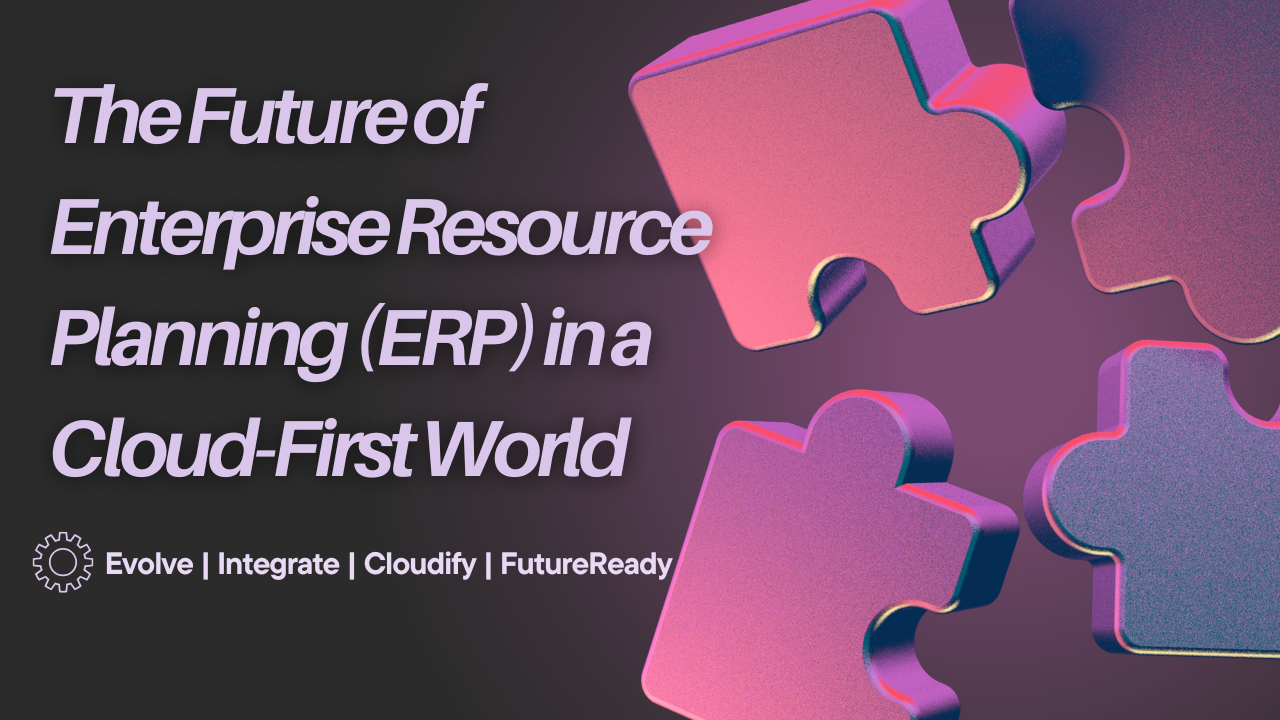
The Future of Enterprise Resource Planning (ERP) in a Cloud-First World is becoming a critical priority for organizations pursuing digital transformation. As businesses adopt intelligent technologies, the Future of Enterprise Resource Planning (ERP) in a Cloud-First World will increasingly focus on automation, scalability, and real-time decision-making. The Future of Enterprise Resource Planning (ERP) in a Cloud-First World is also enabling stronger collaboration, improved operational visibility, and more agile business processes. Looking ahead, the Future of Enterprise Resource Planning (ERP) in a Cloud-First World will continue to shape how enterprises innovate, compete, and grow in an increasingly connected marketplace.
A cloud-first approach does not simply mean moving existing systems online. It represents a broader shift in business architecture and operating philosophy. Companies are prioritizing flexibility over rigid infrastructure, subscription-based models over large upfront investments, and continuous improvement over periodic upgrades. In this environment, the future of ERP is becoming smarter, faster, more connected, and significantly more strategic.
The Future of Enterprise Resource Planning (ERP) in a Cloud-First World is also reshaping enterprise efficiency by reducing dependency on manual processes. Through automation and intelligent workflows, the Future of Enterprise Resource Planning (ERP) in a Cloud-First World enables companies to streamline operations and reduce human error at scale.
Another important aspect of the Future of Enterprise Resource Planning (ERP) in a Cloud-First World is its role in improving cross-functional collaboration. The Future of Enterprise Resource Planning (ERP) in a Cloud-First World allows teams across finance, HR, supply chain, and sales to work on shared, real-time data environments.
Ultimately, the Future of Enterprise Resource Planning (ERP) in a Cloud-First World represents a long-term transformation in enterprise technology. The Future of Enterprise Resource Planning (ERP) in a Cloud-First World will continue to evolve as organizations adopt AI, cloud-native systems, and intelligent automation at scale.
Data integration is another area where cloud-first ERP is creating significant change. Businesses today rely on numerous digital platforms—customer relationship management systems, marketing tools, analytics dashboards, collaboration software, e-commerce platforms, and external databases. Operating these systems independently often creates fragmented information and inconsistent reporting.
Cloud ERP supports broader integration across business ecosystems, creating a more unified operational environment. By connecting multiple systems and centralizing information flows, organizations gain stronger visibility into performance and improve cross-functional collaboration.
Customer expectations are also influencing ERP evolution. Businesses are under increasing pressure to deliver faster services, more personalized experiences, and greater operational responsiveness. ERP systems now play an important role in enabling these outcomes.
Security and compliance continue to remain critical considerations in cloud ERP adoption. While concerns around data privacy and control once slowed cloud migration, advancements in security architecture have significantly improved enterprise confidence. Modern cloud ERP environments increasingly incorporate encryption, identity management, access controls, continuous monitoring, and automated compliance support.
However, adopting cloud ERP does not eliminate responsibility. Organizations must establish strong governance practices, user management frameworks, and cybersecurity policies to fully realize the benefits of cloud environments.
Another emerging trend is modular ERP adoption. Historically, ERP implementations were large-scale, multi-year transformation projects that required replacing entire systems simultaneously. This often created complexity, high costs, and operational risk.
Cloud-first ERP introduces a more flexible approach. Enterprises can implement modules gradually based on business priorities. Companies may modernize finance first, followed by supply chain, procurement, operations, or workforce management. This phased strategy reduces disruption and allows organizations to generate value earlier in the transformation process.
The rise of industry-specific ERP solutions is also shaping the future. Organizations increasingly seek platforms designed around sector-specific needs rather than generic enterprise functionality. Manufacturing, healthcare, retail, education, logistics, and financial services each have unique operational requirements that modern ERP providers are addressing through specialized capabilities.
At the same time, user experience is becoming a stronger focus area. Traditional ERP systems often developed a reputation for being complex and difficult to navigate. Future ERP platforms are prioritizing intuitive interfaces, personalized dashboards, mobile accessibility, and simplified workflows to encourage adoption and improve employee productivity.
Despite these advantages, ERP transformation remains a significant organizational undertaking. Migration challenges, process redesign, integration complexity, employee adoption, and change management all influence implementation success. Technology alone cannot drive transformation; businesses must align people, processes, and strategy alongside system modernization.
Organizations that approach ERP as a long-term business capability rather than a one-time technology project are more likely to achieve meaningful outcomes.
Looking ahead, ERP systems will continue evolving into intelligent digital platforms that connect operations, automate decision-making, and support continuous business adaptation. The future of ERP will not simply be about managing enterprise resources, it will be about enabling enterprises to operate more intelligently in increasingly dynamic environments.
In a cloud-first world, ERP is moving beyond administration and becoming an engine for agility, innovation, and competitive growth. Businesses that embrace this evolution early will be better positioned to build resilient operations and create sustainable value in the years ahead.
The Shift from System Management to Business Enablement
The Future of Enterprise Resource Planning (ERP) in a Cloud-First World: One of the most significant changes in the evolution of ERP is the way organizations perceive its purpose. Earlier, ERP systems were largely viewed as operational tools responsible for maintaining records, processing transactions, and ensuring administrative efficiency. Success was often measured by system uptime and process standardization.
In a cloud-first environment, that perspective is changing. ERP is increasingly becoming a business enablement platform that supports strategic growth, innovation, and organizational agility. Instead of simply helping teams execute existing processes, modern ERP solutions allow enterprises to redesign processes entirely. Businesses can launch new offerings faster, enter new markets with fewer infrastructure limitations, and respond more effectively to changing customer expectations.
This transition reflects a larger movement where technology decisions are directly connected to business outcomes. ERP is no longer operating in the background, it is becoming central to enterprise strategy.
Real-Time Visibility and Faster Decision-Making
Modern organizations operate in environments where conditions can change rapidly. Market demand shifts, supply chain disruptions, customer preferences, and economic conditions require businesses to make decisions with greater speed and accuracy.
Cloud ERP supports this requirement by enabling real-time access to operational and financial information across departments. Rather than relying on fragmented reports created after events occur, decision-makers can monitor business performance continuously.
This real-time visibility allows leadership teams to identify inefficiencies faster, allocate resources more effectively, and improve responsiveness. Whether managing inventory levels, monitoring sales performance, or evaluating operational costs, cloud ERP reduces delays between insight and action.
The Growing Importance of Automation Within ERP
Automation is becoming one of the most valuable capabilities within modern ERP environments. Many business processes still involve repetitive manual work that consumes time and increases the possibility of human error.
Cloud-based ERP platforms increasingly automate activities such as invoice processing, approvals, inventory updates, expense tracking, procurement workflows, employee onboarding, and reporting generation. Automation not only improves efficiency but also creates more capacity for employees to focus on analytical, creative, and strategic responsibilities.
As businesses continue to scale, automation within ERP will become essential for maintaining productivity without proportionally increasing operational complexity.
ERP and the Rise of Connected Business Ecosystems
Businesses no longer operate as isolated entities. Suppliers, logistics providers, distributors, customers, technology vendors, and service partners all contribute to increasingly interconnected business ecosystems.
Future ERP systems are expected to strengthen these connections through improved interoperability and collaborative capabilities. Cloud architecture allows organizations to exchange information more efficiently across stakeholders, creating greater transparency and operational alignment.
This connected approach can improve forecasting accuracy, reduce delays, optimize inventory planning, and create more responsive customer experiences.
Sustainability and ERP’s Emerging Role
Sustainability is becoming an important consideration in enterprise operations, and ERP systems are beginning to support these goals. Businesses are increasingly expected to monitor resource usage, reduce waste, optimize supply chains, and improve environmental accountability.
Cloud ERP platforms provide stronger reporting capabilities and operational visibility that help organizations measure sustainability initiatives more effectively. By integrating environmental and operational metrics into business planning, ERP can support more responsible and efficient decision-making.
Preparing Organizations for Continuous Change
Perhaps the most important characteristic of future ERP systems is adaptability. The pace of business transformation continues to accelerate, and organizations cannot afford systems that become outdated within a few years.
Cloud-first ERP enables continuous updates, faster deployment of new capabilities, and ongoing optimization without requiring major disruptions. This creates an environment where businesses remain prepared for future technologies, changing market conditions, and evolving customer expectations.
Ultimately, the future of ERP is not defined by where the software is hosted, it is defined by how effectively it enables organizations to remain flexible, connected, and prepared for constant change.