Why Zero-Click Marketing Is Reshaping Digital Strategy
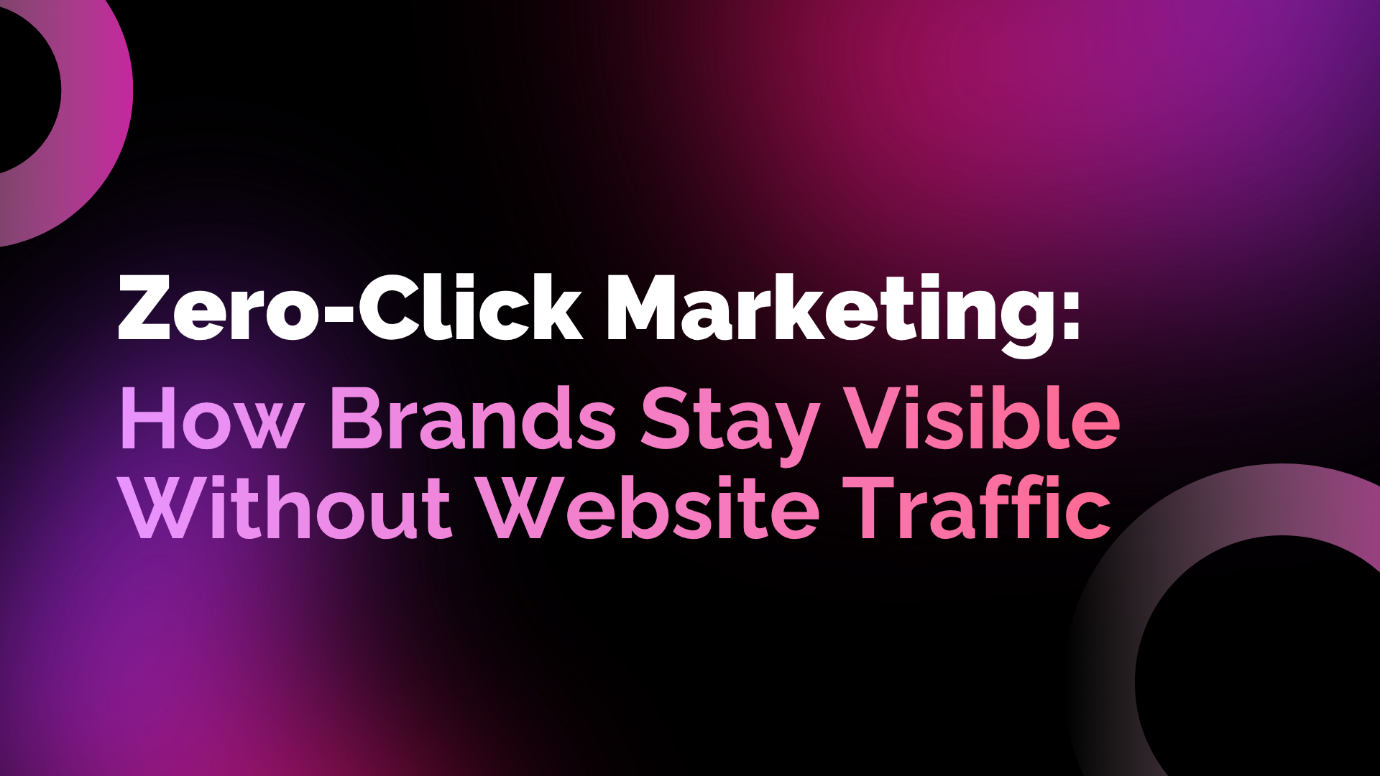
For years, digital marketing success was measured using a familiar formula: attract attention, drive clicks, bring users to the website, and convert them into customers. Traffic became one of the most visible indicators of marketing performance, and strategies across SEO, paid media, email, and content were designed around maximizing visits. But the digital environment is changing rapidly. Today, more users discover information, compare options, make decisions, and even complete actions without ever visiting a website. This shift has given rise to what many marketers now call zero-click marketing, a model where visibility, influence, and business outcomes happen outside owned digital properties.
Zero-Click Marketing is becoming one of the most important shifts in modern digital strategy. As consumers increasingly receive answers directly from search engines, AI assistants, social platforms, and online communities, brands can no longer depend solely on website traffic to generate awareness. Instead, businesses must focus on creating a strong presence across the digital ecosystems where audiences actively seek information and make decisions.
Zero-Click Marketing: At first glance, the concept sounds counterintuitive. If users are not visiting the website, how can marketing still create impact? The answer lies in understanding how digital behaviour has evolved. Search engines provide direct answers. AI assistants :summarize information instantly. Social platforms prioritize native content. Professional networks encourage in-platform engagement. Marketplaces, review platforms, communities, and recommendation systems increasingly become decision environments rather than discovery channels.
Why B2B Buyers Are Driving the Zero-Click Shift
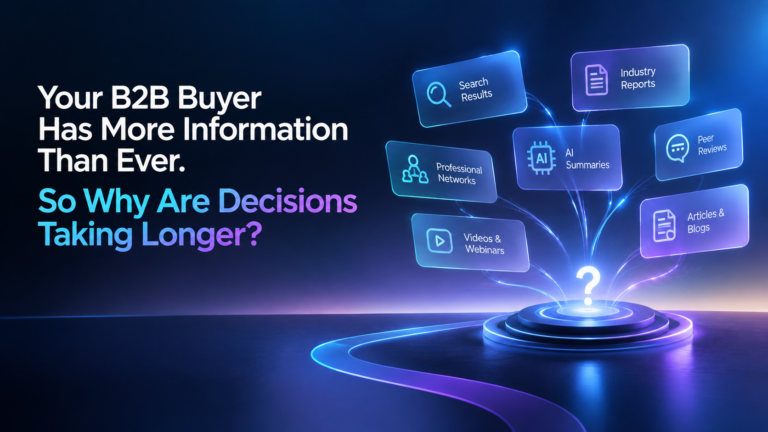
For B2B organizations, this shift is especially important because buyers are becoming more independent. Decision-makers conduct research before speaking with a sales team. They consume reports, watch videos, compare vendors, read expert opinions, interact with AI-generated summaries, and validate choices through multiple external sources. By the time they visit a website, or sometimes even before they contact a business, they may already have formed a strong impression of a brand.
Zero-Click Marketing is becoming one of the most important shifts in modern digital strategy. As consumers increasingly receive answers directly from search engines, AI assistants, social platforms, and online communities, brands can no longer depend solely on website visits to generate awareness. Instead, businesses must focus on creating a strong presence across the digital ecosystems where audiences actively seek information and make decisions.
This creates a new challenge for marketers. The goal is no longer simply attracting users to a destination; it is becoming visible wherever decisions happen.
Traditional digital strategies treated websites as the center of the customer journey. Marketing teams invested heavily in landing pages, conversion funnels, and click optimization. While these elements remain important, relying entirely on website traffic increasingly limits reach. Zero-click marketing shifts focus toward distributing value directly into ecosystems where audiences already spend time.
One of the strongest drivers of this transformation is AI-powered discovery. Search experiences are evolving from link directories into answer engines. Instead of presenting ten blue links and asking users to choose, AI increasingly summarizes, interprets, and recommends content immediately. This changes the economics of attention. Businesses are competing not only for clicks but for inclusion within answers.
That means content strategies must evolve. Content can no longer exist only as long-form articles hidden behind websites. It needs to become modular, distributable, and machine-readable. Insights should appear as executive posts, social content, short-form educational assets, data snippets, videos, expert commentary, downloadable frameworks, and structured knowledge.
This does not mean abandoning websites. Rather, websites become credibility hubs instead of traffic destinations. Their role shifts from attracting attention to validating trust once discovery has already happened elsewhere.
Brand visibility in a zero-click world increasingly depends on authority and context. Businesses that consistently contribute expertise across channels become easier for both humans and algorithms to recognize. Thought leadership therefore becomes more than a branding exercise, it becomes a discoverability strategy.
This is why B2B companies are investing more heavily in founder branding, employee advocacy, community engagement, podcasts, webinars, industry conversations, and educational content. Buyers trust expertise demonstrated publicly more than promotional claims presented privately.
Another major change involves measurement. Marketing teams have historically optimized for impressions, clicks, sessions, and conversion paths. But zero-click environments require broader success indicators. Share of voice, branded search growth, engagement quality, content saves, mentions, recommendation frequency, community participation, and influenced pipeline become increasingly important metrics.
This transition is forcing marketing leaders to rethink attribution models as well. Not every business result will have a visible click attached to it. A prospect may discover a company through AI-generated recommendations, validate through social content, engage with employee thought leadership, and only later enter the sales process. Marketing influence becomes more distributed and less linear.
Content creation itself also changes in this environment. Instead of asking, “How do we get people onto our website?” teams begin asking, “How do we deliver value before people visit?” Educational content becomes more useful than promotional messaging. Clear opinions outperform generic information. Original insights create stronger visibility than recycled trends.
B2B organizations that succeed in zero-click environments often operate like media companies. They publish consistently, build recognizable expertise, and create assets designed for consumption across multiple platforms. The objective becomes owning attention, not necessarily owning every interaction.
Importantly, zero-click marketing does not eliminate conversion; it changes where conversion begins. Buyers increasingly form opinions before direct engagement. The brands that remain visible throughout that invisible journey gain a disproportionate advantage.
There are challenges, of course. Brands lose some control over user experience when interactions happen on external platforms. Attribution becomes more complex. Algorithms change frequently. Content ownership becomes fragmented. But these challenges also create opportunities for organizations willing to adapt faster than competitors.
The companies that win in the coming years will not necessarily be those generating the highest website traffic. They will be the ones creating the strongest presence across digital ecosystems, appearing in conversations, influencing decisions, and becoming recognizable sources of expertise wherever audiences seek information.
Conclusion
Zero-click marketing represents more than a change in channel performance it reflects a broader shift in how people discover, evaluate, and trust brands. In an AI-driven and platform-first environment, visibility is no longer defined by visits alone. Businesses must learn to distribute knowledge, build authority, and create meaningful interactions beyond their websites. The future of marketing will belong to brands that understand one simple reality: customers do not always need to click to be influenced, but they do need reasons to remember, trust, and choose.