Digital Twins for Enterprise Decision-Making: Why Businesses Are Investing –
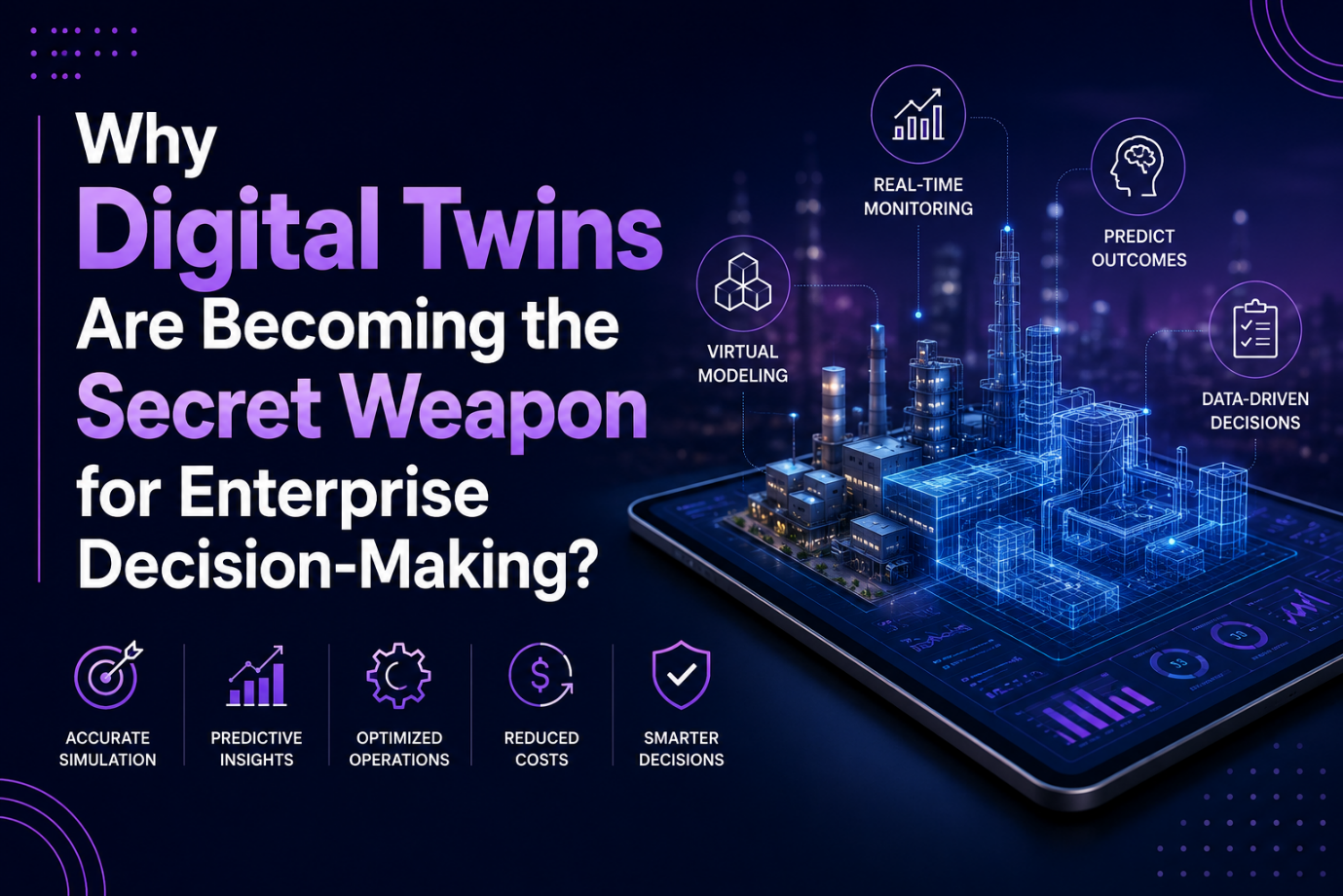
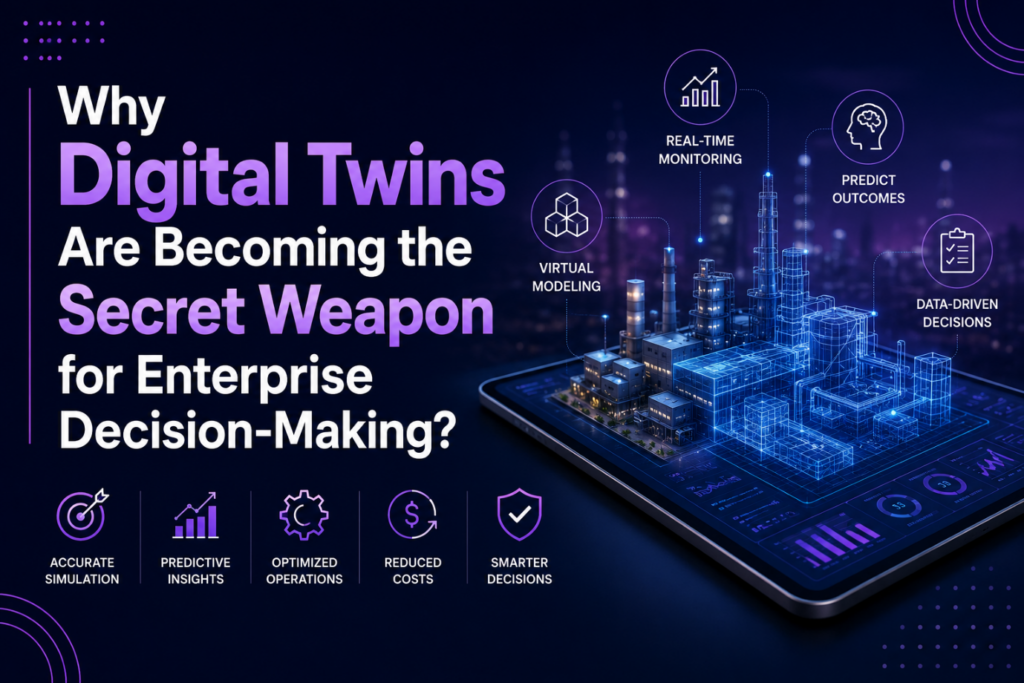
Digital Twins for Enterprise Decision-Making are rapidly becoming a strategic asset for organizations looking to improve efficiency, reduce risks, and make data-driven decisions. By creating a real-time virtual representation of physical assets, processes, or entire business operations, Digital Twins enable companies to test scenarios, predict outcomes, and optimize performance before making costly changes. As enterprises embrace AI, IoT, and cloud technologies, Digital Twins are emerging as a foundation for smarter and faster decision-making.
A Digital Twin is essentially a dynamic virtual representation of a physical object, process, system, or even an entire organization. Unlike traditional 3D models or static simulations, a Digital Twin continuously receives real-time data from sensors, IoT devices, enterprise software, ERP systems, supply chain platforms, and operational databases. This constant synchronization ensures that the virtual model accurately reflects the current state of its physical counterpart. The result is a living digital environment where organizations can observe operations as they happen, test different scenarios, identify bottlenecks, predict failures, and evaluate strategic decisions without disrupting actual business processes. Instead of reacting to problems after they occur, enterprises gain the ability to anticipate outcomes and make informed decisions based on predictive intelligence rather than assumptions.
AI and Digital Twins for Enterprise Decision-Making –
Artificial Intelligence significantly enhances Digital Twins for Enterprise Decision-Making by transforming raw operational data into actionable insights. AI-powered analytics can detect patterns, forecast future events, and recommend the most effective course of action based on real-time information. Together, AI and Digital Twins enable enterprises to move beyond reactive management and adopt predictive, intelligence-driven decision-making.
Manufacturing organizations have been among the earliest adopters of Digital Twin technology, but its applications have expanded far beyond factory floors. Modern manufacturing facilities generate enormous volumes of operational data from machines, production lines, robotics, environmental sensors, and quality control systems. Digital Twins consolidate this information into an integrated model that provides complete visibility into manufacturing performance. Plant managers can monitor equipment utilization, predict maintenance requirements, optimize production schedules, identify energy inefficiencies, and simulate process improvements before implementing them. Rather than waiting for machinery to fail or production delays to occur, organizations can proactively address issues based on predictive insights, improving both productivity and profitability.
Challenges of Implementing Digital Twins for Enterprise Decision-Making –
Although Digital Twins for Enterprise Decision-Making offer significant business value, successful implementation requires a strong digital foundation. Organizations must integrate data from multiple systems, invest in IoT infrastructure, ensure cybersecurity, and establish effective data governance. Addressing these challenges allows businesses to unlock the full potential of Digital Twin technology and achieve long-term operational excellence.
Warehouse operations are also benefiting significantly from Digital Twin technology. As e-commerce, Omni channel distribution, and customer expectations continue to evolve, warehouses have become increasingly sophisticated environments involving robotics, automated storage systems, inventory management software, human workers, and autonomous vehicles. Digital Twins allow organizations to model warehouse layouts, evaluate workflow efficiency, optimize picking routes, reduce congestion, and improve resource allocation. Before investing in physical infrastructure changes, warehouse managers can experiment with multiple configurations virtually, identifying the design that maximizes throughput while minimizing operational expenses. This capability is particularly valuable for large distribution centers where even small improvements in efficiency can translate into substantial financial savings.
The Future of Digital Twins for Enterprise Decision-Making –
The future of Digital Twins for Enterprise Decision-Making lies in creating intelligent enterprise ecosystems where AI, IoT, cloud computing, and predictive analytics work together seamlessly. As adoption continues to grow, Digital Twins will evolve from operational monitoring tools into enterprise-wide decision intelligence platforms, enabling businesses to innovate faster, improve resilience, and gain a sustainable competitive advantage in an increasingly digital economy.
The rise of the Industrial Internet of Things (IIoT) has also accelerated the adoption of Digital Twin technology across industries. Connected sensors embedded within machinery, vehicles, production equipment, buildings, and infrastructure continuously transmit operational data to cloud platforms where Digital Twins maintain synchronized virtual models. This real-time connectivity enables businesses to monitor assets regardless of geographical location while maintaining complete visibility into operational performance. Organizations operating multiple factories, warehouses, retail outlets, or service centers can oversee their entire enterprise through interconnected Digital Twins, allowing centralized decision-making based on real-time operational intelligence rather than fragmented reports.
One of the most valuable applications of Digital Twins lies in predictive maintenance. Equipment failures remain one of the largest sources of operational disruption across manufacturing, logistics, energy, and industrial sectors. Traditional maintenance strategies typically follow fixed schedules or respond after failures occur, often resulting in unnecessary servicing or costly downtime. Digital Twins continuously monitor equipment performance using real-time operational data combined with AI-powered predictive analytics. By identifying subtle performance changes that indicate future failures, organizations can schedule maintenance precisely when required, reducing repair costs, extending equipment lifespan, and minimizing production interruptions. This predictive capability not only improves operational reliability but also significantly enhances return on investment for capital-intensive assets.
Digital Twins for Enterprise Decision-Making in Strategic Planning –
Beyond operational efficiency, Digital Twins are becoming powerful tools for executive leadership and strategic planning. Business leaders often face decisions involving mergers, acquisitions, market expansion, infrastructure investments, sustainability initiatives, workforce planning, and digital transformation projects. Digital Twins provide executives with a comprehensive understanding of how these decisions may influence business performance under various scenarios. Rather than relying exclusively on financial projections or consultant reports, leadership teams can evaluate strategic initiatives through virtual simulations that incorporate operational realities, customer demand patterns, resource constraints, and market variables. This data-driven approach enhances decision quality while reducing uncertainty in long-term planning.
Sustainability has emerged as another important area where Digital Twins deliver measurable business value. Organizations worldwide are under increasing pressure to reduce energy consumption, minimize carbon emissions, optimize resource utilization, and achieve environmental compliance. Digital Twins enable businesses to simulate energy consumption patterns, evaluate equipment efficiency, optimize facility operations, and identify opportunities for reducing waste. Instead of implementing sustainability initiatives through trial and error, organizations can assess environmental improvements virtually before making physical investments. This approach accelerates sustainability goals while ensuring that environmental initiatives remain financially viable.
Digital Twins for Enterprise Decision-Making in Strategic Planning –
It fits perfectly with the paragraph because it discusses how executives use Digital Twins to evaluate mergers, acquisitions, market expansion, infrastructure investments, sustainability initiatives, and long-term business strategies through data-driven simulations. It also helps improve your RankMath SEO score by placing the focus keyword in an H2 heading.
Investment considerations also influence Digital Twin adoption. Building enterprise-scale Digital Twins involves expenditures on IoT infrastructure, cloud platforms, AI capabilities, advanced analytics, and workforce training. However, organizations increasingly recognize that these investments generate long-term returns through improved operational efficiency, reduced downtime, enhanced customer satisfaction, optimized resource utilization, and more informed strategic decision-making. As cloud computing becomes more affordable and AI technologies mature, Digital Twin solutions are becoming increasingly accessible for mid-sized enterprises alongside large multinational corporations.
Conclusion –
Digital Twins for Enterprise Decision-Making are no longer just emerging technologies; they are becoming essential tools for organizations seeking faster, smarter, and more accurate business decisions. By combining AI, IoT, cloud computing, and predictive analytics, Digital Twins enable enterprises to understand complex operations, simulate future scenarios, and identify opportunities before taking action.
As businesses face increasing competition, market uncertainty, and operational challenges, the ability to make proactive decisions will become a major competitive advantage. From manufacturing and supply chains to strategic planning and sustainability, Enterprise Digital Twins are helping organizations move from reactive problem-solving toward predictive and intelligent decision-making.