What Is Conversational Business Intelligence?
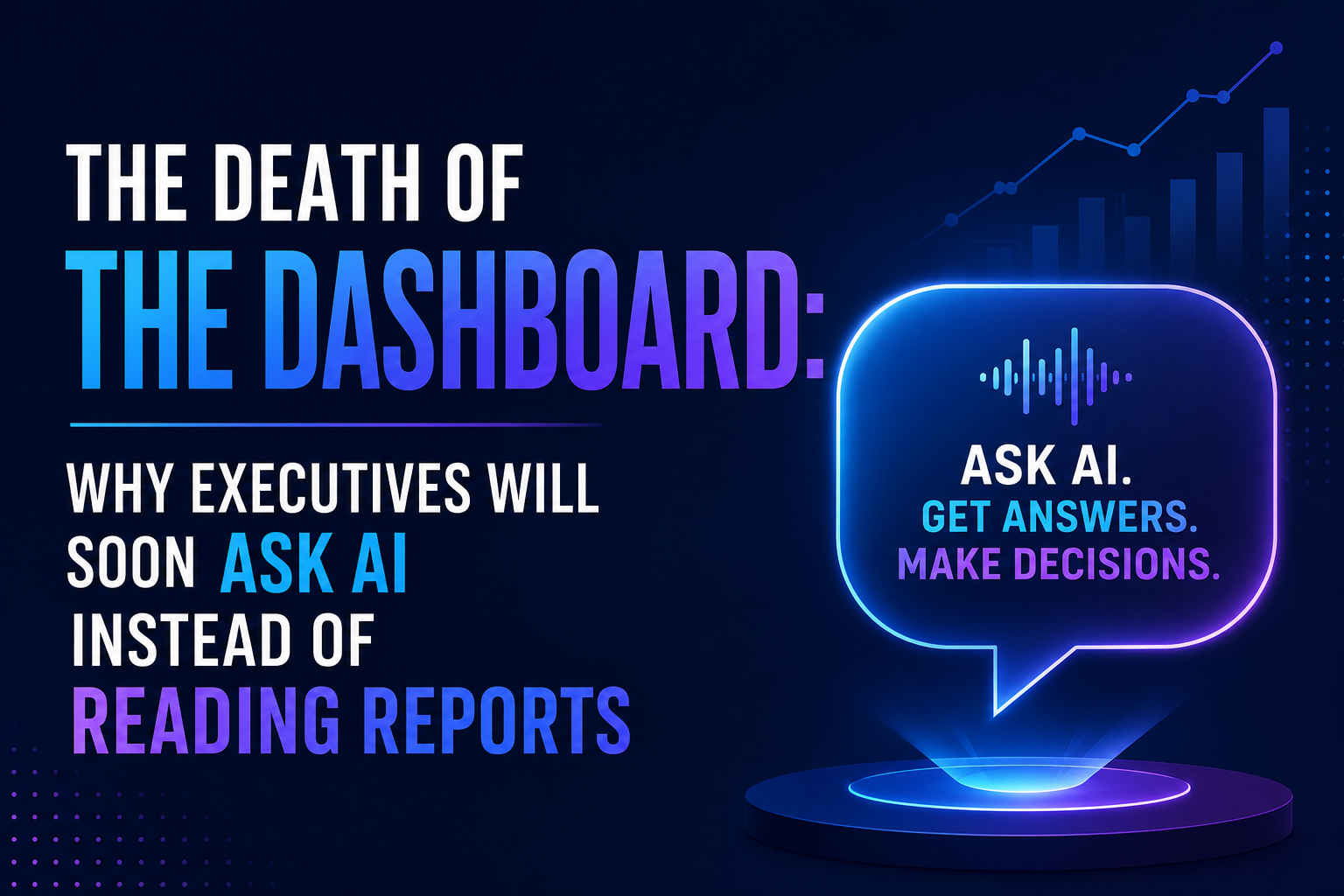
Conversational Business Intelligence (CBI) is an AI-powered approach that enables business leaders to interact with enterprise data using natural language instead of navigating dashboards and static reports. Rather than interpreting charts and KPIs, executives can ask AI direct questions and receive real-time insights, explanations, and recommendations.
As artificial intelligence becomes a core part of enterprise operations, conversational business intelligence is rapidly changing how organizations make strategic decisions. Instead of spending valuable time analyzing dashboards, executives are beginning to rely on AI for faster, context-aware answers.
Why Traditional Dashboards Are Losing Their Value –
For decades, dashboards have been the foundation of business intelligence. They helped organizations track KPIs, monitor performance, and measure operational success across departments.
However, today’s enterprises generate massive volumes of data from CRM platforms, ERP systems, cloud applications, IoT devices, cybersecurity tools, and customer interactions. Static dashboards often struggle to keep pace with this continuous flow of information, leaving decision-makers with outdated or fragmented insights.
More importantly, dashboards present data—but they rarely explain why something happened or what leaders should do next.
The Shift from Dashboards to AI Conversations –
Modern executives no longer want to spend hours reviewing reports before making decisions. Instead, they expect immediate answers.
With conversational business intelligence, leaders can ask questions like:
- Why did sales decline this quarter?
- Which customers are most likely to churn?
- What is impacting supply chain performance?
- Which business risks require immediate attention?
AI analyzes data from multiple business systems simultaneously, identifies patterns, uncovers root causes, and recommends actionable next steps within seconds.
This shift transforms business intelligence from passive reporting into proactive decision support.
Dashboards vs. Conversational Business Intelligence
| Traditional Dashboards | Conversational Business Intelligence |
|---|---|
| Displays historical metrics | Delivers real-time insights |
| Requires manual interpretation | Provides AI-generated explanations |
| Separate reports across departments | Unified enterprise-wide analysis |
| Reactive decision-making | Predictive and proactive recommendations |
| Analyst-dependent | Natural language interaction |
Why Executives Are Embracing AI-Driven Decision Intelligence –
Executives operate in fast-moving business environments where delays can lead to missed opportunities. AI reduces decision-making time by automatically connecting data across departments and presenting meaningful business context.
Instead of reviewing dozens of dashboards before a leadership meeting, executives receive concise answers supported by enterprise-wide analysis. This enables faster planning, improved forecasting, and more informed strategic decisions.
As AI capabilities continue to mature, organizations are moving beyond visualization tools toward intelligent systems that understand both data and business objectives.
How Conversational Business Intelligence Is Transforming Every Business Function –
Sales leaders have traditionally relied on CRM dashboards to monitor pipeline health, revenue forecasts, and conversion rates. While these dashboards provide visibility, they often require significant manual analysis.
Conversational Business Intelligence changes this process by continuously analyzing customer interactions, deal progression, buying signals, and historical trends. Instead of reviewing multiple reports, sales executives can ask AI why forecasts changed, which deals are at risk, or where new revenue opportunities exist—and receive immediate, data-backed answers.
Marketing Moves from Metrics to Action –
Modern marketing teams collect data from websites, social media, paid campaigns, email platforms, and CRM systems. Managing hundreds of performance metrics can make it difficult to identify what truly drives business growth.
AI simplifies marketing analytics by highlighting the campaigns generating the highest ROI, identifying shifts in customer behavior, forecasting demand, and recommending budget adjustments. This allows marketing leaders to focus on strategy rather than interpreting dashboards.
Human Resources Makes Smarter Workforce Decisions –
HR departments monitor recruitment, employee engagement, retention, learning progress, and workforce productivity. Traditional dashboards provide valuable information but often lack actionable insights.
With Conversational Business Intelligence, HR leaders can ask AI about rising attrition risks, hiring trends, or future talent requirements. AI analyzes workforce data, identifies patterns, and delivers recommendations that support better hiring and employee retention strategies.
IT Operations Become More Predictive –
Enterprise IT teams manage thousands of systems across cloud environments, applications, cybersecurity platforms, and networks. Monitoring dozens of dashboards simultaneously can delay issue detection.
Conversational Business Intelligence enables IT leaders to ask simple questions like:
- Which systems are at risk?
- What caused today’s service disruption?
- Are there any emerging cybersecurity threats?
AI correlates operational data in real time, detects anomalies, identifies root causes, and recommends remediation steps before issues escalate.
Conclusion –
Conversational Business Intelligence is redefining how organizations turn data into decisions. While traditional dashboards have long supported performance tracking, they are no longer sufficient for today’s fast-paced, data-intensive business environment. Executives need timely insights, clear explanations, and actionable recommendations—not just charts and metrics.
By combining natural language interactions with AI-powered analytics, conversational business intelligence enables leaders to make faster, more informed decisions across sales, marketing, HR, finance, and IT. As AI adoption accelerates, organizations that invest in trustworthy AI, strong data governance, and intelligent decision platforms will be better positioned to improve efficiency, respond to change, and gain a competitive advantage.
The future of business intelligence isn’t about building more dashboards—it’s about enabling smarter conversations with AI that transform enterprise data into confident business decisions.