Introduction
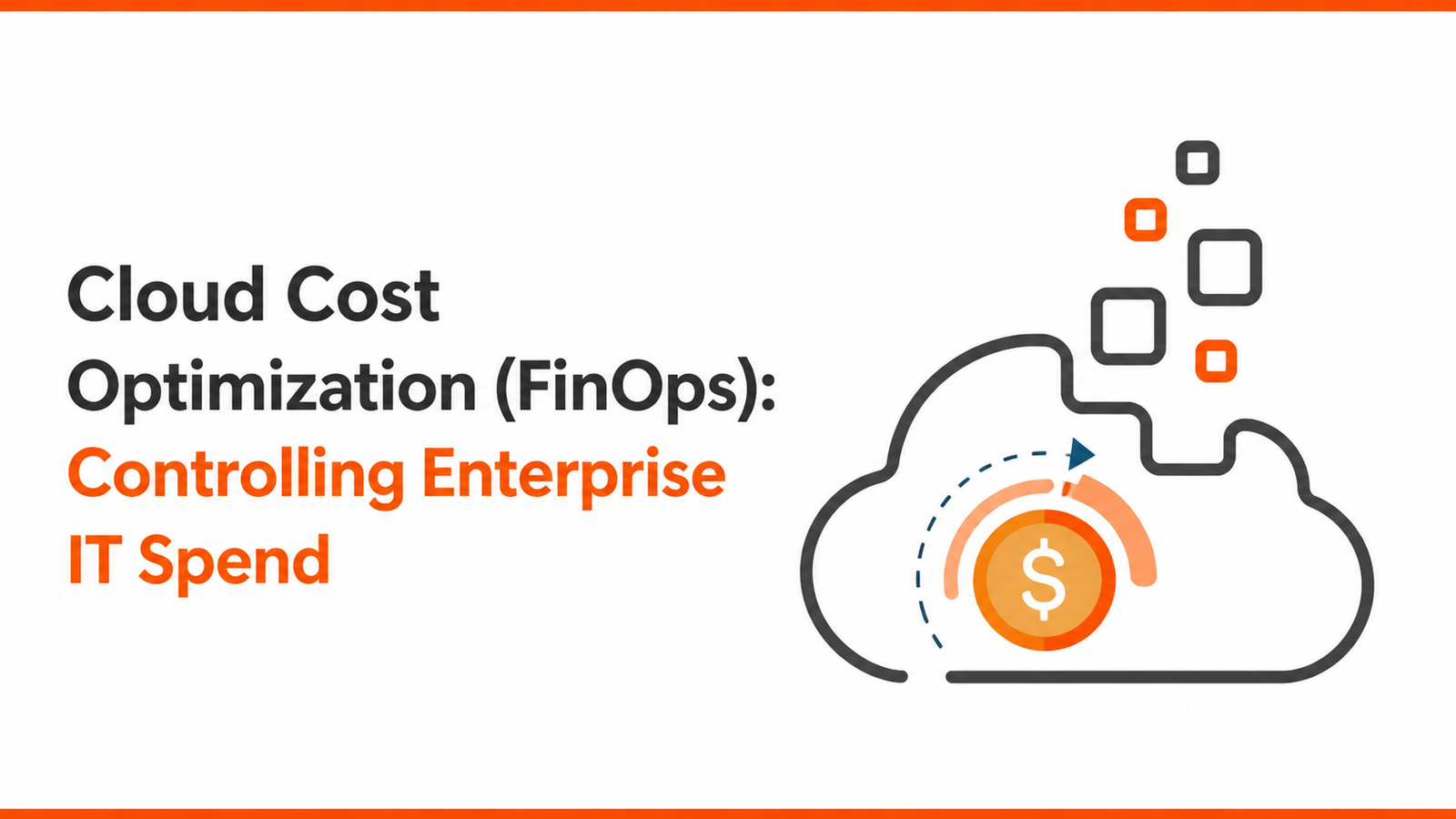
As organizations increasingly adopt cloud technologies, managing cloud costs has become a critical priority for IT leaders and finance teams alike. While the cloud offers scalability, flexibility, and innovation, it also introduces complex pricing models that can quickly lead to overspending if not properly managed. In 2026, Cloud Cost Optimization—driven by FinOps (Financial Operations)—has emerged as a strategic discipline that helps enterprises gain visibility, control, and accountability over their cloud investments.
FinOps is not just about reducing costs; it is about maximizing the business value of every dollar spent in the cloud. It brings together finance, engineering, and operations teams to create a culture of cost awareness and continuous optimization.
Understanding FinOps in the Modern Enterprise
FinOps is a collaborative approach that enables organizations to manage cloud spending more effectively. It combines financial accountability with real-time cloud usage insights, allowing teams to make informed decisions about resource allocation and optimization.
Unlike traditional IT budgeting, where costs are predictable and fixed, cloud spending is dynamic and usage-based. This makes it essential for organizations to adopt a flexible and data-driven approach to cost management.
Key principles of FinOps include:
- Real-time visibility into cloud usage and costs
- Shared responsibility across teams
- Data-driven decision-making
- Continuous optimization and improvement
The Challenges of Uncontrolled Cloud Spending
Many enterprises struggle with rising cloud costs due to a lack of visibility and governance. Without proper monitoring, resources can be over-provisioned, underutilized, or left running unnecessarily.
Common factors contributing to cloud overspending include:
- Idle or unused resources
- Lack of cost accountability across teams
- Inefficient resource allocation
- Complex pricing structures from cloud providers
- Rapid scaling without cost controls
These challenges can significantly impact an organization’s bottom line, making cost optimization a necessity rather than an option.
Gaining Visibility into Cloud Costs
The first step in cloud cost optimization is gaining complete visibility into how resources are being used and where costs are incurred. Modern FinOps tools provide detailed insights into usage patterns, enabling organizations to identify inefficiencies and opportunities for savings.
By implementing cost monitoring and reporting systems, businesses can:
- Track spending across departments and projects
- Identify cost anomalies in real time
- Allocate costs accurately using tagging and labeling
- Forecast future cloud expenses
This level of transparency empowers organizations to take proactive measures to control spending.
Strategies for Effective Cloud Cost Optimization
Optimizing cloud costs requires a combination of technical and financial strategies. Organizations must continuously evaluate their cloud usage and implement best practices to ensure efficiency.
Some effective strategies include:
- Right-sizing resources: Adjusting compute and storage resources to match actual usage
- Reserved instances and savings plans: Committing to long-term usage for discounted pricing
- Auto-scaling: Dynamically scaling resources based on demand
- Shutting down unused resources: Eliminating waste from idle instances
- Storage optimization: Moving infrequently accessed data to lower-cost storage tiers
These strategies help organizations align their cloud usage with business needs while minimizing unnecessary expenses.
The Role of Automation in FinOps
Automation is playing an increasingly important role in cloud cost optimization. AI-driven tools can analyze usage patterns, detect inefficiencies, and recommend or implement cost-saving measures automatically.
For example, automated systems can:
- Identify underutilized resources and suggest downsizing
- Schedule workloads to run during off-peak hours
- Automatically shut down non-essential environments
- Optimize workloads across multiple cloud providers
By reducing manual intervention, automation enhances efficiency and ensures consistent cost control.
Building a Cost-Aware Culture
One of the key aspects of successful FinOps implementation is fostering a culture of cost awareness within the organization. Every team, from developers to executives, must understand the financial impact of their decisions.
Organizations can promote cost accountability by:
- Setting clear budgets and cost targets
- Providing teams with access to cost data
- Encouraging ownership of cloud expenses
- Aligning cost optimization with business goals
When teams are empowered with the right information and incentives, they are more likely to make cost-efficient decisions.
Multi-Cloud and Hybrid Cost Management
As enterprises adopt multi-cloud and hybrid environments, managing costs becomes even more complex. Each cloud provider has its own pricing model, making it challenging to maintain consistency and control.
FinOps practices help organizations:
- Compare costs across different providers
- Optimize workload placement for cost efficiency
- Avoid vendor lock-in
- Maintain centralized cost governance
By implementing a unified cost management strategy, businesses can maximize the value of their multi-cloud investments.
Measuring Success in FinOps
To ensure continuous improvement, organizations must track key performance indicators (KPIs) related to cloud cost optimization. These metrics provide insights into the effectiveness of FinOps strategies and help identify areas for improvement.
Important KPIs include:
- Cost per workload or application
- Resource utilization rates
- Cost savings achieved through optimization
- Budget variance and forecasting accuracy
Regular monitoring of these metrics enables organizations to refine their approach and achieve better financial outcomes.
Conclusion
Cloud Cost Optimization through FinOps is no longer optional—it is essential for controlling enterprise IT spend in a cloud-driven world. By combining financial discipline with operational efficiency, organizations can gain better visibility, reduce waste, and maximize the value of their cloud investments.
As cloud environments continue to grow in complexity, the role of FinOps will become even more critical. Organizations that embrace this approach will not only control costs but also drive innovation, improve agility, and achieve long-term business success.