What is Account-Based Marketing (ABM)?
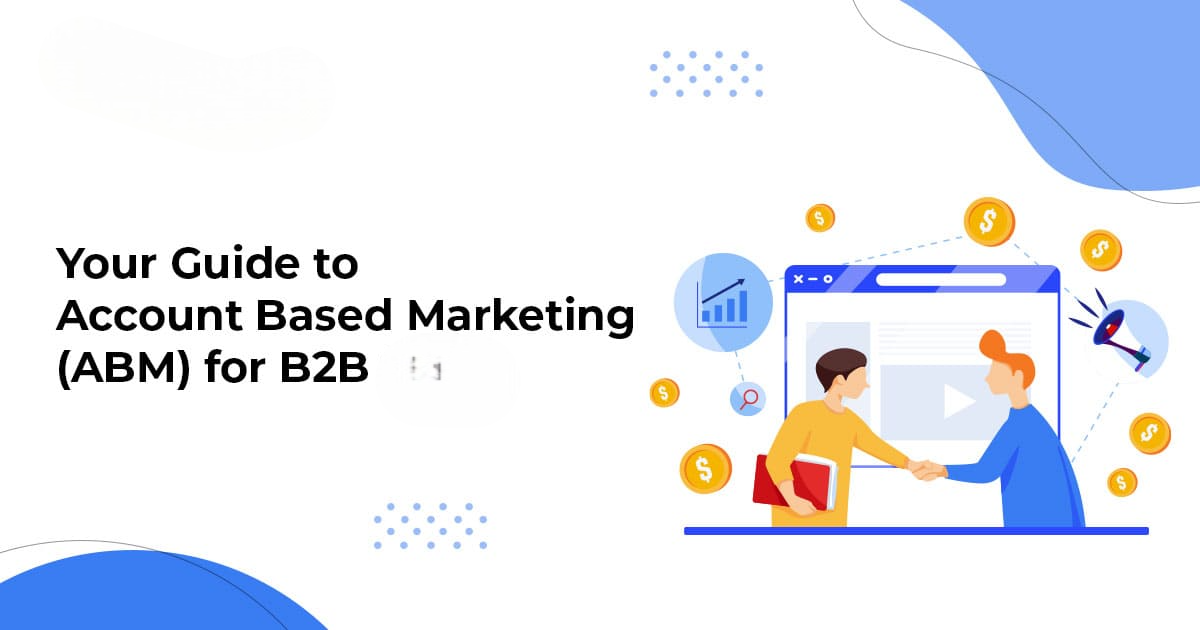
Account-Based Marketing (ABM) is a highly focused B2B strategy where businesses target specific high-value accounts instead of broad audiences. Unlike traditional marketing, which casts a wide net, ABM treats each account as a market of one. This approach aligns marketing and sales teams to deliver personalized campaigns tailored to individual companies. By focusing on quality over quantity, ABM increases the chances of converting high-value clients. It also improves relationship-building with key decision-makers. As B2B buying cycles become more complex, ABM helps businesses stay relevant and competitive.
- Focuses on high-value target accounts instead of mass audiences
- Aligns marketing and sales teams for better results
- Delivers personalized campaigns for each account
- Improves engagement with decision-makers
Why ABM is Essential for B2B Growth –
In today’s competitive landscape, generic marketing strategies are no longer effective for B2B companies. Buyers expect personalized experiences that address their specific challenges. ABM enables businesses to deliver highly relevant messaging, increasing trust and engagement. It also optimizes resource allocation by focusing efforts on accounts with the highest potential value. This leads to better ROI compared to traditional lead generation methods. Additionally, ABM shortens sales cycles by targeting decision-makers directly. As a result, companies can achieve faster and more sustainable growth.
- Provides highly personalized customer experiences
- Maximizes ROI by targeting high-value accounts
- Shortens sales cycles and accelerates deals
- Builds stronger relationships with clients
Key Components of a Successful ABM Strategy –
A successful ABM strategy requires careful planning and execution. It starts with identifying and selecting the right target accounts based on data and business goals. Next, businesses must develop deep insights into these accounts, including their needs, challenges, and decision-making processes. Content and messaging should be highly personalized to resonate with each account. Multi-channel engagement—such as email, social media, and events—is crucial for consistent communication. Finally, alignment between sales and marketing teams ensures seamless execution.
- Identifying and prioritizing target accounts
- Conducting in-depth account research and insights
- Creating personalized content and messaging
- Using multi-channel engagement strategies
- Ensuring strong sales and marketing alignment
Tools and Technologies Powering ABM –
Technology plays a vital role in executing and scaling ABM strategies. Modern tools enable businesses to collect, analyze, and act on customer data effectively. Customer Relationship Management (CRM) systems help track interactions and manage accounts. Marketing automation platforms streamline campaign execution and personalization. AI-driven analytics provide insights into customer behavior and predict outcomes. These technologies make it easier to deliver targeted campaigns at scale. As a result, companies can improve efficiency and achieve better results.
- CRM systems for managing account data and interactions
- Marketing automation tools for campaign execution
- AI-driven analytics for predictive insights
- Data platforms for account intelligence
- Personalization tools for tailored messaging
Measuring Success and Optimizing ABM Campaigns –
Measuring the effectiveness of ABM campaigns is essential for continuous improvement. Unlike traditional marketing, ABM focuses on account-level metrics rather than individual leads. Key performance indicators include account engagement, pipeline growth, and revenue generated. Businesses should track how target accounts interact with campaigns across different channels. Regular analysis helps identify what works and what needs improvement. Optimization involves refining messaging, targeting, and engagement strategies. Over time, this leads to more effective campaigns and better outcomes.
- Tracks account-level engagement and interactions
- Measures pipeline growth and revenue impact
- Analyzes multi-channel performance
- Identifies areas for improvement
- Continuously optimizes campaigns for better results
Conclusion –
Account-Based Marketing is a powerful strategy that enables B2B companies to focus on high-value opportunities and drive meaningful growth. By aligning sales and marketing, delivering personalized experiences, and leveraging advanced technologies, businesses can build stronger relationships and close deals more efficiently. While ABM requires careful planning and execution, its benefits far outweigh the challenges. Companies that adopt ABM successfully can achieve higher ROI, faster sales cycles, and long-term customer loyalty. In an increasingly competitive market, ABM is not just an option—it is a necessity for sustainable B2B success.