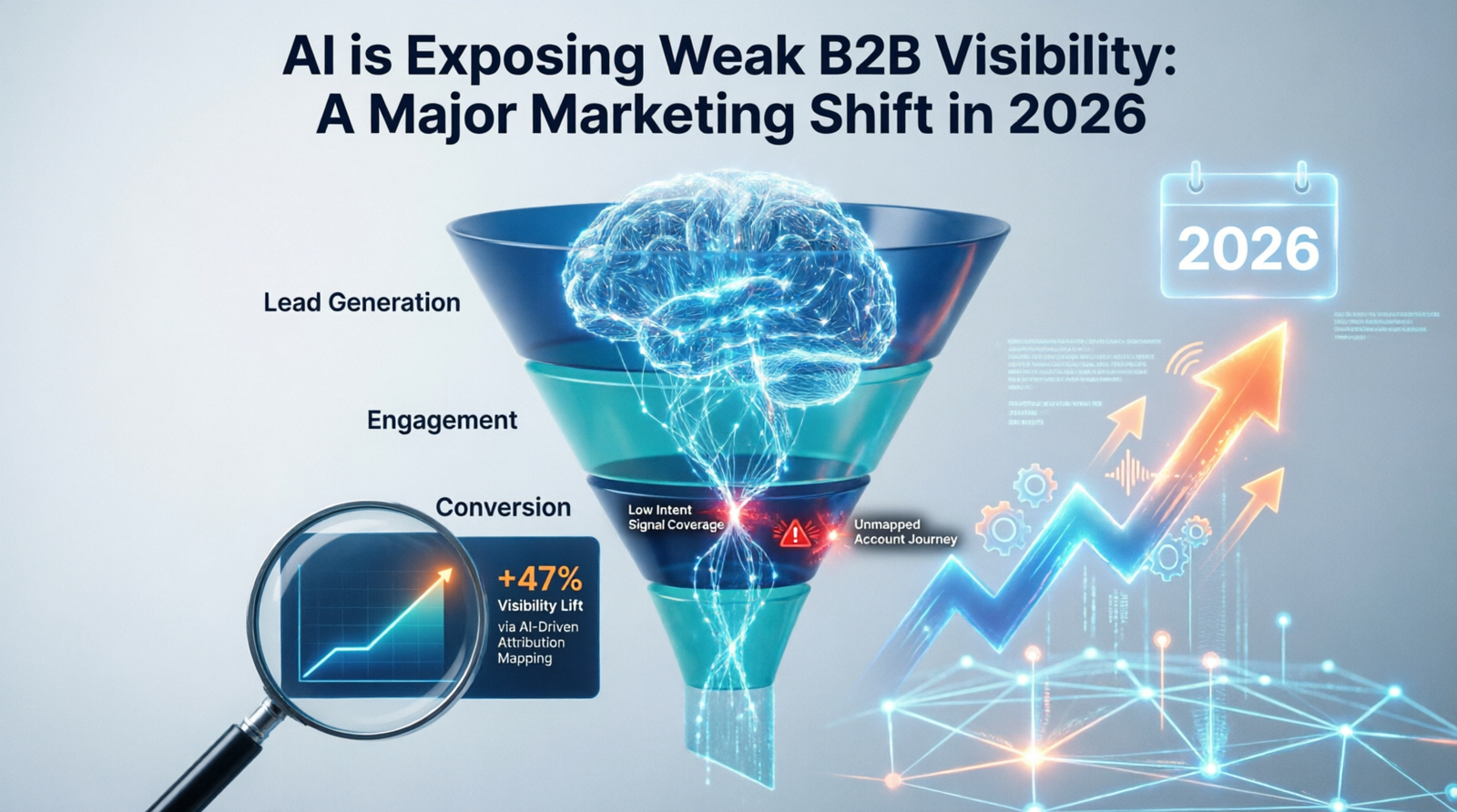
The way B2B companies are discovered online is going through a major transformation. For years, businesses relied heavily on traditional SEO, paid ads, and content marketing to attract leads. But with the rise of AI-powered search and assistants, a new problem is becoming very clear: many B2B companies are becoming invisible in AI-driven discovery systems.
This shift is not just a minor trend—it is reshaping how buyers find vendors, compare solutions, and make decisions.
The New Discovery Layer: AI Search
Modern buyers are no longer only using Google to research solutions. Increasingly, they are turning to AI systems like conversational search tools and intelligent assistants powered by Artificial Intelligence to get recommendations, summaries, and vendor comparisons instantly.
These systems do not display results the same way traditional search engines do. Instead of showing long lists of websites, they summarize and recommend a small set of companies based on structured, high-quality, and widely recognized data.
This creates a new challenge: if a B2B company is not well-structured digitally, it may not appear at all in AI-generated answers.
The Visibility Problem in B2B SaaS and Services
Recent industry observations suggest that a significant number of B2B SaaS and service providers are struggling to appear in AI-generated recommendations—even when they have strong SEO performance.
The reason is simple: AI systems prioritize clarity, authority, and consistency across data sources. Many companies still rely on fragmented websites, outdated content, or inconsistent messaging across platforms.
Even established CRM platforms like Salesforce are now part of a much larger ecosystem where visibility is determined not just by rankings, but by how well a company is represented across structured data sources, reviews, and digital footprints.
Why Traditional SEO Alone Is No Longer Enough
Earlier, ranking on search engines was the primary goal for B2B marketers. However, AI-driven discovery does not rely solely on keyword rankings.
Instead, AI systems evaluate:
- Consistency of company information across platforms
- Authority and credibility of content
- Structured and machine-readable data
- Real-world mentions and relevance
This means a company can rank well on search engines but still remain invisible in AI-generated recommendations.
The Shift Toward “AI Visibility Optimization”
A new concept is emerging in the B2B marketing world: AI visibility optimization.
Unlike traditional SEO, this approach focuses on making a company understandable and recognizable to AI systems. It includes:
- Structured content creation
- Clear positioning of services and offerings
- Consistent messaging across platforms
- Strong thought leadership presence
The goal is no longer just to rank on Google—it is to be included in AI-generated answers and recommendations.
Impact on B2B Marketing Strategy
This shift is forcing marketing teams to rethink their entire strategy. Companies are realizing that high traffic does not necessarily translate into visibility in AI-driven systems.
As a result, B2B marketers are starting to focus more on:
- Content clarity over content volume
- Authority building instead of keyword stuffing
- Unified brand messaging across all digital channels
- Data consistency across websites, CRMs, and listings
The companies that adapt early are likely to gain a significant competitive advantage.
What B2B Companies Need to Do Next
To stay visible in this new environment, B2B companies need to rethink how they present themselves online. It is no longer enough to simply produce content or run campaigns.
They must ensure:
- Their brand information is consistent everywhere
- Their content is structured and easy for AI systems to interpret
- Their expertise is clearly demonstrated through high-quality insights
- Their digital presence aligns across platforms and tools
Conclusion
The rise of AI-driven discovery is exposing a major gap in B2B marketing. Many companies that previously relied on traditional SEO and advertising are now realizing they are not visible in AI-generated recommendations.
This shift marks the beginning of a new era where visibility is no longer controlled only by search engines, but also by intelligent systems powered by AI.
For B2B companies, the message is clear: adapting to this change is no longer optional. Those who fail to evolve their digital presence risk becoming invisible in the very systems buyers now trust the most.