B2B personalization has spent years promising more relevant experiences for buyers, but much of what the industry calls personalization remains remarkably shallow. Websites change headlines based on industry, emails use first names, advertisements reference job titles, and landing pages adapt to company size or business type. These tactics can make a marketing experience appear personalized, but they often overlook the most important variable in a buying decision
Two executives with the same title, working in the same industry and even operating companies of similar size can be facing completely different business realities. One may be preparing for expansion, another may be responding to declining margins, another may be replacing a failing system, and another may simply be exploring options for a problem that is not yet urgent. Yet traditional B2B marketing frequently gives all four the same message.
This creates what can be called the Context Collapse Effect: the gradual loss of marketing effectiveness that occurs when different buyers, situations, priorities, and moments are compressed into the same generic communication.
The problem is not necessarily that the message is bad. A company may have excellent research, strong customer evidence, sophisticated creative, and a compelling value proposition. The problem is that relevance is not determined by message quality alone. Relevance is determined by the relationship between the message and the situation in which it is received.
What Is the Context Collapse Effect?
The Context Collapse Effect occurs when marketers treat different buyers as if they are experiencing the same business reality simply because they share similar characteristics. Traditional segmentation can tell marketers a great deal about a company or individual: their industry, company size, revenue, job title, location, department, and technology environment.
But this information does not necessarily explain what is happening inside the organization today.
A VP of Operations at a 2,000-person manufacturing company could be dealing with supply-chain disruption, preparing a new facility, replacing an ERP system, responding to customer complaints, or evaluating automation. The profile is almost identical in every scenario, but the reason that person might be interested in a solution is completely different.
That is the central problem with traditional personalization.
The buyer’s profile may stay the same while the buyer’s context changes.
A message about operational efficiency may be extremely valuable to a company facing margin pressure and almost irrelevant to a company focused on rapid expansion. A cost-reduction message may resonate with a CFO during a budget review but fail completely with the same CFO six months earlier when the organization was prioritizing growth.
The key concepts covered in this article include B2B personalization, contextual personalization, and situational personalization, with a focus on understanding what buyers actually need at different stages of their decision-making process. It also explores how B2B buyer intent and intent signals can help marketers identify changing priorities, how B2B content personalization can make content more relevant, and how contextual B2B marketing can improve engagement. The article further examines the role of account-based marketing and AI-powered personalization in creating more timely, relevant, and effective B2B marketing experiences.
Why Traditional B2B Personalization Is Reaching a Ceiling –
B2B marketers have become exceptionally good at collecting data. CRM platforms, marketing automation systems, data enrichment tools, intent platforms, and customer-data platforms can provide thousands of attributes about an account or buyer.
But more data does not automatically create more relevance.
Knowing that a prospect is a manufacturing company with 2,000 employees and a VP of Operations is useful. Knowing its revenue, technology stack, location, and organizational structure makes the profile even richer. Yet none of those details necessarily tells you what changed yesterday, what problem has suddenly become urgent, or what issue is currently being debated by the leadership team.
This is the difference between attributes and context.
Attributes describe the organization. Context explains its current decision environment.
A useful B2B personalization strategy therefore needs to look beyond static information and understand movement. What has changed in the business? What new pressure has appeared? What initiative has become important? What problem has moved higher on the executive agenda? What decision is currently being debated?
These questions can reveal much more about why a buyer might care now than another dozen fields added to a CRM record.
Static Data Tells You Who. Context Tells You Why Now –
Static data remains valuable. Marketers still need to understand who they are communicating with, what industry they operate in, how large their organization is, and what responsibilities they have.
The problem begins when marketers assume that these characteristics are enough to determine the right message.
Imagine two companies that are both large manufacturers with similar revenue, employee counts, and technology environments. One has just announced a major expansion into a new market. The other is under pressure to reduce operating costs.
A traditional segmentation system may put both companies into the same campaign.
A context-driven system would recognize that their immediate priorities are very different.The first company may be interested in scalability, operational readiness, and expansion.The second may care about efficiency, automation, and cost reduction.The product being marketed could be identical.
The story that makes the product relevant is not.
Why Context Matters in the B2B Buying Journey –
B2B buyers do not move through a universal funnel at the same pace. Enterprise buying decisions are often triggered by events that happen inside or outside an organization.
A new executive joins. A competitor introduces a new capability. A regulation changes. Costs increase. A legacy system becomes unsustainable. A major customer changes expectations. A merger creates operational complexity. A new technology makes an existing process appear inefficient.
These events can turn previously unimportant problems into strategic priorities.
A company may have known for years that its legacy infrastructure was inefficient. But it may not have had a reason to act. Then a new CIO arrives with a modernization mandate, and suddenly the same problem becomes a board-level priority.
The underlying problem did not necessarily change.The business context around the problem changed. This is why timing matters so much in B2B marketing. A message can be completely relevant in one quarter and almost invisible in another.
Context helps marketers understand that difference.
What Are Context Triggers in B2B Marketing?
A context trigger is an event or condition that changes the relevance of a particular marketing message. It does not automatically indicate that a company is ready to buy. Instead, it provides evidence that the organization’s priorities may have shifted.
Common examples include:
- A new executive joining the organization
- A merger or acquisition
- Expansion into a new market
- Rapid hiring
- A major product launch
- New regulatory requirements
- Increasing operational costs
- Technology modernization
- A major customer changing expectations
- A competitor introducing a new capability
The value of these signals comes from what they reveal about the business situation behind them.
A new CIO may create a technology evaluation window. A merger may create systems-integration challenges. Rapid hiring may indicate scalability pressure. A new regulation may create compliance urgency. A major expansion may expose weaknesses in existing infrastructure.
The trigger itself is not the strategy.
The trigger helps explain why a particular problem may have become more important.
Why B2B Content Loses Its Power at Scale –
The Context Collapse Effect becomes particularly visible as companies scale their content programs. Organizations can now produce more blogs, reports, whitepapers, videos, webinars, newsletters, social posts, and campaigns than ever before.
AI has made content production even faster.
But content volume does not automatically create relevance.
In fact, the ability to distribute the same basic message across increasingly large audiences can create a new problem. When buyers repeatedly encounter content that is technically relevant to their industry but disconnected from their immediate business reality, they learn to ignore it.
The problem is not simply content scarcity.It is contextual scarcity.
There may be thousands of articles about reducing operational costs, but very few messages that address the specific operational challenge a buyer is experiencing right now.
This helps explain why some B2B campaigns generate impressive engagement metrics but weak commercial outcomes. A buyer may download a report because the subject is interesting without having any intention to act. Another buyer may ignore the same report because the topic does not match their current priorities, even though they would have been highly interested three months later.
Context changes the meaning of engagement.A click does not necessarily mean urgency.A lack of engagement does not necessarily mean lack of interest.Sometimes the buyer simply encountered the message at the wrong moment.
AI Could Make Context Collapse Better — or Worse –
AI can make B2B personalization significantly more scalable, but scale alone does not guarantee relevance.
On one side, AI enables marketers to generate highly customized messaging at scale. Content can be adapted for industries, personas, accounts, use cases, and buying stages far more efficiently than before.On the other side, organizations can simply use AI to create more variations of the same generic message.That creates the possibility of an industrialized relevance problem.
Instead of one generic message reaching thousands of buyers, companies can now produce thousands of personalized variations that still fail to address what those buyers actually care about.
The technology has multiplied the content.It has not necessarily improved the understanding.The better opportunity is to use AI to interpret meaningful business signals and connect them to relevant content. AI can help identify patterns in business announcements, leadership changes, hiring activity, technology adoption, financial developments, regulatory changes, and other signals that may indicate changing priorities.
The future of B2B personalization is therefore less about adding more customer attributes and more about understanding the situation behind those attributes.The goal should be to understand when a particular message becomes important.
The Shift From Persona Personalization to Situational Personalization –
The next generation of B2B marketing will need to move from persona personalization toward situational personalization.
Instead of asking only, “Who is this person?”, marketers need to ask, “What is happening around this person right now?”
That sounds simple, but it requires a significant change in how marketing teams think about data and content. The buyer’s profile remains important, but it becomes the starting point rather than the complete picture.
Situational personalization connects the buyer to the account, the account to its current circumstances, and those circumstances to the message.
A practical model looks like this:
- Buyer: Who is involved in the decision?
- Account: What organization are they part of?
- Trigger: What has recently changed?
- Context: What business pressure has that change created?
- Message: What information is most relevant now?
This creates a more intelligent connection between personalization and buyer intent.
Organizing Content Around Business Situations –
Contextual marketing also changes how organizations should think about their content libraries.
Instead of organizing content primarily by product, persona, or industry, organizations can increasingly organize content around business situations.
Content for companies entering new markets should look different from content for companies trying to reduce operating costs. Content for organizations replacing legacy infrastructure should look different from content for organizations experimenting with new technology.
The same product may solve all of these problems.But the explanation of its value should change because the buyer’s context changes.For example, a technology company could organize content around situations such as:
- Entering a new market
- Managing rapid growth
- Reducing operational costs
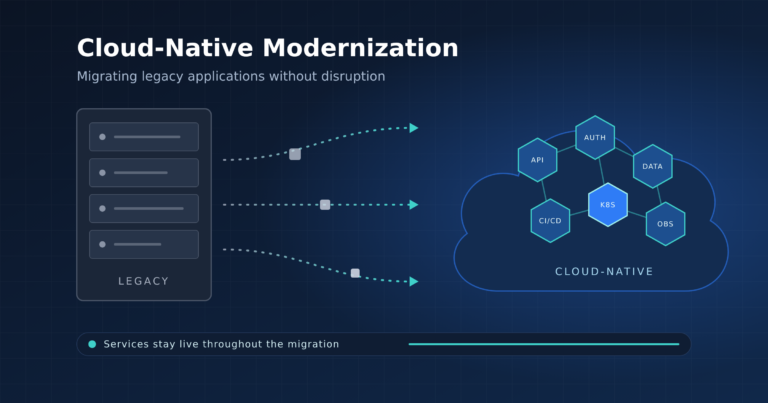
- Replacing legacy infrastructure
- Responding to regulatory pressure
- Integrating after an acquisition
- Improving customer experience
This approach starts with the business problem rather than the product.And that is often where relevance begins.
How Account-Based Marketing Can Evolve –
Account-based marketing has already pushed B2B organizations toward more focused communication. But personalization at the account level can still fail if the message does not reflect the account’s current situation.
A company may receive content specifically written for its industry, business size, and strategic category while simultaneously dealing with an entirely different priority.
True account relevance therefore requires understanding not only the account but the moment the account is in.
Traditional ABM often looks like this:
Target account → personalized message
Contextual ABM moves closer to:
Target account → current situation → relevant trigger → contextual message
The account matters.
But the moment the account is in matters just as much.
The Same Problem Can Mean Different Things to Different Buyers –
Context becomes even more important when a B2B buying committee contains multiple stakeholders.
The CFO may see cost. The CIO may see integration. The operations leader may see efficiency. The CEO may see strategic risk. Procurement may see commercial leverage.
They may all be involved in the same purchase, but they are not experiencing the problem in the same way.
Effective B2B communication therefore needs a common strategic narrative with different reasons for each stakeholder to care.
A message about automation, for example, could focus on financial efficiency for the CFO, operational scalability for the COO, integration and security for the CIO, and competitive advantage for the CEO.
The underlying value proposition remains consistent.
The context changes the way that value is expressed.
How Sales Can Help Marketing Understand Context –
Sales teams can provide one of the most valuable sources of contextual intelligence because they hear directly from buyers.
Salespeople often know why an account suddenly became interested, what internal event triggered the conversation, which issue is creating urgency, and what the buying committee is debating.
Marketing organizations often ask sales:
Which accounts should we target?
A more valuable question may be:
What changed inside these accounts?
The answer can reveal the contextual triggers that should shape campaigns, content, and sales enablement.
This creates a stronger marketing-sales feedback loop. Sales brings real buyer situations into the organization, marketing turns those situations into useful content and campaigns, and the resulting performance provides feedback about which contexts actually influence demand.
Over time, the organization builds something more valuable than a list of personas.
It builds an understanding of how buying situations develop.
Context Changes How B2B Marketing Should Be Measured –
Contextual marketing also requires marketers to rethink measurement.Traditional metrics such as impressions, clicks, downloads, and engagement are useful, but they can encourage organizations to optimize for broad attention.
The goal of contextual marketing is different.It is not maximum attention.It is maximum relevance within the right moment.
Marketers should increasingly ask whether content reached the right account, appeared before an important business conversation, helped sales accelerate an opportunity, influenced multiple stakeholders, or contributed to movement within a target account.
A highly contextual campaign may reach fewer people while influencing more meaningful decisions. That is not necessarily a weakness. It may be evidence that the campaign is doing a better job of reaching the right people at the right time.
Context Makes Marketing More Creative and More Useful –
Contextually relevant marketing does not necessarily require more complicated creative. In many cases, the opposite is true.
When a message understands the buyer’s situation, it can become simpler because it does not need to explain everything.
A company facing rapid expansion does not need another generic explanation of why its industry is changing. It needs a clear articulation of how to prevent operational complexity from slowing its next phase of growth.
A company replacing a legacy platform does not necessarily need another broad explanation of digital transformation. It needs to understand the signs that its existing infrastructure has become a business constraint.
Relevance creates clarity.
The better a message understands the buyer’s situation, the less it needs to explain.
A Practical Framework for Contextual B2B Personalization –
Organizations looking to reduce the Context Collapse Effect can start with a simple framework.
1. Understand the buyer
Start with the fundamentals: the buyer’s role, responsibilities, objectives, challenges, and influence within the buying committee. Persona data still matters, but it should be treated as the foundation rather than the complete strategy.
2. Understand the account
Look beyond the individual’s profile and understand what is happening at the company level. Industry, business model, growth strategy, technology environment, competitive position, and organizational changes can provide important context.
3. Identify what changed
Look for events that may have altered the organization’s priorities. A leadership change, expansion, acquisition, new regulation, product launch, or change in market conditions can all create new reasons for a buyer to reconsider an existing problem.
4. Identify the business pressure
The trigger itself is not enough. Marketers need to understand what pressure it creates. Does the change create a need to reduce costs, improve efficiency, scale operations, reduce risk, modernize infrastructure, or respond to competition?
5. Match the message to the situation
Once the context is understood, select the content and value proposition that best addresses the situation. The same product may need to be positioned around efficiency for one account and scalability for another.
6. Measure the business impact
Finally, measure whether contextual communication actually changes outcomes. Look beyond surface-level engagement and evaluate account progression, sales conversations, opportunity acceleration, stakeholder engagement, and revenue influence.
The central question throughout the process should be:
Why would this message matter to this buyer right now?
That question is more powerful than simply asking how a message can be made more personalized.
Conclusion –
The Context Collapse Effect is ultimately a warning against confusing personalization with understanding.
A message can contain the buyer’s name, company information, industry, job title, company size, and technology stack and still feel completely irrelevant. Conversely, a simple message that accurately captures what a buyer is experiencing can feel deeply personalized without mentioning any personal information at all.
The difference is context.
B2B buyers do not experience markets as personas or database records. They experience them as changing business situations. A new executive arrives. A competitor introduces a new capability. Costs increase. A regulation changes. A major customer changes expectations. An expansion creates operational pressure. A legacy system becomes unsustainable.
These moments change what matters.
The future of B2B marketing will therefore not belong simply to the companies that create the most personalized messages. It will belong to the companies that understand when a particular message becomes important.
The goal is not maximum personalization.
The goal is maximum relevance at the right moment.
Frequently Asked Questions
The Context Collapse Effect describes what happens when marketers deliver similar messages to buyers who may have very different business situations, priorities, and levels of urgency. The result is personalization without meaningful relevance.
B2B personalization often fails because it relies heavily on static information such as job title, industry, company size, and location. These attributes help identify a buyer but do not necessarily explain what is happening inside the organization or why a particular problem matters now.
Contextual personalization is the practice of adapting marketing communication based on a buyer’s current business situation. It considers events, triggers, priorities, challenges, and changes that can influence what a buyer cares about at a particular moment.
B2B context triggers are events or conditions that can change the relevance of a marketing message. Examples include leadership changes, mergers, expansion, new regulations, rapid hiring, technology adoption, product launches, and increasing operational costs.
Traditional personalization often focuses on who the buyer is. Contextual personalization focuses on what is happening around the buyer and why that situation may make a particular message relevant now.