Physical Address
304 North Cardinal St.
Dorchester Center, MA 02124
Physical Address
304 North Cardinal St.
Dorchester Center, MA 02124

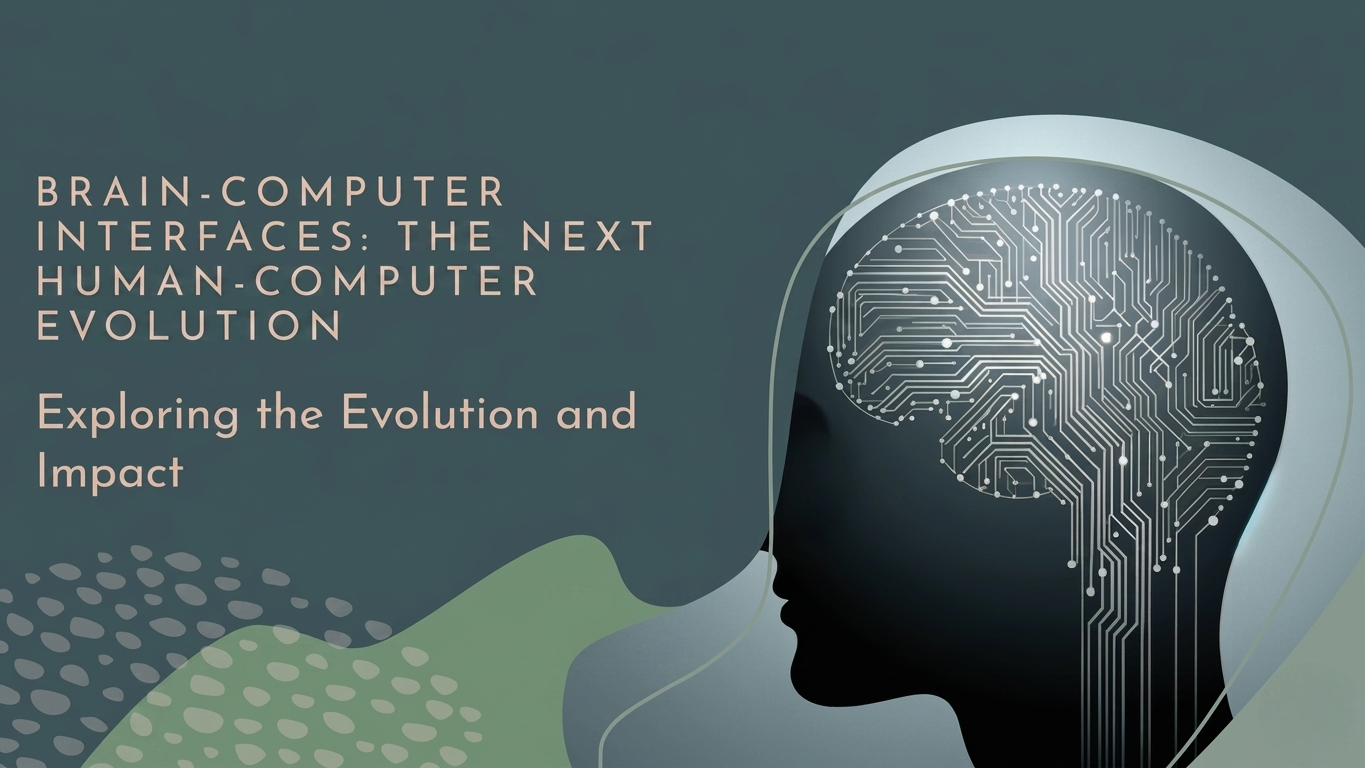
The way humans interact with computers has evolved dramatically—from keyboards and mice to touchscreens and voice assistants. In 2025, a new frontier is emerging that could redefine this interaction entirely: Brain-Computer Interfaces (BCIs).
BCIs aim to create a direct communication pathway between the human brain and computers, enabling users to control devices, communicate, and even interact with digital environments using neural signals alone. What once belonged to science fiction is now becoming a serious area of research and innovation, with the potential to transform healthcare, productivity, and human capabilities.
A Brain-Computer Interface is a system that captures brain signals, interprets them, and translates them into commands that a computer or machine can execute. Instead of relying on physical input like typing or speaking, BCIs use neural activity as the input mechanism.
These systems typically involve sensors that detect electrical signals generated by the brain. The signals are then processed using advanced algorithms and AI models to identify patterns associated with specific thoughts or intentions.
BCIs can be broadly categorized into two types:
Each approach has its own advantages and trade-offs in terms of accuracy, safety, and usability.
At a high level, BCIs operate through a sequence of steps that convert neural signals into actionable outputs.
First, brain signals are captured using sensors or electrodes. These signals are often weak and noisy, requiring sophisticated filtering and processing. Next, machine learning models analyze the signals to detect patterns that correspond to specific actions or intentions.
Finally, these interpreted signals are translated into commands—for example, moving a cursor, typing text, or controlling a robotic arm.
This entire process happens in near real time, allowing users to interact with systems in a way that feels natural and intuitive.
BCIs are being explored across multiple domains, with some of the most impactful applications emerging in healthcare and assistive technology.
In medical settings, BCIs are already helping individuals with paralysis regain a degree of independence. Patients can control prosthetic limbs, wheelchairs, or communication devices using their thoughts. This has significant implications for improving quality of life.
Beyond healthcare, BCIs are also being tested in areas such as gaming, virtual reality, and productivity tools. Imagine navigating a digital interface or composing a message simply by thinking—this level of interaction could dramatically increase efficiency.
Some notable application areas include:
The potential benefits of BCIs go far beyond convenience. They represent a fundamental shift in how humans interact with technology.
One major advantage is speed and efficiency. By eliminating physical input methods, BCIs could significantly reduce the time required to perform tasks.
Another key benefit is accessibility. For individuals with physical limitations, BCIs provide a direct way to interact with the digital world, opening up opportunities that were previously inaccessible.
BCIs also enable new forms of interaction that are not possible with traditional interfaces, such as controlling multiple systems simultaneously or interacting with augmented environments in real time.
Despite their promise, BCIs face several significant challenges that must be addressed before widespread adoption becomes feasible.
One of the biggest hurdles is signal accuracy. Brain signals are complex and can vary widely between individuals, making it difficult to interpret them consistently.
There are also concerns around safety and invasiveness, particularly for implanted devices. Surgical procedures carry risks, and long-term effects are still being studied.
Another major issue is data privacy. Brain data is extremely sensitive, and protecting it from misuse or unauthorized access is critical.
Additionally, the technology is still expensive and requires specialized hardware, limiting accessibility for the general population.
As BCIs become more advanced, they raise important ethical questions. The ability to read or influence brain activity introduces concerns about consent, autonomy, and identity.
For example, who owns the data generated by your brain? How can we ensure that BCIs are not used for manipulation or surveillance?
There is also the question of inequality. If BCIs enhance cognitive or physical abilities, access to this technology could create new social divides between those who have it and those who do not.
Addressing these concerns will require collaboration between technologists, policymakers, and society as a whole.
Looking ahead, BCIs have the potential to become a core part of everyday technology. While widespread adoption may still be years away, rapid advancements in neuroscience, AI, and hardware design are accelerating progress.
In the future, we may see:
These developments could fundamentally change how we work, learn, and communicate.
Brain-Computer Interfaces represent one of the most exciting and transformative developments in modern technology. By enabling direct communication between the human brain and machines, they have the potential to redefine the boundaries of human capability.
While significant challenges remain, ongoing research and innovation are steadily bringing BCIs closer to practical reality. In the coming years, this technology could move from experimental labs to real-world applications, marking the beginning of a new era in human-computer interaction.
The evolution from physical interfaces to neural interaction is not just an upgrade—it is a paradigm shift that could shape the future of technology and humanity itself.