Introduction
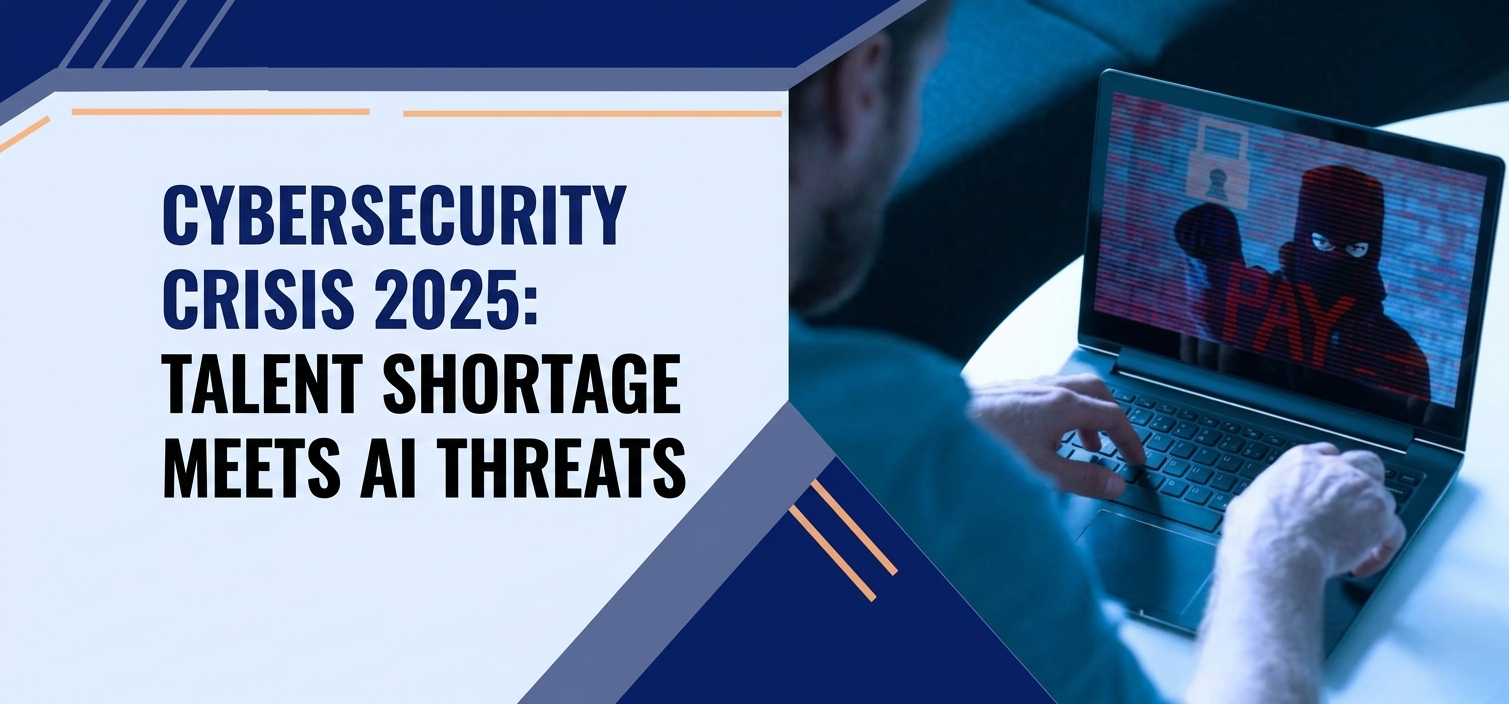
Cybersecurity in 2025 is facing a perfect storm. On one side, cyber threats are becoming more advanced, faster, and increasingly powered by artificial intelligence. On the other, organizations around the world are struggling with a severe shortage of skilled cybersecurity professionals. This imbalance is creating a growing crisis—one where the demand for protection far exceeds the available expertise to deliver it.
As businesses continue to digitize operations and adopt AI-driven technologies, the pressure on security teams is intensifying. The result is a high-risk environment where vulnerabilities are harder to detect, threats evolve rapidly, and response times are often stretched thin.
The Growing Cybersecurity Talent Gap
The shortage of cybersecurity professionals is not a new issue, but in 2025, it has reached critical levels. Organizations across industries are finding it increasingly difficult to hire and retain skilled security experts.
Several factors are contributing to this gap. The rapid pace of technological change means that skills quickly become outdated, requiring continuous learning. At the same time, the demand for cybersecurity expertise is expanding across sectors, from finance and healthcare to manufacturing and government.
This imbalance has led to:
- Overburdened security teams handling multiple responsibilities
- Increased burnout and job dissatisfaction
- Delays in threat detection and incident response
- Greater reliance on automation and external vendors
The talent shortage is no longer just a hiring challenge—it is a significant operational risk.
The Rise of AI-Powered Cyber Threats
While the talent pool struggles to keep up, cyber threats are becoming more sophisticated due to the integration of artificial intelligence. Attackers are now leveraging AI to automate tasks, enhance precision, and scale their operations.
AI-powered threats can analyze systems, identify vulnerabilities, and execute attacks with minimal human involvement. This dramatically increases both the speed and complexity of cyberattacks.
For example, AI can be used to:
- Generate highly convincing phishing emails tailored to individuals
- Scan networks for weaknesses in real time
- Create adaptive malware that evades detection
- Launch automated attacks across multiple targets simultaneously
This evolution means that even less-skilled attackers can carry out highly advanced operations, further intensifying the threat landscape.
The Collision of Talent Shortage and AI Threats
The real crisis emerges at the intersection of these two trends. As AI makes cyberattacks more powerful and accessible, the lack of skilled professionals makes it harder to defend against them.
Security teams are expected to manage increasingly complex threats with limited resources. This leads to gaps in monitoring, delayed responses, and higher chances of successful breaches.
In many organizations, a small team is responsible for:
- Monitoring security alerts 24/7
- Investigating incidents
- Managing compliance requirements
- Implementing security policies
This level of workload is unsustainable, especially when dealing with AI-driven threats that operate at machine speed.
Impact on Businesses and IT Infrastructure
The consequences of this crisis are far-reaching. Cybersecurity is no longer just an IT concern—it is a business-critical issue.
Organizations face:
- Increased risk of data breaches and financial losses
- Damage to brand reputation and customer trust
- Regulatory penalties due to compliance failures
- Operational disruptions caused by cyber incidents
In highly regulated industries, even a single breach can have long-term consequences. As threats grow more sophisticated, the cost of inaction becomes significantly higher.
The Role of AI in Cyber Defense
Interestingly, the same technology driving cyber threats is also part of the solution. Organizations are increasingly adopting AI-powered cybersecurity tools to compensate for the talent shortage.
These systems can:
- Detect anomalies in network behavior
- Identify potential threats before they escalate
- Automate incident response processes
- Analyze large volumes of security data in real time
AI-driven defense systems help reduce the burden on human teams by handling repetitive and time-sensitive tasks. This allows security professionals to focus on strategic decision-making and complex investigations.
Rethinking the Cybersecurity Workforce
Addressing the talent shortage requires a shift in how organizations approach cybersecurity roles and skills.
Instead of relying solely on highly specialized experts, companies are:
- Upskilling existing IT staff in cybersecurity practices
- Adopting cross-functional security responsibilities
- Leveraging managed security service providers
- Encouraging continuous learning and certification programs
There is also a growing emphasis on making cybersecurity more accessible as a career path, attracting new talent into the field.
Building a Resilient Security Strategy
In this evolving landscape, organizations must adopt a more proactive and resilient approach to cybersecurity.
Key focus areas include:
- Implementing Zero Trust security models
- Strengthening identity and access management
- Automating routine security operations
- Investing in real-time monitoring and threat intelligence
- Conducting regular security audits and training
A layered security approach, combined with automation, can help mitigate risks even with limited human resources.
The Future Outlook
The cybersecurity crisis is unlikely to disappear in the near future. As AI continues to evolve, both threats and defenses will become more advanced.
We can expect:
- Increased reliance on AI-driven security systems
- Greater collaboration between humans and machines
- Expansion of cybersecurity education and training programs
- Stronger global regulations around data protection and AI usage
The role of cybersecurity professionals will also evolve, focusing more on strategy, oversight, and system design rather than manual monitoring.
Conclusion
The cybersecurity crisis of 2025 is defined by a dangerous combination of talent shortage and rapidly advancing AI threats. Organizations are facing a situation where the complexity of attacks is increasing, while the availability of skilled defenders remains limited.
To navigate this challenge, businesses must embrace AI-driven security solutions, invest in workforce development, and adopt proactive security strategies. The future of cybersecurity will depend on how effectively organizations can balance human expertise with machine intelligence.
In an era where threats operate at machine speed, the ability to adapt quickly is not just an advantage—it is a necessity.