Introduction: Why Zero Trust is Redefining B2B Cybersecurity-
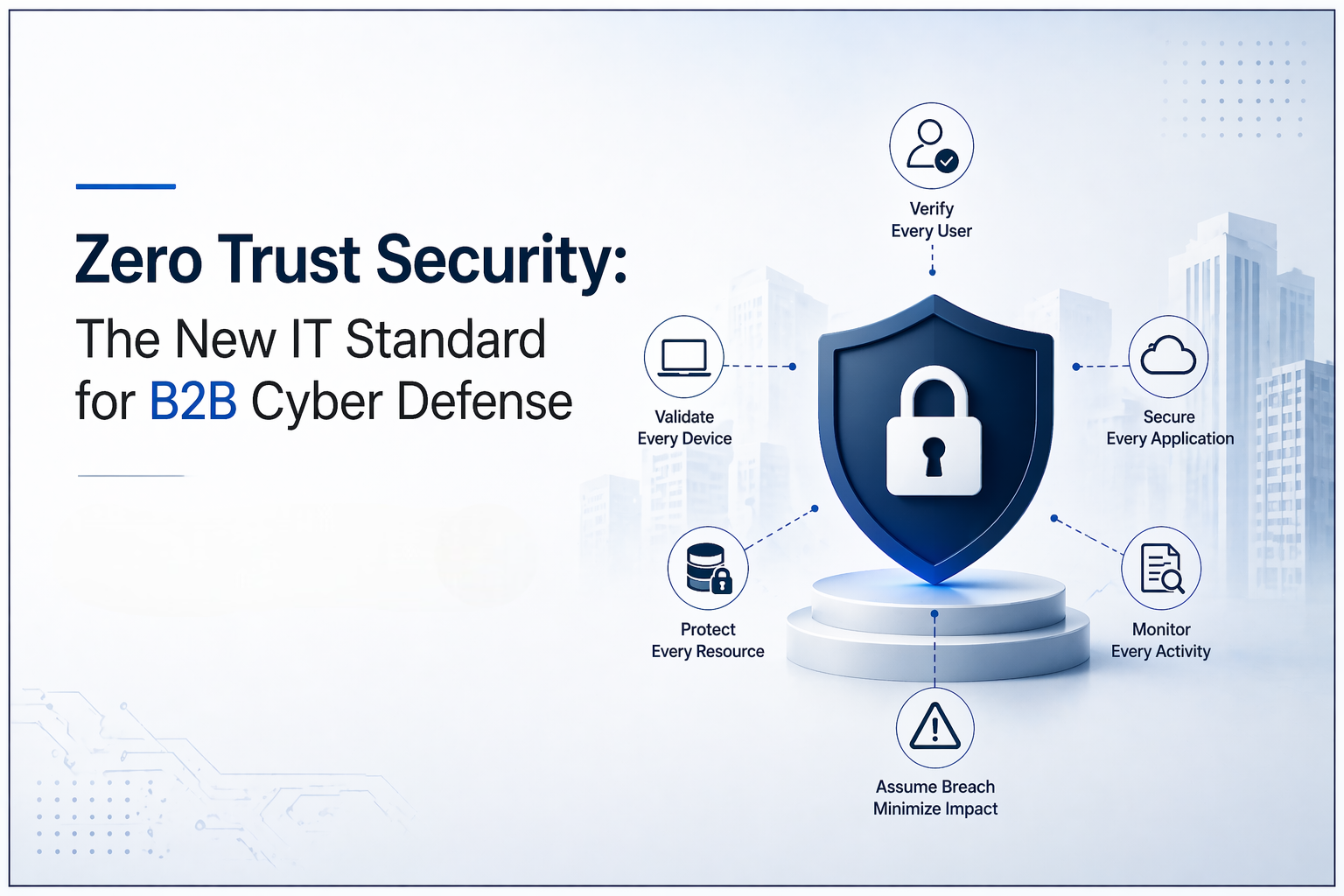
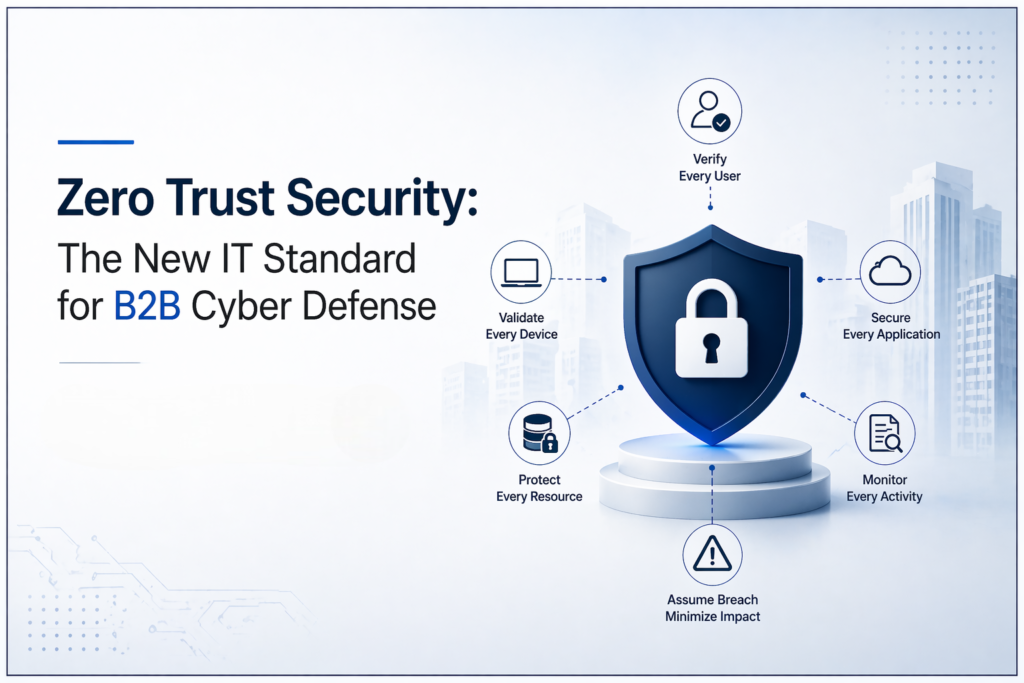
In today’s interconnected B2B environment, traditional perimeter-based security models are no longer sufficient to protect enterprise systems. With increasing cloud adoption, remote work, and third-party integrations, organizations face a constantly expanding attack surface. This has led to the rise of Zero Trust Security, a model that operates on the principle of “never trust, always verify.” IT departments are now responsible for implementing this approach to ensure that every user, device, and application is continuously authenticated. Frameworks from organizations like National Institute of Standards and Technology have helped define Zero Trust architectures for enterprises. Unlike legacy systems, Zero Trust assumes that threats can exist both inside and outside the network. This shift is especially critical for B2B enterprises that rely on complex digital ecosystems. IT teams must rethink security strategies to align with modern risks. As cyberattacks grow more sophisticated, Zero Trust is becoming the new standard for enterprise defense. It represents a proactive rather than reactive approach to cybersecurity.
- Eliminates reliance on perimeter-based security
- Requires continuous authentication and verification
- Assumes threats exist both inside and outside networks
- Aligns with modern B2B digital ecosystems
Core Principles of Zero Trust in IT Architecture –
Zero Trust Security is built on a set of core principles that guide IT implementation across B2B enterprises. These principles include strict identity verification, least-privilege access, and micro-segmentation of networks. IT teams ensure that users only have access to the resources necessary for their roles, reducing the risk of internal threats. Technologies such as multi-factor authentication (MFA), identity and access management (IAM), and endpoint security play a crucial role in enforcing these principles. Companies often leverage platforms like Microsoft to implement identity-driven security solutions. Micro-segmentation further limits the spread of potential breaches by isolating systems and data. Continuous monitoring and real-time analytics allow IT teams to detect and respond to anomalies بسرعة. These principles collectively create a robust security framework that adapts to evolving threats. By embedding these concepts into IT architecture, enterprises can significantly enhance their cybersecurity posture. Zero Trust is not a single product but a comprehensive strategy.
- Enforces least-privilege access controls
- Implements multi-factor authentication (MFA)
- Uses identity and access management systems
- Applies micro-segmentation to networks
Implementing Zero Trust in B2B IT Environments-
Adopting Zero Trust in B2B enterprises requires a structured and phased approach led by IT teams. The first step involves assessing existing infrastructure and identifying vulnerabilities. IT departments then design a roadmap that includes identity management, device security, and network segmentation. Cloud platforms like Amazon Web Services support Zero Trust implementation through advanced security services and scalable infrastructure. Integration with existing enterprise systems is critical to ensure seamless operations. IT teams must also train employees and stakeholders to adapt to new security protocols. Automation plays a key role in enforcing policies and reducing manual intervention. Continuous testing and monitoring help refine the system over time. Implementation can be complex, but the long-term benefits outweigh the challenges. A well-executed Zero Trust strategy strengthens the entire IT ecosystem.
- Assesses current IT infrastructure and risks
- Develops a phased Zero Trust implementation plan
- Integrates security across cloud and on-prem systems
Benefits and Business Impact of Zero Trust Security-
Zero Trust Security offers significant benefits that go beyond traditional cybersecurity measures. For B2B enterprises, it enhances protection against data breaches, insider threats, and advanced cyberattacks. By enforcing strict access controls, IT reduces the risk of unauthorized data exposure. Zero Trust also improves regulatory compliance, as organizations can better manage and audit access to sensitive information. This is particularly important in industries with strict data protection requirements. Additionally, Zero Trust supports secure remote work by ensuring that access is verified regardless of location. It also increases visibility into network activity, enabling faster detection of threats. From a business perspective, stronger security builds trust with partners and clients. IT teams can also reduce downtime and financial losses caused by cyber incidents. Overall, Zero Trust contributes to both operational efficiency and risk mitigation.
- Strengthens protection against cyber threats
- Enhances compliance with data regulations
- Supports secure remote and hybrid work models
Challenges and the Future of Zero Trust in B2B IT-
Despite its advantages, implementing Zero Trust Security comes with challenges that IT teams must address. Legacy systems and outdated infrastructure can make integration difficult. Organizations may also face resistance from employees due to increased authentication requirements. Cost and resource allocation are additional concerns, especially for large-scale deployments. However, advancements in technology are making Zero Trust more accessible and efficient. AI-driven security tools and automation are helping IT teams manage complex environments. As cyber threats continue to evolve, Zero Trust will become even more critical for B2B enterprises. Future developments may include more intelligent threat detection and adaptive security systems. Companies that invest in Zero Trust today will be better prepared for tomorrow’s challenges. IT will remain at the forefront of this transformation, ensuring security and resilience in an increasingly digital world.
- Addresses challenges of legacy system integration
- Requires cultural and organizational change
- Involves investment in advanced security tools
Conclusion-
Zero Trust Security is rapidly emerging as the new IT standard for B2B cyber defense, replacing outdated perimeter-based models with a more dynamic and resilient approach. By continuously verifying users, devices, and systems, Zero Trust minimizes the risk of breaches and strengthens overall security posture. IT plays a central role in designing, implementing, and maintaining this framework, ensuring that it aligns with business objectives and evolving threats. While challenges such as cost and complexity exist, the long-term benefits of enhanced security, compliance, and operational efficiency make Zero Trust a worthwhile investment.