The Evolution of IT Infrastructure
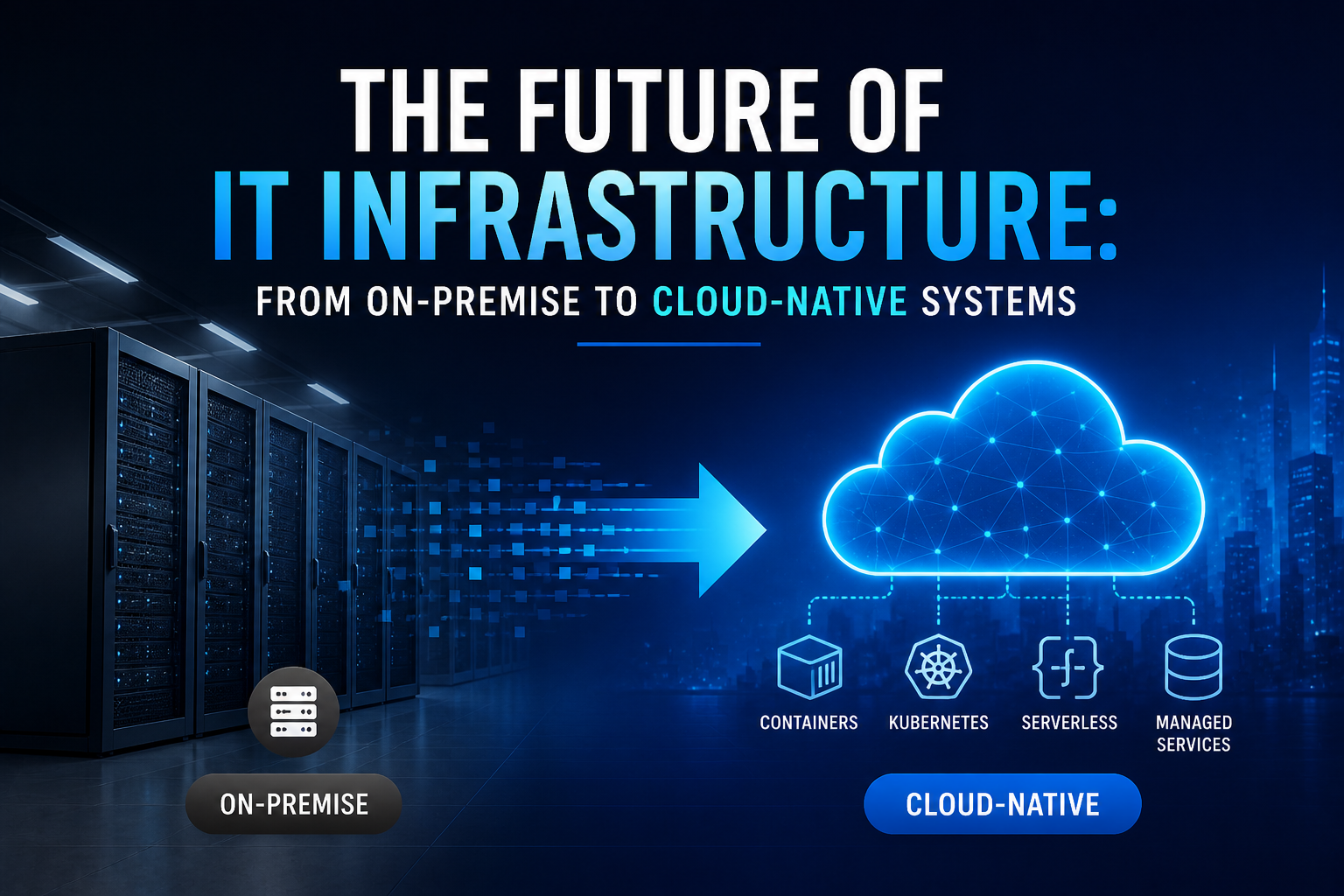
IT infrastructure has undergone a major transformation over the past two decades, shifting from fully on-premise systems to highly flexible cloud-based environments. Traditionally, organizations relied on physical servers housed within their own data centers, requiring significant investment in hardware, maintenance, and IT staff. These systems offered control but lacked scalability and agility. As business demands grew, this model became increasingly inefficient. The rise of virtualization and broadband internet opened the door to cloud computing. Companies began migrating workloads to remote servers managed by third-party providers. Today, this shift is accelerating toward cloud-native systems designed specifically for distributed environments. Businesses now prioritize flexibility, speed, and scalability over physical ownership of infrastructure. This transition reflects a broader digital transformation across industries. IT infrastructure is no longer just a support system—it is a core business enabler.
- Shift from physical servers to virtual environments
- On-premise systems require high cost and maintenance
- Cloud computing enables scalability and flexibility
Limitations of Traditional On-Premise Systems
On-premise infrastructure gave organizations full control over their systems, but it also introduced several limitations. High upfront costs for servers, storage, and networking equipment made scaling difficult. Maintenance required dedicated IT teams and constant hardware upgrades. Disaster recovery and backup systems were often complex and expensive to implement. Additionally, scaling resources during peak demand was slow and inefficient. Businesses often had to over-provision resources to avoid downtime, leading to wasted capacity. Security management was entirely the responsibility of the organization, increasing operational burden. As companies expanded globally, maintaining multiple physical data centers became impractical. These challenges highlighted the need for more flexible infrastructure models. On-premise systems are still used, but mostly in hybrid environments.
- High capital expenditure and maintenance costs
- Difficult to scale quickly during demand spikes
- Complex disaster recovery systems
- Requires large in-house IT teams
Rise of Cloud Computing and Its Impact
Cloud computing revolutionized IT infrastructure by offering computing resources on demand. Services provided by companies like Amazon Web Services and Microsoft Azure allow businesses to rent computing power instead of owning it. This shifted IT spending from capital expenditure to operational expenditure. Organizations can now scale resources up or down instantly based on need. Cloud platforms also provide built-in tools for storage, security, analytics, and machine learning. This reduces the complexity of managing infrastructure internally. Businesses benefit from faster deployment cycles and improved agility. Cloud adoption has also enabled remote work and global collaboration at scale. However, reliance on third-party providers introduces new risks such as vendor lock-in. Despite this, cloud computing has become the default infrastructure model for many organizations.
- Pay-as-you-go infrastructure model
- Instant scalability and flexibility
- Reduced need for physical hardware
Cloud-Native Systems: The Next Stage of Evolution
Cloud-native infrastructure goes beyond simply hosting applications in the cloud. It involves designing and building applications specifically for cloud environments. This includes technologies such as microservices, containers, and orchestration platforms like Kubernetes. Cloud-native systems are highly modular, allowing independent scaling of components. This improves resilience, performance, and deployment speed. Developers can update individual services without affecting the entire system. Continuous integration and continuous deployment (CI/CD) pipelines are central to this model. Cloud-native architecture also supports automation at every level. However, it requires advanced technical expertise and strong DevOps practices. Despite its complexity, it is becoming the standard for modern software development. Enterprises are increasingly adopting cloud-native strategies to stay competitive.
- Built specifically for cloud environments
- Uses microservices and containerization
- Enables independent scaling of services
The Hybrid Future of IT Infrastructure
The future of IT infrastructure is not entirely cloud-based or fully on-premise but a hybrid model combining both. Many organizations continue to keep sensitive data on-premise while moving scalable workloads to the cloud. This approach offers a balance between control, security, and flexibility. Industries like banking, healthcare, and government often require strict data compliance, making hybrid systems essential. At the same time, innovation-driven workloads are increasingly shifting to cloud-native platforms. Companies are also adopting multi-cloud strategies to avoid dependency on a single provider. Managing hybrid environments requires advanced orchestration and monitoring tools. IT teams must now handle both physical and virtual infrastructure seamlessly. As technologies evolve, the line between cloud and on-premise will continue to blur. The focus will shift from where systems run to how efficiently they operate.
- Hybrid models combine cloud and on-premise systems
- Sensitive data often remains on-premise
- Cloud used for scalable workloads
Conclusion
The evolution of IT infrastructure from on-premise systems to cloud-native environments represents one of the most significant shifts in modern technology. Traditional infrastructure provided control but lacked flexibility, while cloud computing introduced scalability and efficiency. Cloud-native systems are now pushing this transformation further by enabling highly modular, automated, and resilient architectures. However, the future is not about replacing one model with another but integrating multiple approaches to meet diverse business needs. Hybrid and multi-cloud strategies are becoming the new standard as organizations balance performance, security, and cost. Ultimately, the future of IT infrastructure will be defined by adaptability, automation, and intelligent resource management, shaping how businesses operate in a digital-first world.