Introduction
For many years, cold outreach was one of the most widely used tactics in B2B sales. Sales teams relied heavily on cold emails, unsolicited phone calls, and mass prospecting campaigns to connect with potential buyers. While these methods once generated a steady flow of leads and business opportunities, the sales landscape has evolved significantly. Modern buyers are more informed, more selective, and often less receptive to unsolicited sales approaches.
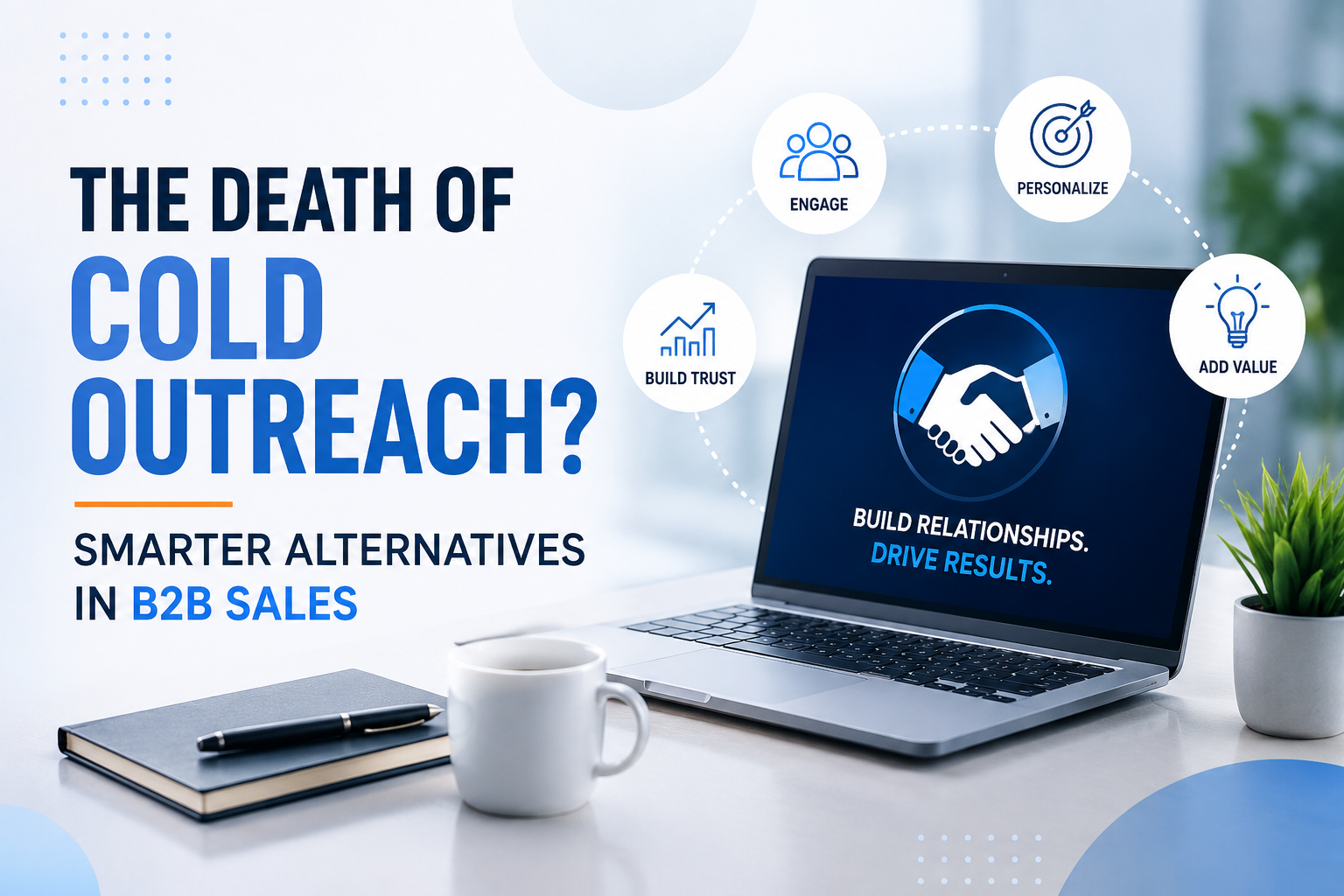
The Death of Cold Outreach is one of the biggest shifts reshaping modern B2B sales. While cold outreach has long been a staple for generating leads, today’s buyers expect personalized, value-driven interactions instead of generic sales pitches. Understanding The Death of Cold Outreach helps organizations rethink their sales approach and build stronger customer relationships.
Why Cold Outreach Is Becoming Less Effective
The decline of cold outreach is closely tied to changing buyer behavior. Business professionals receive dozens, and sometimes hundreds, of sales messages every week. Their inboxes are crowded, and their schedules are packed, making it increasingly difficult for generic outreach efforts to stand out.
Additionally, advancements in spam filtering technologies and stricter privacy regulations have made mass outreach campaigns less effective. Buyers are becoming more cautious about sharing information and are more likely to ignore messages that appear irrelevant or overly promotional.
The challenge is not simply that cold outreach exists; it is that buyers now expect communication to be personalized, relevant, and valuable. Generic sales pitches often fail because they do not address the specific needs or challenges of the recipient.
The Shift Toward Buyer-Centric Sales
One of the biggest transformations in modern B2B sales is the move toward buyer-centric engagement. Rather than focusing solely on selling products or services, organizations are placing greater emphasis on understanding customer challenges and providing solutions that create real value.
This approach encourages sales teams to act as advisors rather than traditional sellers. Instead of leading with a pitch, they lead with insights, expertise, and a genuine understanding of the prospect’s business goals. By doing so, they establish trust and create stronger foundations for long-term business relationships.
Buyers are more likely to engage with companies that demonstrate a clear understanding of their industry, pain points, and objectives. This shift has made relationship-building a critical component of successful sales strategies.
Content Marketing: Attracting Instead of Chasing Prospects
The concept of The Death of Cold Outreach does not mean businesses should stop reaching out to prospects altogether. Instead, it highlights the need to replace mass, untargeted outreach with personalized engagement, account-based marketing, and relationship-driven communication. Companies that embrace this shift can improve B2B Lead Generation, strengthen Relationship-Based Selling, and increase conversion rates.
As buyer behavior continues to evolve, The Death of Cold Outreach reflects a broader transformation in B2B Sales Strategies. Organizations that invest in personalized outreach, AI-powered sales tools, and customer engagement are better equipped to build trust and create long-term business relationships.
This approach is particularly effective because it aligns with the way modern buyers conduct research. Instead of being interrupted by a sales message, they discover helpful content on their own terms and engage when they are ready. As a result, conversations generated through content marketing are often warmer and more productive than those initiated through cold outreach.
Account-Based Marketing Delivers Higher Precision
As organizations seek more efficient ways to generate revenue, many are adopting Account-Based Marketing (ABM). Unlike traditional outreach methods that target large numbers of prospects, ABM focuses on a smaller group of high-value accounts that closely match a company’s ideal customer profile.
Sales and marketing teams work together to develop highly personalized campaigns for specific organizations. This level of customization allows businesses to address the unique needs, goals, and challenges of each target account.
The Death of Cold Outreach doesn’t mean outreach is obsolete—it means traditional, generic outreach is no longer enough. The future of B2B Sales Strategies lies in personalization, data-driven decision-making, and Relationship-Based Selling. Companies that embrace smarter alternatives, leverage technology, and focus on delivering value will generate more qualified leads, build stronger customer relationships, and achieve sustainable business growth. By adapting to changing buyer expectations, organizations can turn The Death of Cold Outreach into an opportunity to modernize their sales process and gain a competitive advantage.
Social Selling Creates Authentic Connections
Social selling has become a powerful strategy for engaging modern buyers. Professional networking platforms such as LinkedIn allow sales professionals to connect with prospects in a more natural and less intrusive manner.
Instead of sending immediate sales pitches, successful social sellers focus on sharing insights, participating in discussions, and contributing valuable perspectives to industry conversations. Over time, these interactions help establish credibility and familiarity.
When prospects consistently see useful content and thoughtful engagement from a sales professional, they are more likely to trust that individual and consider their solutions when a business need arises. Social selling therefore shifts the focus from direct selling to relationship building, making future sales conversations significantly more effective.
Using Intent Data to Identify Interested Buyers
One of the major limitations of cold outreach is uncertainty. Sales teams often have little indication of whether a prospect is actively interested in their offerings. Intent data helps solve this problem by providing insights into buyer behavior and purchasing signals.
As buyer expectations continue to evolve, businesses are actively exploring Cold Outreach Alternatives that prioritize personalization, trust, and long-term engagement. Instead of relying solely on unsolicited emails or generic sales calls, modern B2B Sales Strategies focus on account-based marketing, social selling, AI-driven prospecting, and value-based communication. These Cold Outreach Alternatives help organizations connect with decision-makers more effectively, improve B2B Lead Generation, and build stronger customer relationships. By adopting smarter outreach methods, companies can increase response rates, shorten sales cycles, and achieve sustainable business growth in today’s competitive marketplace.
Engaging buyers at the right moment can dramatically improve response rates and increase the likelihood of meaningful conversations. Instead of reaching out blindly, sales professionals can prioritize opportunities based on actual buying intent.
Referral Marketing Remains Highly Effective
Despite advances in technology and automation, referrals continue to be one of the most powerful sources of new business opportunities. Buyers naturally place greater trust in recommendations from colleagues, partners, and existing customers than they do in unsolicited sales messages.
Organizations that consistently deliver excellent customer experiences often benefit from word-of-mouth promotion and customer advocacy. Satisfied clients are more willing to introduce vendors to peers and industry contacts, creating valuable opportunities for business growth.
Referral-driven sales conversations typically begin with a higher level of trust, reducing the barriers that often exist in traditional cold outreach. This trust can shorten sales cycles and improve conversion rates significantly.
AI Is Reshaping Modern Prospecting
Artificial Intelligence is playing an increasingly important role in B2B sales. AI-powered tools can analyze large volumes of customer data, identify patterns, and help sales teams focus on the most promising opportunities.
Rather than replacing sales professionals, AI enhances their effectiveness by automating repetitive tasks and providing actionable insights. Sales representatives can use AI to personalize communications, prioritize leads, and better understand customer needs.
This combination of automation and personalization allows organizations to engage prospects more efficiently while maintaining a human-centered approach. As AI technologies continue to evolve, they are expected to become even more integral to modern sales strategies.
The Future Is a Hybrid Approach
Although many experts discuss the decline of cold outreach, it would be inaccurate to suggest that it has completely disappeared. In reality, cold outreach still has a role in B2B sales when it is executed thoughtfully and strategically.
The most successful organizations are adopting a hybrid approach that combines traditional prospecting with modern engagement methods. They use content marketing to attract interest, intent data to identify opportunities, social selling to build relationships, and personalized outreach to initiate meaningful conversations.
This integrated strategy recognizes that buyers move through different stages of the purchasing journey and require different forms of engagement along the way. Rather than relying on a single tactic, businesses can create a comprehensive sales ecosystem that supports long-term growth.
Measuring Success in Modern B2B Sales
The metrics used to evaluate sales performance are also evolving. In the past, success was often measured by the number of calls made, emails sent, or meetings booked. While these activity-based metrics remain relevant, they do not always reflect actual business outcomes.
Modern sales organizations place greater emphasis on indicators such as pipeline quality, customer acquisition cost, sales cycle efficiency, customer lifetime value, and retention rates. These metrics provide a clearer understanding of how effectively a company is building sustainable customer relationships and generating long-term revenue.
By focusing on outcomes rather than activity alone, businesses can better assess the effectiveness of their sales strategies and make more informed decisions.
Conclusion
The idea that cold outreach is completely dead may be overstated, but there is no doubt that its effectiveness has declined in today’s buyer-driven marketplace. Modern decision-makers expect personalized experiences, relevant insights, and meaningful interactions that help them solve business challenges. Generic outreach campaigns often struggle to meet these expectations.
As a result, organizations are increasingly embracing smarter alternatives such as content marketing, account-based marketing, social selling, intent-driven prospecting, referral marketing, and AI-powered personalization. These approaches prioritize trust, relevance, and value, enabling businesses to connect with buyers in more meaningful ways.
The future of B2B sales is not about abandoning outreach altogether; it is about using it more intelligently within a broader strategy. Companies that adapt to changing buyer expectations and invest in relationship-focused engagement will be better positioned to generate qualified leads, close more deals, and achieve sustainable growth in an increasingly competitive business environment.