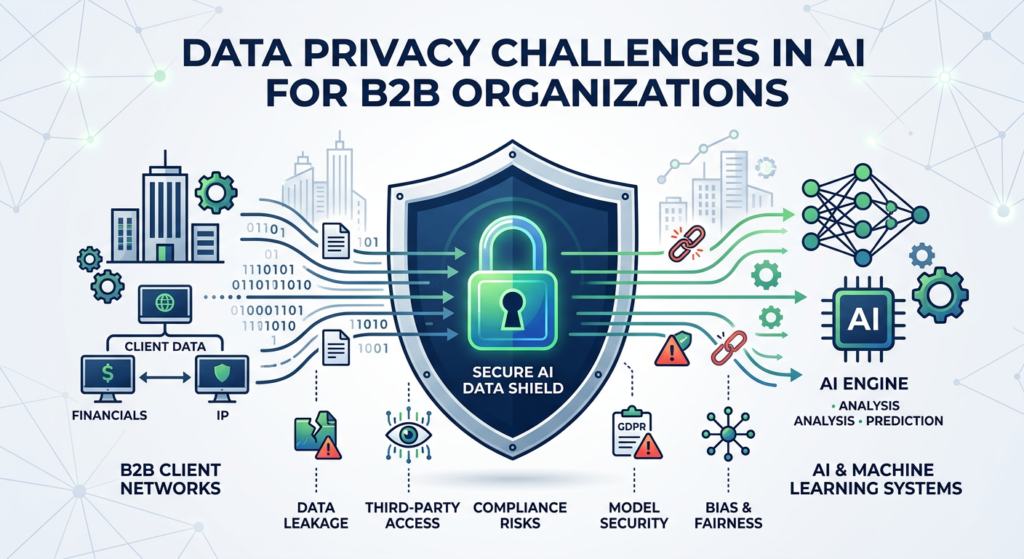
As artificial intelligence becomes deeply integrated into B2B operations, data privacy has emerged as one of the most critical concerns for organizations. AI systems rely on vast amounts of data to function effectively, often including sensitive business information, customer records, and behavioral insights. While this data enables powerful capabilities such as predictive analytics and personalization, it also introduces significant risks related to security, compliance, and trust.
For B2B companies, the stakes are particularly high. Unlike B2C environments, where data typically involves individual consumers, B2B data often includes confidential business information, contractual details, and proprietary insights. Mismanaging this data can lead to legal consequences, reputational damage, and loss of competitive advantage.
The Growing Importance of Data Privacy in AI
The rise of AI has amplified the importance of data privacy because of the scale and complexity of data processing involved. Traditional data systems were relatively straightforward, but AI models continuously collect, analyze, and learn from data, often in real time. This creates new vulnerabilities and increases the potential for misuse.
In addition, regulatory frameworks around data privacy are evolving rapidly across different regions. Organizations must not only protect data but also ensure compliance with various legal requirements, which can vary significantly depending on geography and industry.
As AI adoption accelerates, data privacy is no longer just an IT concern—it has become a strategic priority that impacts every part of the business.
Key Data Privacy Challenges in AI Adoption
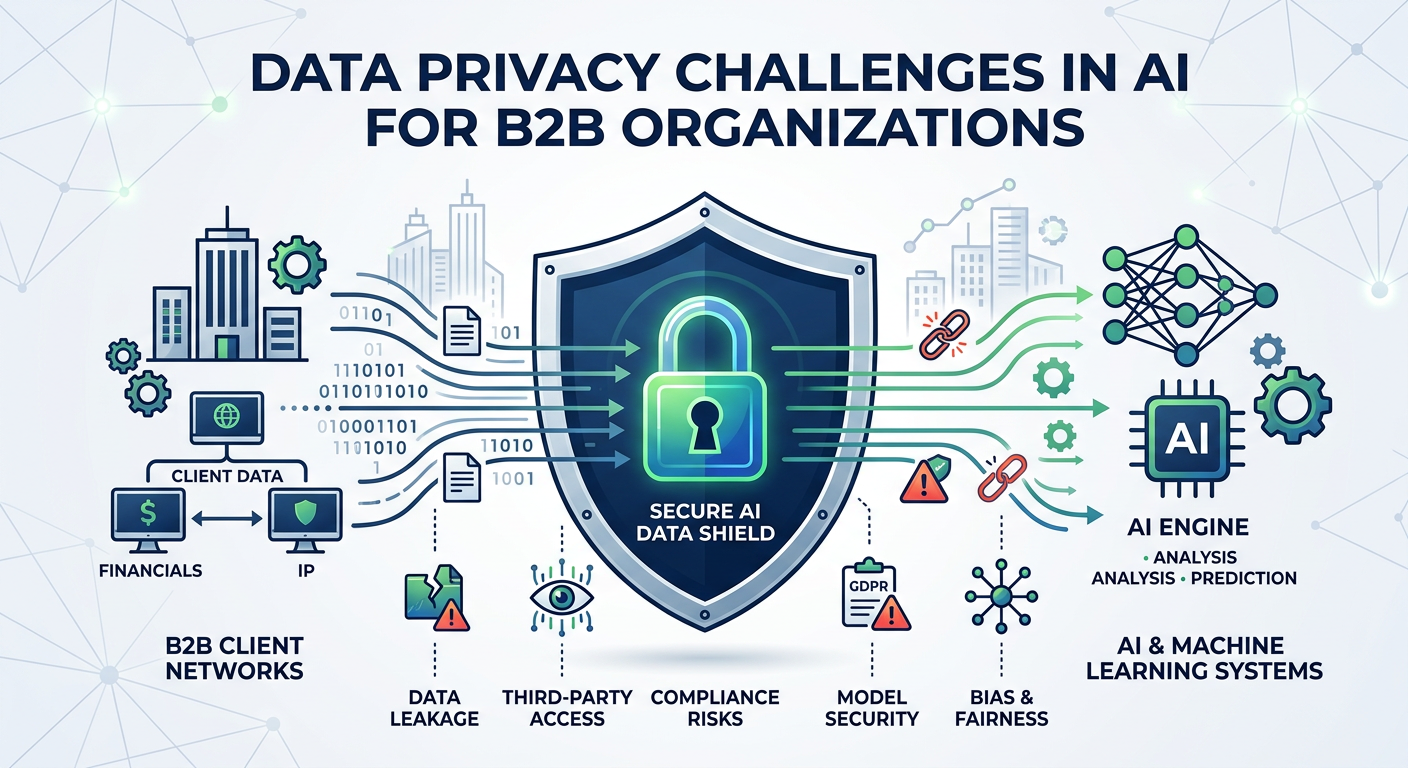
B2B organizations face several unique challenges when implementing AI while maintaining strong data privacy standards. These challenges are both technical and organizational in nature.
Some of the most common issues include:
- Data collection and consent: Ensuring that data is collected legally and with proper authorization
- Data storage and security: Protecting sensitive information from breaches and unauthorized access
- Data sharing risks: Managing how data is shared across partners, vendors, and third-party platforms
- Lack of transparency: Difficulty in understanding how AI models use and process data
- Cross-border data regulations: Navigating different privacy laws across regions
Each of these challenges requires careful planning and robust governance to avoid potential risks.
The Complexity of AI Data Processing
One of the defining characteristics of AI systems is their ability to process and analyze large volumes of data from multiple sources. While this capability is powerful, it also makes it difficult to track how data is being used at every stage.
AI models often operate as “black boxes,” meaning their internal decision-making processes are not always transparent. This lack of explainability can create concerns about how sensitive data is handled and whether it is being used in compliance with privacy regulations.
Moreover, AI systems may inadvertently use data in ways that were not originally intended, increasing the risk of privacy violations. For B2B organizations, this is particularly problematic when dealing with confidential client information or proprietary datasets.
Balancing Personalization and Privacy
One of the main advantages of AI in B2B marketing and sales is the ability to deliver personalized experiences. However, achieving this level of personalization requires access to detailed data, which can conflict with privacy requirements.
Organizations must find a balance between leveraging data for business value and respecting privacy boundaries. Overuse of data can lead to intrusive experiences, while underuse may limit the effectiveness of AI initiatives.
To strike this balance, companies should:
- Use anonymized or aggregated data wherever possible
- Implement strict access controls and data minimization practices
- Be transparent about how data is collected and used
By adopting these practices, businesses can maintain trust while still benefiting from AI-driven insights.
Regulatory Compliance and Legal Considerations
Compliance with data privacy regulations is one of the most challenging aspects of AI adoption. Laws such as GDPR, CCPA, and other regional frameworks impose strict requirements on how data is collected, stored, and processed.
For B2B organizations operating across multiple regions, compliance becomes even more complex. They must ensure that their AI systems adhere to different legal standards while maintaining consistent operations.
Key compliance requirements often include:
- Obtaining explicit consent for data usage
- Providing transparency into data processing activities
- Allowing users to access, modify, or delete their data
- Implementing strong security measures to protect data
Failure to comply with these regulations can result in significant fines and legal consequences.
Building a Privacy-First AI Strategy
To address these challenges, B2B companies need to adopt a privacy-first approach to AI. This means integrating data privacy considerations into every stage of AI development and deployment, rather than treating it as an afterthought.
A privacy-first strategy typically involves:
- Embedding privacy principles into AI system design
- Establishing clear data governance policies
- Conducting regular audits and risk assessments
- Training employees on data privacy best practices
This proactive approach not only reduces risk but also enhances trust among customers and partners.
The Role of Trust in B2B Relationships
Trust is a cornerstone of B2B relationships, and data privacy plays a crucial role in maintaining it. Clients expect their data to be handled responsibly and securely, especially when it involves sensitive business information.
Organizations that demonstrate strong data privacy practices can differentiate themselves in the market. On the other hand, a single data breach or privacy violation can have long-lasting consequences, including loss of clients and damage to brand reputation.
By prioritizing transparency, accountability, and security, companies can build stronger and more resilient relationships with their stakeholders.
The Future of Data Privacy in AI
As AI technologies continue to evolve, data privacy will remain a dynamic and evolving challenge. Emerging trends such as federated learning, differential privacy, and secure multi-party computation are being developed to address some of these concerns.
In the future, we can expect:
- Greater emphasis on explainable AI and transparency
- Stronger global regulations and standardization
- Increased adoption of privacy-enhancing technologies
- More collaboration between organizations and regulators
These developments will shape how B2B companies approach AI and data privacy in the years to come.
Conclusion
Data privacy in AI is one of the most significant challenges facing B2B organizations today. While AI offers immense potential for innovation and growth, it also introduces complex risks related to data security, compliance, and trust. Successfully navigating these challenges requires a strategic and proactive approach.
By building a strong data foundation, implementing robust governance frameworks, and adopting privacy-first principles, organizations can harness the power of AI while safeguarding sensitive information. Ultimately, companies that prioritize data privacy will not only reduce risk but also strengthen their reputation and competitive position in an increasingly data-driven world.