Introduction
Business complexity is becoming an increasingly important challenge for modern organizations as they adopt artificial intelligence, automation, cloud platforms, analytics tools, and interconnected digital systems. Businesses have always looked for ways to improve efficiency, make better decisions, and reduce operational challenges. However, the technologies introduced to simplify business operations can sometimes create an entirely different problem: organizations become so dependent on interconnected systems that understanding how everything works becomes increasingly difficult.
The challenge often starts with good intentions. Marketing teams introduce automation to improve campaign performance, sales departments adopt AI-powered platforms to prioritize prospects, finance teams implement intelligent reporting tools, and HR departments use digital platforms to streamline recruitment. Each solution may deliver improvements within its respective department. However, when these technologies operate independently, organizations can experience growing business complexity across their entire operational environment.
As artificial intelligence becomes more deeply integrated into enterprise workflows, this challenge becomes even more significant. Businesses may have systems that generate recommendations, automate decisions, and exchange information across departments, yet employees and managers may struggle to explain why certain outcomes occur. The question is no longer simply how much technology an organization can adopt. It is whether the organization can remain in control of the technology it depends on. Business complexity becomes a serious concern when organizations introduce new technologies without establishing a clear strategy for managing their interconnected systems. Reducing business complexity requires companies to look beyond individual software implementations and understand how technology affects the entire organization.
1. How Business Complexity Develops Through Technology Adoption
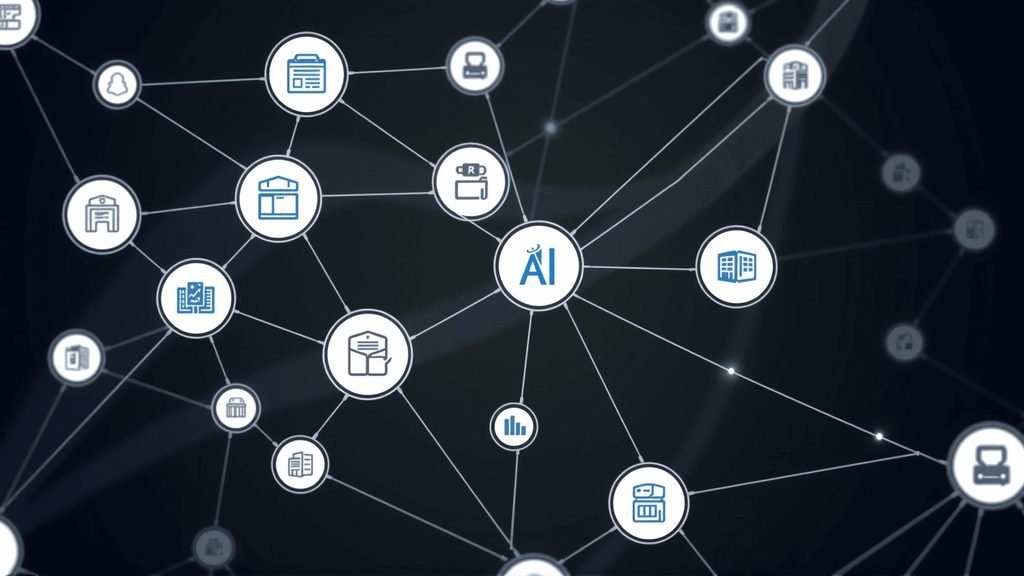
Digital transformation is rarely a single implementation project. It usually involves introducing multiple applications, platforms, integrations, and automated processes over time. Each department identifies its own challenges and selects technologies that promise to address them.
Although this approach can improve departmental productivity, it can also create business complexity when organizations fail to consider how individual systems interact.
For example, a marketing department may introduce an automation platform to manage campaigns, while the sales team uses a separate CRM to track prospects. Finance may maintain another application for revenue reporting, and customer support may depend on an independent service management platform.
Individually, these systems may work effectively. However, the organization may struggle to establish a consistent understanding of customer information, operational performance, and business priorities.
Several factors contribute to this growing complexity:
- Disconnected applications: Different departments use platforms that do not exchange information effectively.
- Overlapping functionality: Multiple tools perform similar tasks, creating unnecessary operational expenses and maintenance.
- Inconsistent data: Departments maintain different versions of important business information.
- Uncoordinated automation: Automated workflows operate independently without considering organization-wide priorities.
- Increasing integration requirements: IT teams must maintain connections between applications, databases, and services.
Managing business complexity requires organizations to evaluate how different applications, departments, and automated workflows interact. Without this broader perspective, even successful technology implementations can contribute to unnecessary business complexity.
The result is an environment where organizations have more technological capabilities but may require additional effort to understand and manage their everyday operations.
The real challenge is not the number of technologies an organization uses. It is whether those technologies work together in a way that supports a common business objective.
2. Artificial Intelligence Is Adding Another Layer of Business Complexity
Artificial intelligence is accelerating business transformation by enabling organizations to automate repetitive activities, analyze large datasets, identify patterns, and generate recommendations.
Businesses increasingly use AI-powered systems to analyze customer behavior, forecast demand, prioritize sales opportunities, optimize inventory, and support administrative workflows. These capabilities can improve efficiency, particularly when applied to repetitive or data-intensive activities.
However, business complexity increases when multiple AI systems operate independently and optimize different objectives.
Consider an enterprise organization using several AI-powered applications:
- A marketing platform recommends increasing campaign activity to attract more customers.
- A sales platform prioritizes prospects with the highest likelihood of immediate conversion.
- A financial forecasting tool recommends controlling expenditure.
- An operations platform suggests investing in additional resources to improve capacity.
Each recommendation may be reasonable when evaluated independently. However, these recommendations may not automatically align with the organization’s overall strategy.
For example, increasing marketing activity could require additional sales capacity. Expanding operational resources could increase expenditure. Prioritizing immediate conversions could also affect longer-term customer acquisition strategies.
This is where AI-driven business complexity becomes a strategic concern.
Organizations must understand how automated recommendations influence one another rather than treating every AI-generated decision as an independent improvement. This is particularly important because business complexity can increase when AI-powered applications make decisions without considering shared organizational priorities. Addressing business complexity in AI-driven environments requires coordinated decision-making, transparent workflows, and clearly defined business objectives.
The Difference Between Intelligent Automation and Intelligent Business Management
Intelligent automation focuses on making individual tasks faster and more efficient. Intelligent business management considers how those tasks contribute to broader organizational objectives.
The distinction is important.
Automating a department-specific process may improve local productivity without necessarily improving overall business performance. Enterprise leaders therefore need to evaluate technology according to its contribution to the complete business environment.
A genuinely intelligent organization does not simply automate more activities. It coordinates technology, people, information, and decisions effectively.
3. Losing Operational Visibility in an Increasingly Automated Business
Operational visibility refers to an organization’s ability to understand what is happening across its processes, systems, and departments.
It allows managers to identify problems, evaluate performance, investigate unexpected outcomes, and make informed decisions.
However, as automation expands, operational visibility can gradually become more difficult to maintain.
Consider a situation where a sales lead is automatically assigned to a representative based on a predictive model. A customer subsequently receives a personalized message generated by another platform. The sales team then receives a recommendation to prioritize a different opportunity.
If the customer experience or sales outcome becomes unexpected, employees may need to investigate several systems to understand what happened.
The problem becomes more challenging when multiple applications influence the same workflow.
Organizations may be able to observe the final result without easily identifying the sequence of automated decisions that produced it.
This creates several operational challenges:
- Employees struggle to identify the source of unexpected results.
- Managers have limited visibility into automated workflows.
- IT teams spend additional time investigating system behavior.
- Departments become dependent on technical specialists to explain routine processes.
- Business decisions become harder to evaluate because their underlying logic is not sufficiently visible.
Maintaining operational visibility requires more than monitoring application availability. Organizations must also understand how information moves between systems, which rules influence decisions, and where human intervention is possible.
Why Understanding Automated Decisions Matters
Automation should make business processes easier to manage, not harder to explain.
When an organization cannot determine why a particular decision occurred, investigating problems becomes more difficult. This can affect customer relationships, financial planning, operational performance, and management accountability.
Businesses should therefore maintain appropriate workflow documentation, decision records, monitoring mechanisms, and clear ownership for important automated processes.
Operational visibility should remain a fundamental requirement throughout digital transformation. As business complexity increases, organizations need better visibility into how automated systems interact and influence operational outcomes. Managing business complexity effectively means ensuring that employees and managers can understand, investigate, and improve important business processes.
4. When Businesses Trust AI Recommendations More Than Human Judgment
AI systems can analyze large amounts of information and identify patterns that employees might overlook. However, their recommendations depend on the quality of the information they receive, the assumptions behind their models, and the objectives they are designed to optimize.
This means that an AI-generated recommendation should not automatically be treated as the correct business decision.
For example, an AI-powered sales platform may prioritize prospects according to historical conversion patterns. While this approach may help identify familiar opportunities, it could overlook emerging customer segments that do not resemble previous buyers.
Similarly, a recruitment platform may recommend candidates based on existing employee information. If historical data reflects outdated hiring patterns, the system may unintentionally reproduce those limitations.
These situations demonstrate why human judgment remains important.
Organizations should evaluate automated recommendations by considering:
- Data quality: Is the underlying information accurate, complete, and relevant?
- Business context: Does the recommendation support current organizational priorities?
- Model limitations: Are there assumptions that could influence the recommendation?
- Potential consequences: Could following the recommendation create unintended operational or business outcomes?
- Human accountability: Who is responsible for reviewing and approving important decisions?
AI should strengthen business judgment rather than replace the responsibility to question whether a recommendation makes sense. Organizations that want to control business complexity must maintain a balance between automated intelligence and human decision-making. This approach helps prevent unnecessary dependence on AI-generated recommendations.
5. How Increasing Business Complexity Affects Employees
Technology adoption does not affect systems alone. It also changes how employees perform their responsibilities, collaborate with other departments, and make everyday decisions.
When organizations introduce multiple applications and automated workflows, employees may need to understand different interfaces, follow changing procedures, and monitor activities that were previously handled manually.
This can create additional cognitive and operational complexity.
For example, an employee who previously managed a customer interaction directly may now be responsible for monitoring an automated communication workflow, reviewing system-generated recommendations, and correcting exceptions.
Although automation may reduce repetitive work, it can introduce new responsibilities that require technical knowledge and continuous attention.
Common employee challenges include:
- Learning multiple platforms with different interfaces and workflows.
- Understanding how automated decisions affect daily responsibilities.
- Managing exceptions when automated processes produce unexpected results.
- Coordinating with departments that use different technology environments.
- Identifying when a task requires human judgment rather than automation.
Organizations must recognize that successful digital transformation depends on employee understanding, not simply technology deployment.
Building Employee Confidence in Intelligent Systems
Employees should understand more than the basic operation of a platform. They should also know why a system has been introduced, what decisions it influences, and when they should question or override its recommendations.
Businesses can support this through:
- Role-specific technology training.
- Clear documentation of automated workflows.
- Defined responsibilities for system monitoring.
- Practical guidance for handling exceptions.
- Opportunities for employees to provide feedback on technology implementations.
When employees understand the systems they use, automation becomes easier to manage and more likely to deliver meaningful operational value. Employee awareness is also essential for managing business complexity because technology adoption changes how people interact with organizational processes. Clear responsibilities and appropriate training help businesses prevent technology from becoming an additional source of operational confusion.
6. Data Fragmentation Makes Business Decisions More Difficult
Data fragmentation is another major contributor to business complexity.
Many organizations operate multiple applications that independently collect, process, and store business information. While each application may serve a specific purpose, disconnected data environments can make it difficult to establish a consistent understanding of organizational performance.
For example, marketing may track campaign engagement through one platform, sales may manage customer records through a separate CRM, finance may maintain revenue information in another application, and customer support may use a different system for service interactions.
When these platforms do not communicate effectively, managers may encounter incomplete information or conflicting reports.
The problem becomes more significant when AI-powered tools depend on different datasets and definitions.
A company may have several dashboards displaying different versions of the same performance metric. This makes it difficult for leadership teams to determine which information should guide business decisions.
Establishing a Reliable Data Foundation
Improving business intelligence requires more than purchasing advanced analytics software.
Organizations must establish reliable data foundations that support consistent reporting, effective integration, and clear information ownership.
Important considerations include:
- Data standardization: Establish consistent definitions for important business metrics and information.
- Data ownership: Identify the departments and individuals responsible for maintaining data quality.
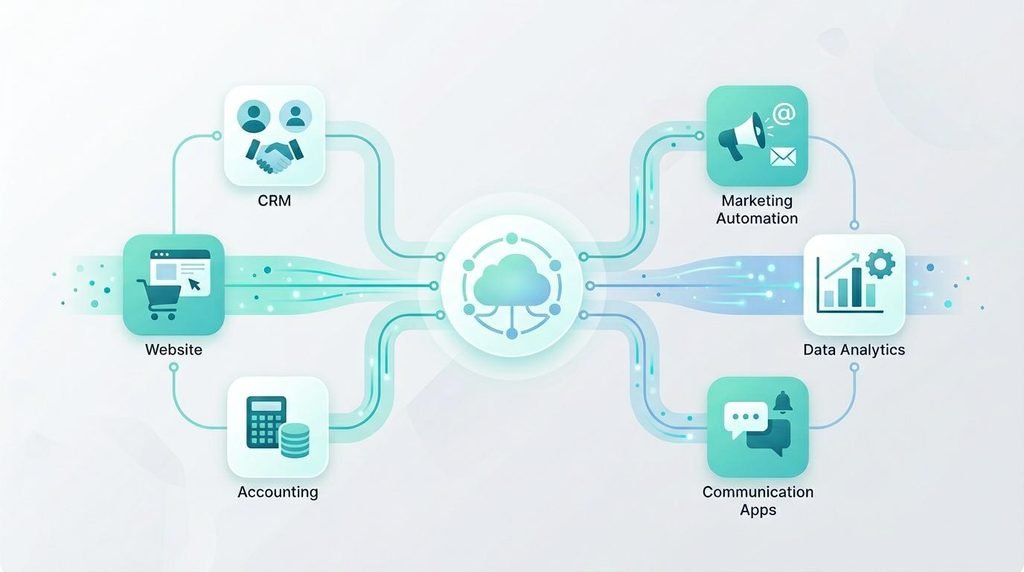
- System integration: Connect applications where information sharing creates meaningful business value.
- Data governance: Define appropriate rules for accessing, maintaining, and using organizational information.
- Reporting consistency: Ensure that departments work with reliable and aligned performance information.
A connected data environment helps organizations reduce unnecessary complexity and improve the quality of management decisions. A well-structured data environment also helps reduce business complexity by providing departments with consistent information and a shared understanding of organizational performance. This makes it easier to coordinate operations and identify opportunities for improvement.
7. Practical Ways to Reduce Business Complexity Without Slowing Innovation
The solution to increasing business complexity is not to abandon artificial intelligence, automation, or digital transformation.
These technologies can deliver meaningful business value when implemented thoughtfully.
Instead, organizations need a more structured approach to technology adoption and management. The objective should be to introduce systems that solve real problems while keeping operations understandable and manageable. A successful strategy for reducing business complexity should focus on simplifying existing processes before introducing additional technologies. Businesses can achieve better operational clarity by identifying unnecessary dependencies, improving coordination, and prioritizing technology investments that deliver measurable value.
The following practices can help businesses achieve this balance.
7.1 Evaluate Technology Before Introducing New Tools
Before adopting another platform, organizations should clearly identify the problem they want to solve.
Businesses should evaluate whether existing applications already provide the required functionality and whether a new solution will create additional integration or maintenance requirements.
Technology adoption should be driven by operational needs rather than the desire to implement the latest available innovation.
7.2 Eliminate Redundant Applications
Over time, businesses may accumulate applications that perform similar functions.
Regular technology reviews can help identify overlapping functionality, unnecessary subscriptions, and systems that no longer provide meaningful value.
Consolidating redundant tools can simplify workflows and reduce the effort required to manage enterprise technology environments.
7.3 Establish Clear AI Governance
Organizations should establish appropriate boundaries around automated decision-making.
Not every business process should operate without human oversight, particularly when decisions involve financial consequences, customer relationships, employee outcomes, or reputational risk.
AI governance should define:
- Which decisions can be automated.
- Which decisions require human review.
- Who is responsible for monitoring AI systems.
- How unexpected outcomes should be investigated.
- When human intervention is necessary.
Effective governance supports responsible innovation while maintaining organizational accountability.
7.4 Improve Integration Between Business Systems
Applications should exchange information effectively when doing so supports business requirements.
Organizations should evaluate integration opportunities across CRM platforms, marketing systems, financial applications, HR tools, and operational software.
However, integration should remain purposeful. Connecting every application without a clear objective can introduce additional dependencies and maintenance requirements.
The goal is to create a connected environment that supports business processes without unnecessary technical complexity.
7.5 Maintain Documentation and Operational Transparency
Organizations should document important workflows, system dependencies, automated decisions, and ownership responsibilities.
Documentation becomes particularly important when several systems participate in a single business process.
Clear documentation helps employees understand how processes work and enables technical teams to investigate problems more effectively.
7.6 Keep Human Oversight Where It Matters
Automation should not eliminate human responsibility.
Employees and managers should retain appropriate authority to question recommendations, review exceptions, and intervene when systems produce unexpected outcomes.
This is particularly important for decisions that can significantly affect customers, employees, finances, or business operations.
7.7 Regularly Measure the Business Value of Technology
Organizations should evaluate whether their technology investments continue to support their original objectives.
Useful evaluation areas include:
- Operational efficiency.
- Process reliability.
- Employee productivity.
- Data quality.
- System usability.
- Decision-making effectiveness.
- Maintenance and integration requirements.
A technology platform should continue to justify its place within the organization through meaningful business value.
8. The Future Belongs to Businesses That Combine Intelligence With Clarity
The future of enterprise technology will not be determined simply by how many AI tools an organization adopts or how many processes it automates.
Organizations will also need the ability to understand, coordinate, and govern the technologies they depend on.
Business complexity is not necessarily a sign of failed digital transformation. As companies grow, their operations naturally involve more systems, information, people, and dependencies. The challenge is ensuring that this growth does not undermine operational clarity. Managing business complexity will become increasingly important as enterprises expand their use of AI-powered applications, intelligent automation, and connected digital platforms. Organizations that proactively address business complexity can maintain better control over their technology environments while continuing to innovate.
Businesses that prioritize connected information, understandable workflows, responsible AI governance, and human accountability will be better positioned to manage increasingly intelligent environments.
Technology should help employees perform their responsibilities more effectively, support managers in making informed decisions, and enable departments to work toward shared objectives.
Ultimately, intelligent business management is about achieving the right balance between automation and human judgment.
Organizations should not aim to automate every decision or introduce technology into every process. They should focus on solving meaningful problems while maintaining the ability to understand how their operations function.
The real measure of digital transformation is not how technologically advanced a business appears. It is how effectively that technology helps the organization operate, adapt, and make better decisions.
Frequently Asked Questions
1. What does business complexity mean?
Business complexity refers to the challenges organizations experience when managing interconnected processes, technologies, departments, and decisions. It can increase when businesses introduce multiple applications, automation platforms, and AI-powered systems without coordinating how they operate together.
2. Why is business complexity increasing in modern enterprises?
Business complexity is increasing because organizations are adopting more digital platforms, artificial intelligence tools, cloud applications, and automated workflows. When these technologies operate independently, they can create disconnected information, overlapping processes, and additional management requirements.
3. How does artificial intelligence contribute to business complexity?
Artificial intelligence can increase business complexity when multiple AI systems make recommendations or automate decisions based on different objectives and datasets. Without proper coordination, organizations may struggle to understand how these decisions affect their overall business performance.
4. What is the relationship between automation and operational visibility?
Automation reduces the need for manual involvement in repetitive processes. However, when automated workflows are not properly documented or monitored, employees may struggle to understand why certain decisions occur. Maintaining operational visibility requires appropriate monitoring, documentation, and human oversight.
5. How can businesses reduce technology-related complexity?
Businesses can reduce technology-related complexity by reviewing existing applications, removing redundant tools, improving system integration, standardizing data, documenting workflows, and establishing clear responsibilities for technology management.
6. Why is human oversight important in AI-driven business operations?
Human oversight helps organizations evaluate AI recommendations, identify unexpected outcomes, and maintain accountability. It is particularly important for decisions involving financial consequences, customer relationships, employee outcomes, and business reputation.
7. How does data fragmentation affect enterprise decision-making?
Data fragmentation occurs when business information is stored across disconnected applications and databases. It can create inconsistent reports, incomplete insights, and conflicting performance metrics, making it more difficult for managers to make informed decisions.
8. What role does AI governance play in reducing business complexity?
AI governance establishes clear rules, responsibilities, and boundaries for AI-powered systems. It helps organizations determine which decisions can be automated, which require human review, and how automated processes should be monitored and evaluated.
9. Can businesses become more efficient without adopting additional technology?
Yes. Organizations can improve efficiency by simplifying existing workflows, consolidating redundant applications, improving employee training, strengthening data management, and making better use of their current technology investments.
10. What should businesses prioritize when planning digital transformation?
Businesses should prioritize operational clarity, reliable data, purposeful automation, system integration, employee understanding, and responsible AI adoption. Digital transformation should support measurable business objectives rather than simply increasing the number of technologies an organization uses.