AI Procurement Era and the Shift to Machine-Led Buying Decisions –
AI Procurement Era is redefining enterprise sales by shifting decision-making power from human-only evaluation to AI-augmented procurement systems. Enterprise sales has traditionally revolved around the assumption that buyers rely on sales teams for product understanding, vendor comparison, and purchase decisions. For decades, vendors benefited from information asymmetry, where sales representatives held more product knowledge than customers.
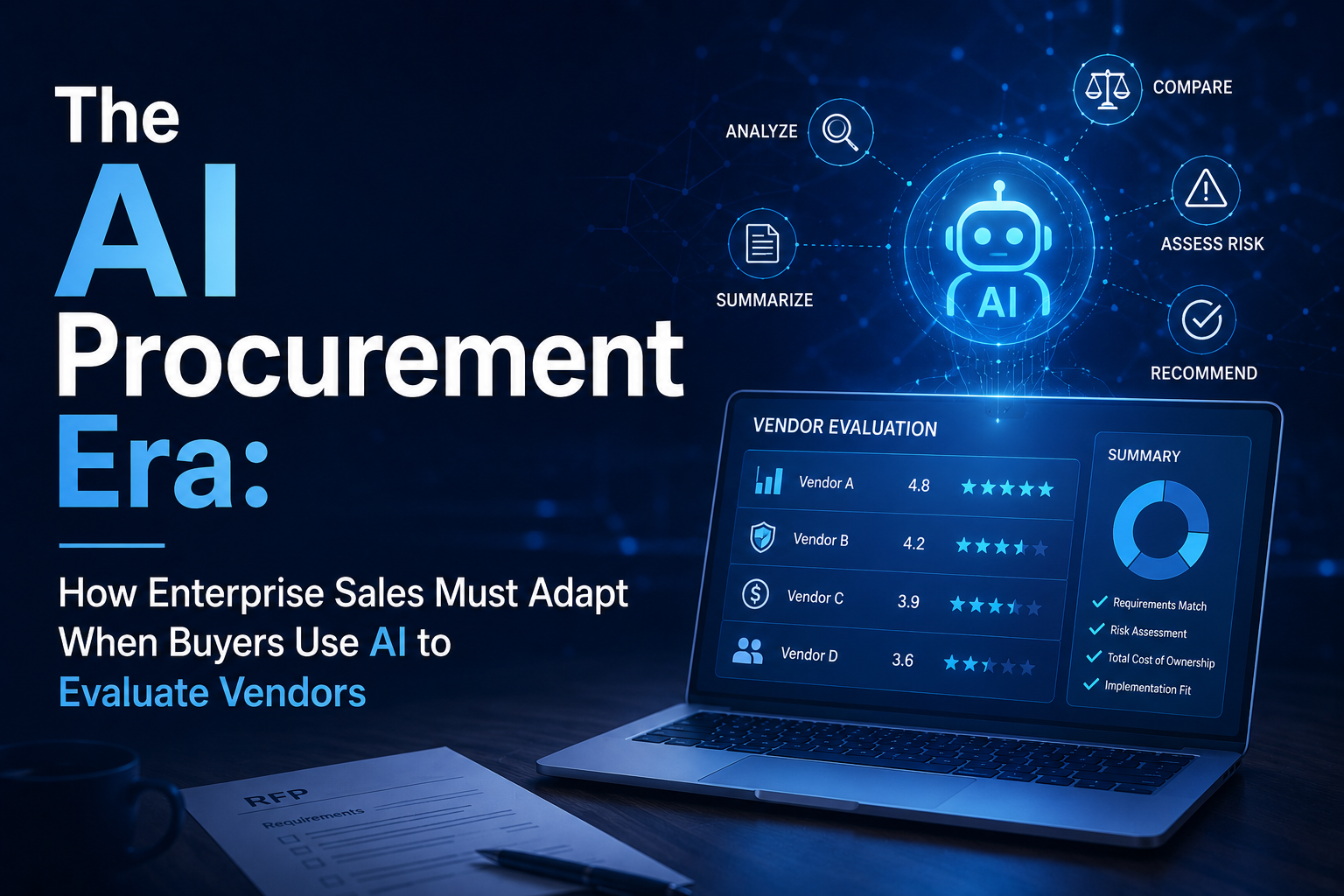
The AI Procurement Era is fundamentally transforming enterprise buying behavior by introducing intelligent systems into vendor evaluation and decision-making processes. Instead of relying solely on human-led assessments, organizations now use AI-powered procurement systems that analyze proposals, compare vendors, and evaluate compliance in real time. This shift is enabling faster, more accurate, and data-driven procurement decisions across complex enterprise environments.
The Growing Complexity of Enterprise Procurement –
Modern enterprise procurement has become increasingly complex, involving multiple stakeholders such as finance, legal, cybersecurity, compliance, and executive leadership. Large-scale purchasing decisions require analyzing hundreds of pages of technical documentation, compliance reports, pricing models, and implementation plans.
Within the evolving AI-driven procurement ecosystem, enterprise sales teams must adapt to a landscape where buyers are supported by machine intelligence at every stage of evaluation. These systems go beyond traditional analysis by assessing structured enterprise data, performance metrics, and contractual transparency. As a result, vendors are increasingly required to present machine-readable business information that can be interpreted by both AI systems and human stakeholders.
How AI Procurement Era Is Changing Vendor Competition –
The AI Procurement Era introduces a new competitive layer where vendors are no longer evaluated only by humans but also by intelligent systems. Unlike traditional buyers, procurement AI prioritizes structured data, consistency, and factual accuracy over persuasive messaging.
AI systems can detect contradictions in proposals, evaluate compliance gaps, and compare measurable outcomes across vendors. This means that organizations relying heavily on marketing narratives without structured evidence may be filtered out before reaching decision-makers.
Winning enterprise deals now depends on how well organizations present machine-readable, verifiable business information.
Expanded Evaluation Criteria in AI-Driven Procurement –
AI-powered procurement systems significantly expand evaluation criteria beyond pricing and product features. Vendors are now assessed on:
- Security compliance and certifications
- Financial stability and risk factors
- Customer success metrics
- Integration complexity
- Product roadmap alignment
- Operational scalability
- Sustainability and governance practices
This expansion means enterprise sales strategies must ensure every capability is measurable, documented, and algorithmically verifiable.
The Importance of Structured Enterprise Information –
The AI Procurement Era increases demand for structured, machine-readable enterprise content. Traditional sales materials designed for humans often rely on storytelling and high-level messaging, which AI systems cannot easily interpret.
Instead, procurement AI prefers structured data such as:
- Technical specifications
- Implementation methodologies
- Pricing frameworks
- Compliance documentation
- Performance benchmarks
- Customer outcome reports
Organizations that fail to structure their knowledge risk reduced visibility in AI-driven procurement pipelines.
Transformation of RFP and Vendor Evaluation Processes –
Request for Proposal (RFP) workflows are becoming increasingly AI-driven. Procurement teams use AI to generate complex RFPs, while vendors use AI to automate response creation using internal knowledge systems.
This creates a dual-intelligence environment where both buyers and sellers rely on AI. Competitive advantage now depends on maintaining accurate, structured, and continuously updated organizational knowledge.
Compression of the Sales Influence Window –
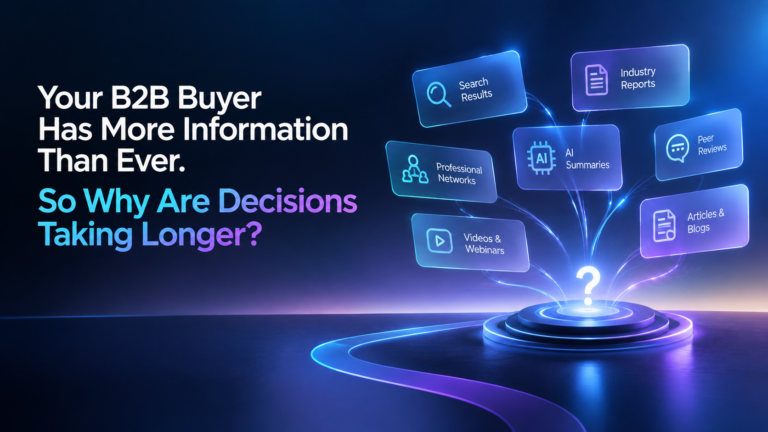
In the AI Procurement Era, buyers enter sales conversations significantly more informed than before. AI tools allow procurement teams to analyze industry trends, estimate costs, evaluate risks, and define requirements independently.
This compresses the traditional influence window of enterprise sales teams. Vendors must now engage at a deeper strategic level from the very first interaction, focusing on value alignment rather than basic education.
Trust and Transparency as Competitive Advantages –
Trust becomes a critical differentiator in AI-driven procurement environments. While AI systems evaluate structured evidence, human executives evaluate credibility and long-term reliability.
Organizations that provide transparent documentation, measurable outcomes, and consistent messaging across all platforms gain stronger positioning in both AI and human evaluation layers.
Changing Dynamics of Enterprise Negotiation –
Procurement AI significantly enhances buyer negotiation capabilities. Buyers can independently benchmark pricing, analyze contract fairness, and evaluate commercial risk with high accuracy.
As a result, traditional negotiation tactics based on information gaps are losing effectiveness. Successful negotiations now focus on:
- Transparent pricing models
- ROI-driven value delivery
- Long-term strategic partnerships
AI Adoption in Sales Organizations –
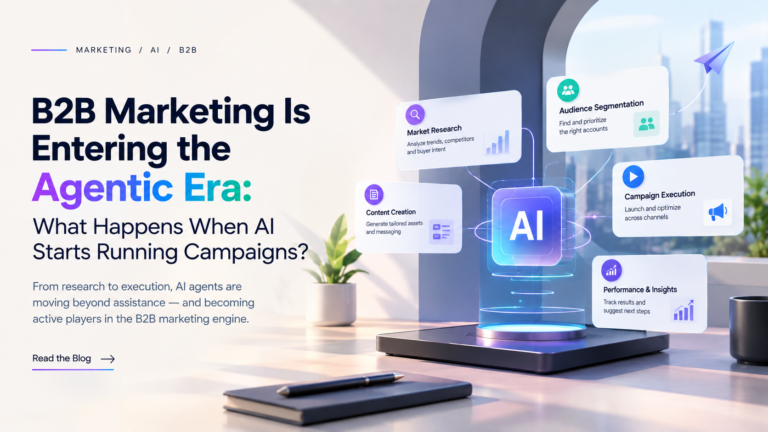
To match procurement intelligence, vendors are increasingly adopting AI tools for proposal generation, competitive analysis, pricing optimization, and customer engagement.
However, long-term success requires more than automation. It requires combining AI efficiency with human expertise, empathy, and strategic relationship management.
Content Strategy in the AI Procurement Era –
Every piece of enterprise content now contributes to machine-readable vendor identity. AI systems continuously analyze whitepapers, case studies, documentation, and product materials to build a perception of vendor capability.
This requires strict content governance to ensure consistency, accuracy, and alignment across all public-facing assets.
Conclusion –
The AI Procurement Era represents not the decline of enterprise sales but its evolution into a more transparent, data-driven, and intelligence-powered discipline.
Organizations that adapt will succeed by aligning their sales processes with how AI evaluates information. Those that fail to adapt will struggle in an environment where buying decisions are increasingly shaped by intelligent systems from the earliest stages of evaluation.
The future belongs to vendors that combine structured knowledge, operational excellence, and verifiable value—ensuring credibility with both human decision-makers and AI-driven procurement systems.