AI Investment Is Rising—but Returns Are Not Guaranteed –
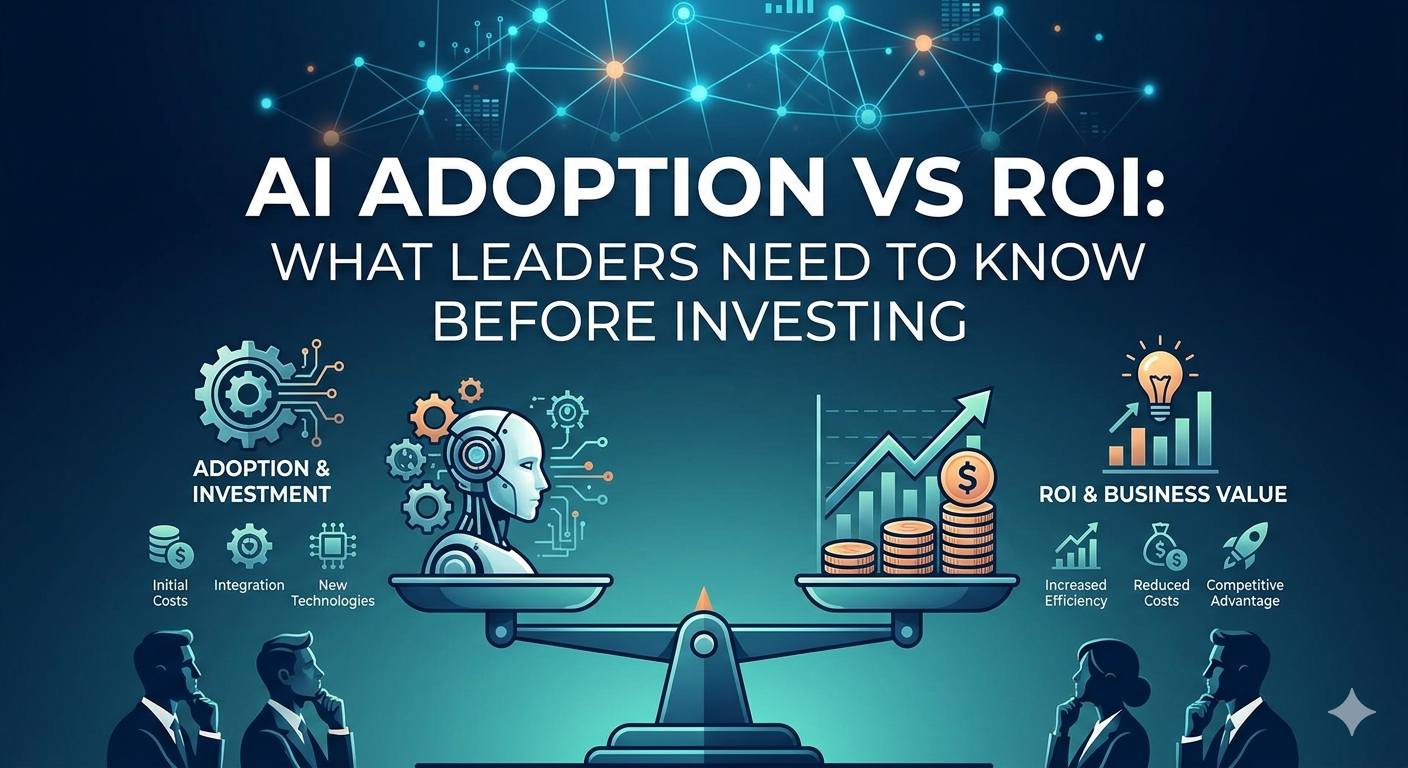
Artificial Intelligence has become a top priority for businesses in 2026, with companies investing heavily to stay competitive. However, adopting AI does not automatically translate into measurable returns. Many organizations rush into implementation without fully understanding the financial implications, leading to underwhelming outcomes. Leaders often assume that AI will quickly improve efficiency or reduce costs, but the reality is more complex. Successful AI adoption requires clear objectives, structured planning, and alignment with business goals. Without these, AI initiatives risk becoming expensive experiments rather than value-generating assets. The gap between adoption and ROI is often caused by unrealistic expectations and lack of execution discipline. Businesses must approach AI as a long-term investment rather than a quick fix.
- High investment does not guarantee high returns
- Many AI projects fail due to poor planning
- ROI depends on execution, not just technology
Defining ROI in AI Is More Complex Than It Seems –
Unlike traditional investments, AI does not always produce immediate or easily measurable returns. ROI in AI can come in various forms—cost savings, productivity gains, improved decision-making, or enhanced customer experience. The challenge lies in quantifying these benefits accurately. Many companies struggle to link AI outcomes directly to financial performance, making it harder to justify continued investment. Leaders must establish clear metrics before implementation to track success effectively. This includes defining key performance indicators (KPIs) and setting realistic timelines for results. Without a structured measurement framework, even successful AI projects may appear ineffective. Understanding how to measure ROI is critical to making informed investment decisions.
- ROI includes both direct and indirect benefits
- Measuring AI impact is often challenging
- Lack of clear KPIs leads to confusion
Common Barriers That Reduce AI ROI –
Several obstacles can prevent organizations from achieving strong returns on AI investments. One major issue is poor data quality, as AI systems rely heavily on accurate and structured data. Without it, results become unreliable and ineffective. Another challenge is the lack of skilled talent to implement and manage AI systems properly. Integration with existing systems can also be complex and costly, slowing down progress. Additionally, resistance to change within organizations can limit adoption and usage. Many employees may not trust or fully understand AI tools, reducing their impact. These barriers highlight that AI success is not just about technology—it’s about people, processes, and data working together.
- Poor data quality affects AI performance
- Lack of skilled talent limits effectiveness
- Integration challenges increase costs and delays
Where AI Actually Delivers Strong ROI –
Despite the challenges, AI can deliver significant value when applied to the right use cases. Areas with repetitive tasks, large datasets, and clear decision-making processes tend to benefit the most. For example, automation of routine operations can reduce labor costs and improve efficiency. Predictive analytics can help businesses make better forecasts and reduce risks. Customer support automation can enhance response times and satisfaction. The key is to focus on practical, high-impact applications rather than broad or experimental initiatives. Companies that start small and scale gradually are more likely to see measurable returns. Identifying the right opportunities is critical to maximizing ROI.
- Automation reduces operational costs
- Predictive analytics improves decision-making
- AI enhances customer experience
Strategic Approach Leaders Must Take Before Investing –
Before investing in AI, leaders must take a structured and realistic approach. This begins with identifying specific business problems that AI can solve effectively. Instead of adopting AI for the sake of innovation, organizations should align it with clear strategic goals. Budget planning should include not just implementation costs but also maintenance, training, and scaling expenses. Leaders must also ensure that teams are prepared through proper training and change management initiatives. Building a strong data foundation is equally important for long-term success. Finally, companies should adopt a phased approach—starting with pilot projects, measuring outcomes, and scaling gradually. This reduces risk and improves the chances of success.
- Align AI with specific business goals
- Plan for total cost, not just initial investment
- Invest in training and change management
- Ensure strong data infrastructure
Conclusion –
AI adoption in 2026 presents both significant opportunities and considerable challenges for business leaders. While the potential for improved efficiency, cost savings, and innovation is high, achieving a strong return on investment requires careful planning and execution. Organizations must move beyond the hype and focus on practical applications that deliver measurable value. By setting clear objectives, addressing internal challenges, and adopting a strategic approach, businesses can bridge the gap between AI adoption and ROI. In a competitive landscape, the companies that succeed will be those that treat AI not as a trend, but as a disciplined, results-driven investment.