Physical Address
304 North Cardinal St.
Dorchester Center, MA 02124
Physical Address
304 North Cardinal St.
Dorchester Center, MA 02124
Modern enterprises operate in highly competitive and fast-changing business environments where efficiency, speed, and productivity directly impact profitability and customer satisfaction. Organizations today manage complex workflows involving supply chains, sales operations, customer service, IT infrastructure, finance, manufacturing, and human resources. As businesses grow, identifying operational inefficiencies becomes increasingly difficult due to the large volume of processes, systems, and data involved.
Operational bottlenecks are one of the most common challenges enterprises face. These bottlenecks slow down workflows, reduce productivity, increase costs, and negatively affect customer experiences. Traditional methods of identifying inefficiencies often rely on manual reporting, delayed analysis, or reactive problem-solving approaches that fail to provide real-time visibility.
Artificial intelligence (AI) is transforming how enterprises detect and resolve operational bottlenecks. By analyzing large volumes of business data in real time, AI systems can identify workflow inefficiencies, predict delays, automate monitoring, and provide actionable insights that improve operational performance.
As enterprises increasingly embrace digital transformation, AI-driven operational intelligence is becoming essential for optimizing business processes, improving decision-making, and maintaining competitive advantage.
An operational bottleneck occurs when a specific stage in a workflow limits the overall efficiency or output of a business process. Bottlenecks can emerge in manufacturing, supply chain management, IT systems, customer support operations, sales processes, or administrative workflows.
For example, delayed approvals in finance departments, overloaded customer service queues, slow database performance, or inventory shortages can create bottlenecks that impact overall business productivity.
These inefficiencies often result in increased operational costs, missed deadlines, employee frustration, and reduced customer satisfaction. In large enterprises, bottlenecks may remain hidden because of disconnected systems, fragmented reporting, and complex operational structures.
Identifying bottlenecks quickly is critical because even minor inefficiencies can create significant financial and operational consequences over time.
Historically, enterprises relied on manual analysis, periodic reporting, and employee feedback to identify operational inefficiencies. While these methods can provide some insights, they often lack speed, scalability, and predictive capabilities.
Manual analysis becomes increasingly difficult as organizations generate larger volumes of operational data from ERP systems, CRM platforms, cloud applications, IoT devices, and workflow management tools.
Traditional reporting systems are often reactive rather than proactive. By the time reports reveal a problem, operational delays or financial losses may have already occurred.
Additionally, siloed departments and disconnected technologies make it difficult to gain a unified view of enterprise operations. Businesses may struggle to identify the root causes of inefficiencies because data exists across multiple systems and platforms.
This growing complexity has increased the demand for AI-powered operational intelligence solutions.
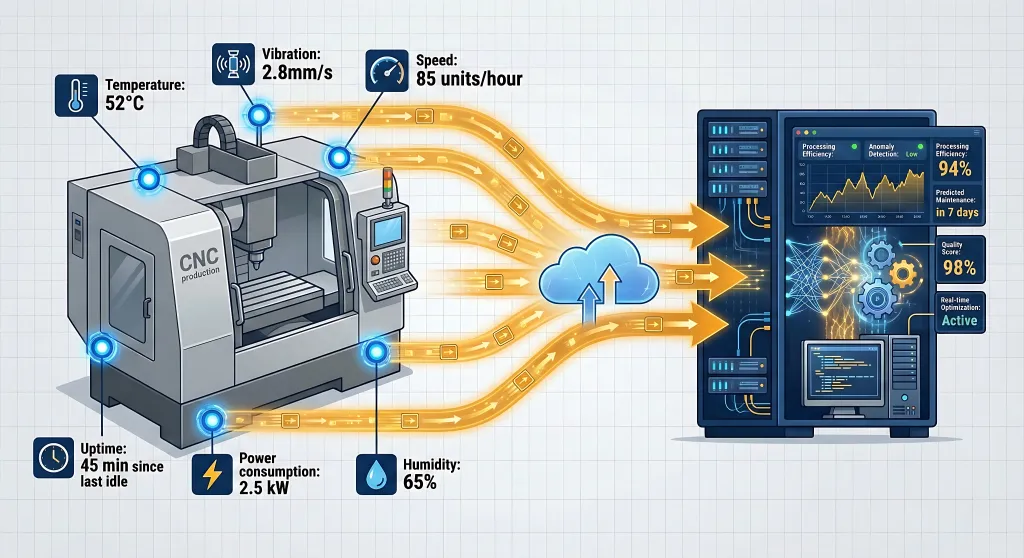
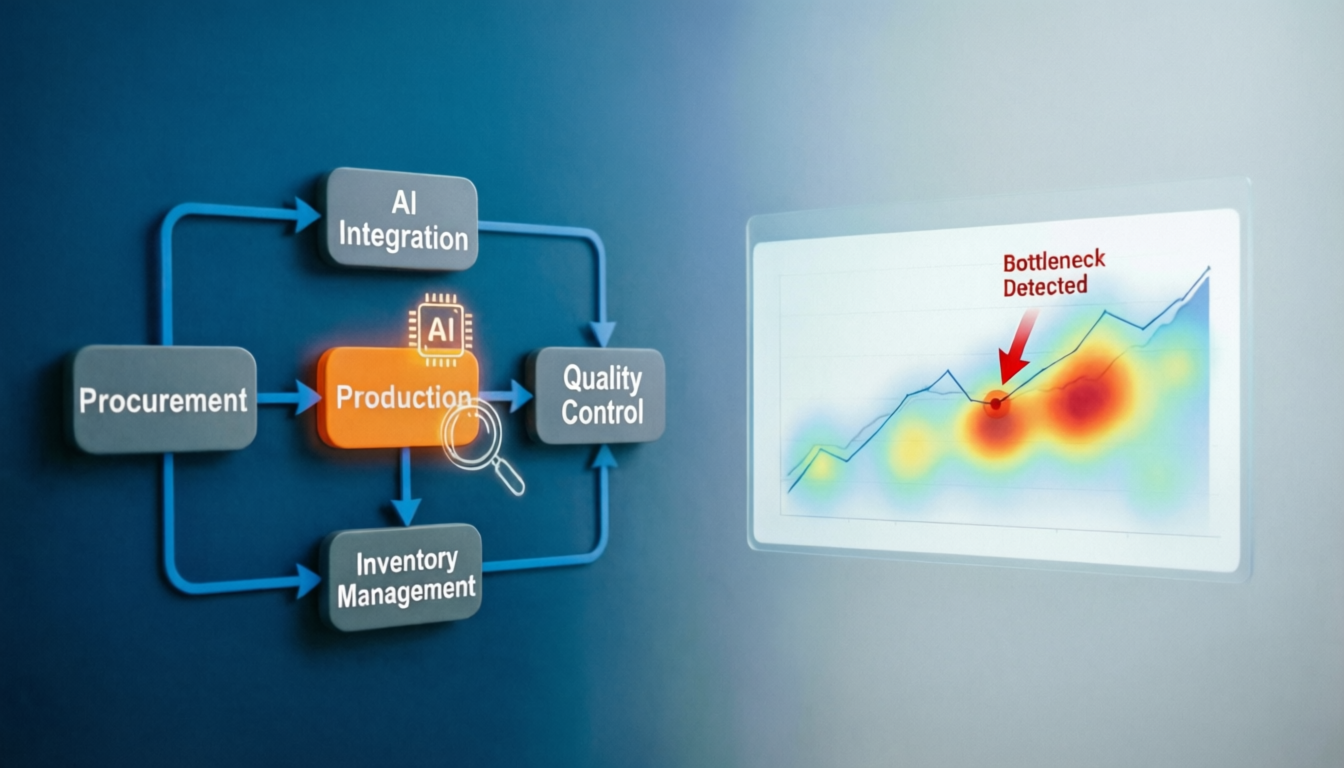
Artificial intelligence improves bottleneck detection by continuously analyzing large datasets, monitoring workflows, and identifying unusual patterns or delays in real time.
Machine learning algorithms can process operational data from multiple sources including ERP systems, CRM platforms, manufacturing systems, customer support tools, logistics software, and cloud infrastructure.
AI systems identify inefficiencies by analyzing metrics such as processing times, task completion rates, resource utilization, system performance, customer wait times, and workflow dependencies.
For example, AI can detect if a particular department consistently delays approvals, if customer support tickets accumulate beyond expected thresholds, or if production equipment frequently causes workflow interruptions.
Unlike traditional systems, AI can also predict future bottlenecks before they significantly impact operations. Predictive analytics helps businesses take preventive actions rather than reacting after problems escalate.
| Enterprise Function | Common Bottleneck | AI-Driven Detection Capability |
|---|---|---|
| Supply Chain Management | Inventory shortages | Demand forecasting and supply analysis |
| Customer Support | Long response times | Ticket prioritization and workload monitoring |
| Manufacturing | Equipment downtime | Predictive maintenance analysis |
| Finance Operations | Delayed approvals | Workflow efficiency tracking |
| HR Processes | Slow recruitment cycles | Candidate pipeline analytics |
| IT Infrastructure | System performance issues | Real-time infrastructure monitoring |
| Sales Operations | Pipeline delays | Lead progression analysis |
One of the most important AI-driven technologies for bottleneck detection is process mining. Process mining analyzes digital event logs generated by enterprise systems to visualize workflows and identify inefficiencies.
By studying how tasks move across departments and systems, AI-powered process mining tools can detect delays, redundant steps, approval bottlenecks, and process deviations.
For example, a process mining system may reveal that purchase approvals consistently slow down due to manual review stages or that customer onboarding workflows involve unnecessary repetitive tasks.
This visibility enables enterprises to redesign workflows, automate repetitive processes, and improve operational efficiency.
Predictive analytics is another major advantage of AI-powered operational management. Instead of simply identifying current problems, AI models can forecast future operational risks based on historical patterns and real-time data.
For instance, AI systems can predict when supply chain disruptions may occur because of increased demand, shipping delays, or inventory shortages. In manufacturing, predictive maintenance algorithms can forecast equipment failures before downtime happens.
Customer service departments can also use predictive analytics to anticipate spikes in support requests and allocate resources proactively.
By preventing bottlenecks before they occur, businesses reduce operational disruptions and improve overall productivity.
AI-driven bottleneck detection offers several important benefits for enterprises. One major advantage is improved operational visibility. Businesses gain real-time insights into workflows, resource allocation, and system performance across departments.
Automation is another significant benefit. AI systems can automatically monitor operations, generate alerts, prioritize issues, and recommend corrective actions without requiring constant manual oversight.
Decision-making also improves because leadership teams gain access to accurate and data-driven operational insights. Faster problem identification allows organizations to respond more quickly and reduce business disruptions.
AI additionally supports cost optimization by reducing downtime, minimizing delays, improving workforce productivity, and optimizing resource utilization.
Customer experience improvements are another major outcome since faster and more efficient operations often lead to shorter response times and higher service quality.
Machine learning algorithms continuously improve bottleneck detection capabilities over time. As AI systems analyze more operational data, they become better at identifying patterns, predicting inefficiencies, and recommending optimization strategies.
For example, machine learning models can identify recurring operational issues linked to specific business conditions, employee workloads, or system behaviors.
These systems also support intelligent workflow automation by dynamically adjusting task assignments, prioritizing workloads, or rerouting operations based on real-time conditions.
This adaptive learning capability makes AI-powered operational management significantly more effective than static reporting systems.
Despite its advantages, implementing AI-driven bottleneck detection comes with several challenges. One major issue is data quality. AI systems depend heavily on accurate, complete, and consistent operational data. Poor-quality data can reduce analysis accuracy and generate misleading insights.
Integration complexity is another challenge. Enterprises often use multiple disconnected systems that require extensive integration before AI models can analyze workflows effectively.
Privacy and security concerns also arise when AI systems process sensitive operational or employee data. Businesses must establish strong governance and compliance frameworks to protect information.
Another challenge involves organizational resistance to change. Employees and managers may hesitate to trust AI-generated recommendations or automated operational decisions.
Additionally, implementing enterprise AI solutions often requires significant investment in infrastructure, technical expertise, and workforce training.
Modern enterprises increasingly use AI not only for reporting but also for real-time decision intelligence. AI systems can monitor operations continuously and provide instant recommendations during workflow disruptions.
For example, logistics systems can automatically reroute shipments during transportation delays, while customer support platforms can prioritize urgent service requests dynamically.
Real-time intelligence enables enterprises to respond faster to operational challenges and maintain business continuity more effectively.
This shift toward intelligent operational automation is becoming a key component of enterprise digital transformation strategies.
The future of enterprise operations will likely become increasingly AI-driven. Businesses are expected to adopt more autonomous systems capable of self-monitoring, self-optimization, and predictive decision-making.
AI-powered digital twins, real-time analytics platforms, and intelligent automation systems will provide deeper operational visibility across entire business ecosystems.
Generative AI may also play a growing role in operational strategy by automatically generating workflow recommendations, process improvement plans, and resource optimization scenarios.
As enterprises continue embracing cloud computing, IoT technologies, and advanced analytics, AI-driven bottleneck management will become even more essential for maintaining scalability and competitiveness.
Operational bottlenecks remain one of the most significant challenges affecting enterprise productivity, efficiency, and customer satisfaction. Traditional methods of identifying inefficiencies are often too slow and limited to manage the complexity of modern business operations.
Artificial intelligence is transforming operational management by enabling real-time monitoring, predictive analytics, intelligent automation, and advanced workflow analysis. AI-powered systems help enterprises identify hidden inefficiencies, optimize resources, reduce downtime, and improve decision-making across departments.
Although challenges related to data quality, integration, and organizational adoption still exist, the long-term advantages of AI-driven operational intelligence are substantial.
Enterprises that successfully integrate AI into operational management strategies will be better positioned to improve efficiency, reduce costs, enhance customer experiences, and achieve sustainable growth in an increasingly competitive digital economy.