Introduction
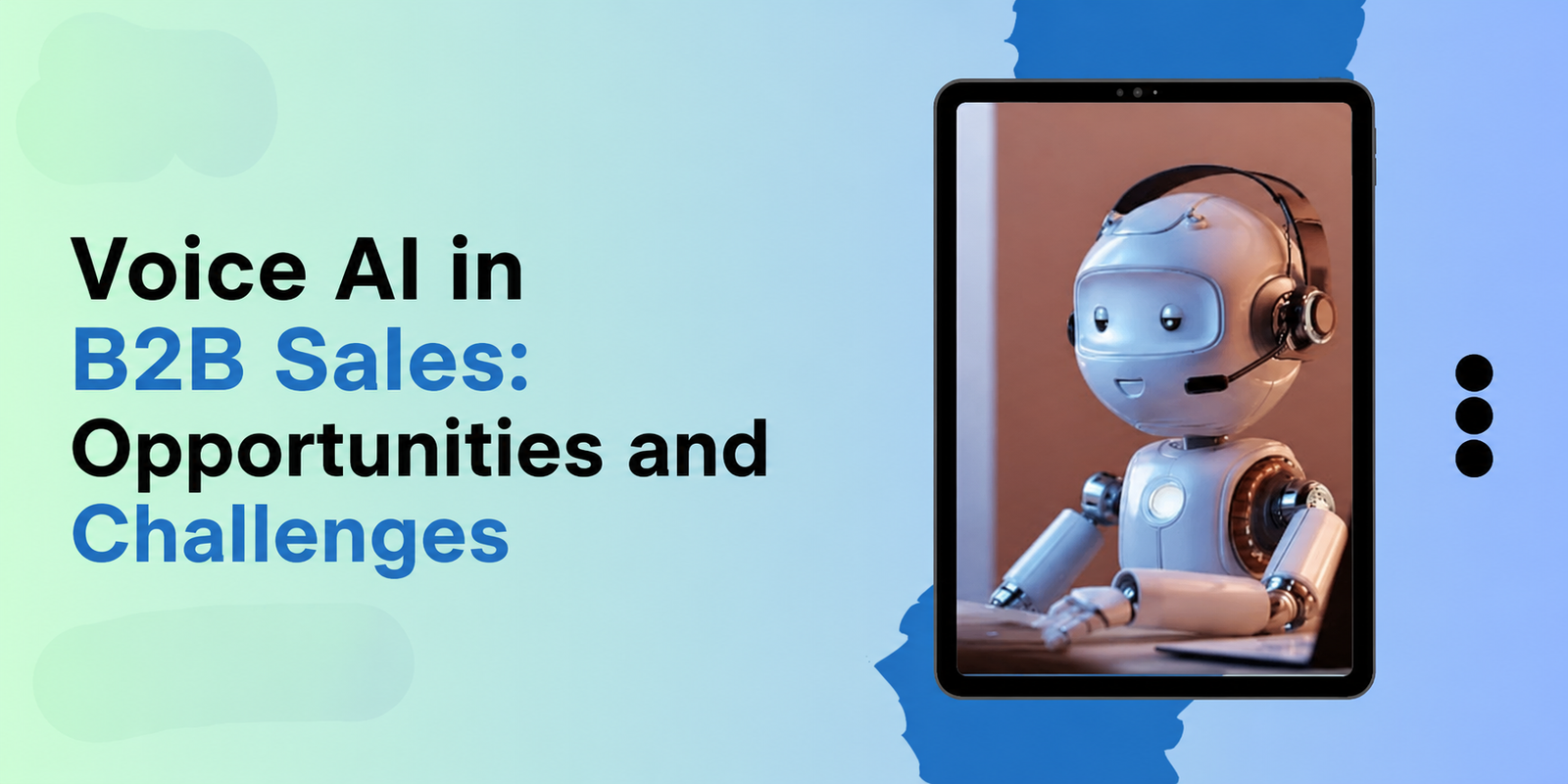
Artificial Intelligence has rapidly transformed the way businesses approach sales, customer engagement, and communication. Among the latest innovations reshaping the B2B sales landscape is Voice AI. From intelligent virtual assistants to AI-powered sales calls and automated customer interactions, Voice AI is helping organizations streamline operations, improve customer experiences, and accelerate sales processes.
As B2B buyers increasingly expect faster responses and personalized communication, companies are exploring Voice AI solutions to enhance lead qualification, customer support, appointment scheduling, and sales outreach. However, while Voice AI offers significant advantages, it also introduces challenges related to data privacy, personalization, accuracy, and customer trust.
Understanding both the opportunities and challenges of Voice AI is essential for businesses looking to integrate this technology into their sales strategies effectively.
What Is Voice AI in B2B Sales?
Voice AI refers to the use of artificial intelligence technologies such as speech recognition, natural language processing (NLP), and machine learning to simulate human-like voice interactions. In B2B sales, Voice AI systems can automate conversations, answer customer questions, qualify leads, schedule meetings, and assist sales representatives during live interactions.
Modern Voice AI platforms can analyze customer intent, detect conversation patterns, and provide real-time recommendations to sales teams. These systems are becoming increasingly valuable for organizations handling large volumes of customer interactions across multiple channels.
The Growing Role of Voice AI in Sales Operations
Traditional B2B sales processes often require significant manual effort, especially during lead generation and customer engagement stages. Sales representatives spend countless hours making cold calls, scheduling meetings, and handling repetitive tasks.
Voice AI helps automate many of these activities, allowing sales teams to focus on high-value interactions and relationship building. AI-powered voice systems can handle initial prospect communication, follow-up reminders, and frequently asked questions without requiring constant human involvement.
This growing adoption of Voice AI is driven by the need for:
- Faster customer response times
- Improved lead qualification
- Enhanced customer engagement
- Reduced operational costs
- Increased sales productivity
- Better scalability in customer communication
As businesses continue to adopt digital transformation strategies, Voice AI is becoming a key component of modern sales ecosystems.
Opportunities of Voice AI in B2B Sales
Improved Lead Qualification
One of the most significant advantages of Voice AI is its ability to automate lead qualification processes. AI-powered voice assistants can interact with prospects, gather relevant information, and determine whether a lead matches the company’s target criteria.
This reduces the burden on sales teams and ensures that representatives spend more time engaging with high-quality prospects rather than unqualified leads.
For example, Voice AI systems can ask questions about company size, budget, business needs, and decision-making timelines before routing leads to the appropriate sales representative.
Enhanced Customer Engagement
Voice AI enables businesses to maintain continuous customer engagement without delays. Prospects can receive instant responses to inquiries, schedule meetings automatically, and access information at any time of the day.
This 24/7 availability improves customer satisfaction and creates a smoother buying experience. In competitive B2B markets, faster communication often plays a major role in influencing purchasing decisions.
Additionally, AI-driven voice interactions can personalize conversations based on customer history, preferences, and engagement patterns.
Increased Sales Productivity
Sales representatives frequently spend valuable time performing repetitive administrative tasks. Voice AI can automate many of these activities, including:
- Appointment scheduling
- Call transcription
- CRM data entry
- Follow-up reminders
- Meeting summaries
- Basic customer support
By reducing manual workloads, sales teams can dedicate more time to strategic selling and relationship management.
Real-Time Sales Assistance
Modern Voice AI tools can provide real-time guidance during sales conversations. AI systems can analyze customer sentiment, identify objections, and suggest relevant responses or product recommendations while the conversation is happening.
This capability helps sales representatives improve communication quality and handle customer concerns more effectively.
Real-time sales intelligence also enables managers to monitor performance and identify coaching opportunities based on conversation data.
Data-Driven Insights
Voice AI platforms generate valuable insights from customer interactions. Businesses can analyze conversation trends, common objections, customer preferences, and buying behaviors to improve their sales strategies.
These insights help organizations optimize messaging, personalize outreach campaigns, and identify emerging market trends more accurately.
Advanced analytics also support forecasting and pipeline management by identifying which customer interactions are most likely to result in conversions.
Challenges of Voice AI in B2B Sales
Lack of Human Connection
Despite its growing sophistication, Voice AI still struggles to fully replicate human empathy, emotional intelligence, and relationship-building capabilities. B2B sales often involve complex negotiations and trust-based relationships that require human interaction.
Some prospects may feel uncomfortable interacting with AI-powered systems, especially during high-value purchasing decisions.
Businesses must find the right balance between automation and human engagement to maintain authentic customer relationships.
Data Privacy and Security Concerns
Voice AI systems process large amounts of customer data, including sensitive business information and recorded conversations. This creates concerns related to data privacy, compliance, and cybersecurity.
Organizations must ensure that Voice AI platforms comply with regulations such as GDPR and other data protection standards.
Important considerations include:
- Secure storage of voice recordings
- Customer consent for data collection
- Protection against cyber threats
- Compliance with industry regulations
- Transparent data usage policies
Failure to address these concerns can damage customer trust and expose businesses to legal risks.
Accuracy and Miscommunication
Although Voice AI technology has improved significantly, it is not always perfect. Speech recognition errors, language barriers, accents, and complex industry terminology can sometimes lead to misunderstandings.
Inaccurate responses or poor conversation experiences may frustrate customers and negatively impact brand perception.
Businesses should continuously train and optimize their AI systems to improve language understanding and conversational accuracy.
Integration Challenges
Implementing Voice AI within existing sales and CRM systems can be technically complex. Many organizations face difficulties integrating AI solutions with their current workflows, databases, and communication platforms.
Without proper integration, businesses may experience data inconsistencies, workflow disruptions, and reduced operational efficiency.
Successful Voice AI implementation often requires collaboration between IT teams, sales departments, and AI solution providers.
Resistance to Adoption
Employees may initially resist adopting Voice AI technologies due to concerns about job replacement or changes in traditional workflows. Some sales professionals may feel that AI could reduce the importance of human sales expertise.
To overcome this challenge, organizations should position Voice AI as a support tool rather than a replacement for human sales representatives.
Providing proper training and demonstrating how AI can improve productivity often helps encourage adoption.
Best Practices for Implementing Voice AI in B2B Sales
Businesses looking to maximize the value of Voice AI should follow a strategic implementation approach. Successful adoption requires careful planning, continuous optimization, and clear alignment with business objectives.
Key best practices include:
- Start with simple automation tasks
- Combine AI with human sales support
- Continuously monitor AI performance
- Train systems using industry-specific language
- Ensure strong data security measures
- Use analytics to improve customer experiences
- Gather customer feedback regularly
Organizations that take a balanced and customer-focused approach are more likely to achieve long-term success with Voice AI technologies.
The Future of Voice AI in B2B Sales
Voice AI is expected to become increasingly sophisticated in the coming years. Advances in natural language processing, emotional intelligence, and predictive analytics will enable AI systems to deliver more personalized and human-like interactions.
Future Voice AI platforms may offer deeper integration with CRM systems, advanced multilingual capabilities, and enhanced real-time decision support for sales teams.
As businesses continue to prioritize automation and customer experience, Voice AI will likely play a central role in shaping the future of B2B sales operations.
Conclusion
Voice AI is transforming B2B sales by improving lead qualification, automating repetitive tasks, enhancing customer engagement, and providing valuable sales insights. Its ability to streamline communication and support sales teams makes it a powerful tool for modern organizations seeking greater efficiency and scalability.
However, businesses must also address challenges related to human interaction, data privacy, integration complexity, and conversational accuracy. Successful implementation depends on balancing automation with personalized customer experiences and maintaining trust throughout the buyer journey.
As Voice AI technology continues to evolve, organizations that strategically adopt and optimize these solutions will be better positioned to improve sales performance, strengthen customer relationships, and remain competitive in the rapidly changing B2B marketplace.