
AI vs RPA: Which Automation Strategy is Better?
AI vs RPA: Which Automation Strategy is Better?
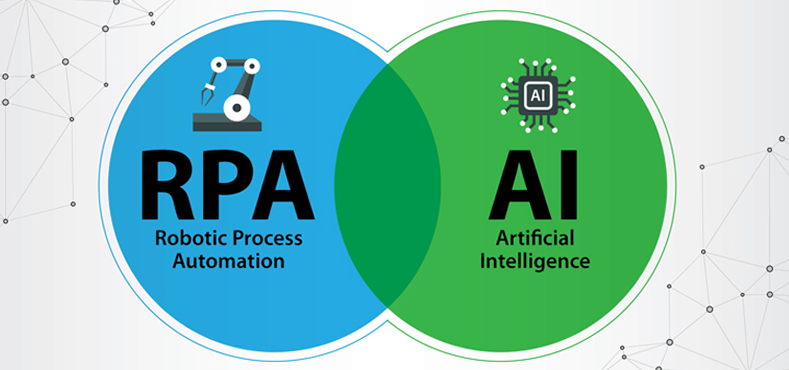
Automation has become a cornerstone of modern business operations, helping organizations improve efficiency, reduce costs, and minimize human error. Two of the most prominent automation strategies today are Artificial Intelligence (AI) and Robotic Process Automation (RPA). While both aim to streamline workflows, they operate in fundamentally different ways. RPA focuses on automating repetitive, rule-based tasks, whereas AI brings intelligence into automation by enabling systems to learn, adapt, and make decisions. Understanding the differences between these two approaches is essential for choosing the right strategy for your business.
Understanding RPA and AI –
Robotic Process Automation (RPA) is designed to mimic human actions within digital systems. It works best for structured tasks such as data entry, invoice processing, report generation, and form filling. RPA bots follow predefined rules and workflows, making them highly reliable for repetitive operations. However, they lack the ability to learn or adapt beyond their programmed instructions. Any change in process or input format may require reconfiguration.
Artificial Intelligence (AI), on the other hand, goes beyond rule-based automation. AI systems can analyze data, recognize patterns, and make decisions based on context. Technologies such as machine learning, natural language processing, and computer vision allow AI to handle unstructured data like emails, images, and voice inputs. This makes AI suitable for more complex tasks such as customer support chatbots, fraud detection, predictive analytics, and personalized recommendations.
Key Differences Between AI and RPA –
| Feature | RPA (Robotic Process Automation) | AI (Artificial Intelligence) |
|---|---|---|
| Nature | Rule-based automation | Intelligent, learning-based automation |
| Data Handling | Structured data | Structured and unstructured data |
| Flexibility | Low (fixed workflows) | High (adaptive and learning) |
| Implementation | Faster and simpler | Complex and time-consuming |
| Cost | Lower initial cost | Higher investment |
| Use Cases | Data entry, invoice processing | Chatbots, predictions, decision-making |
When to Use RPA –
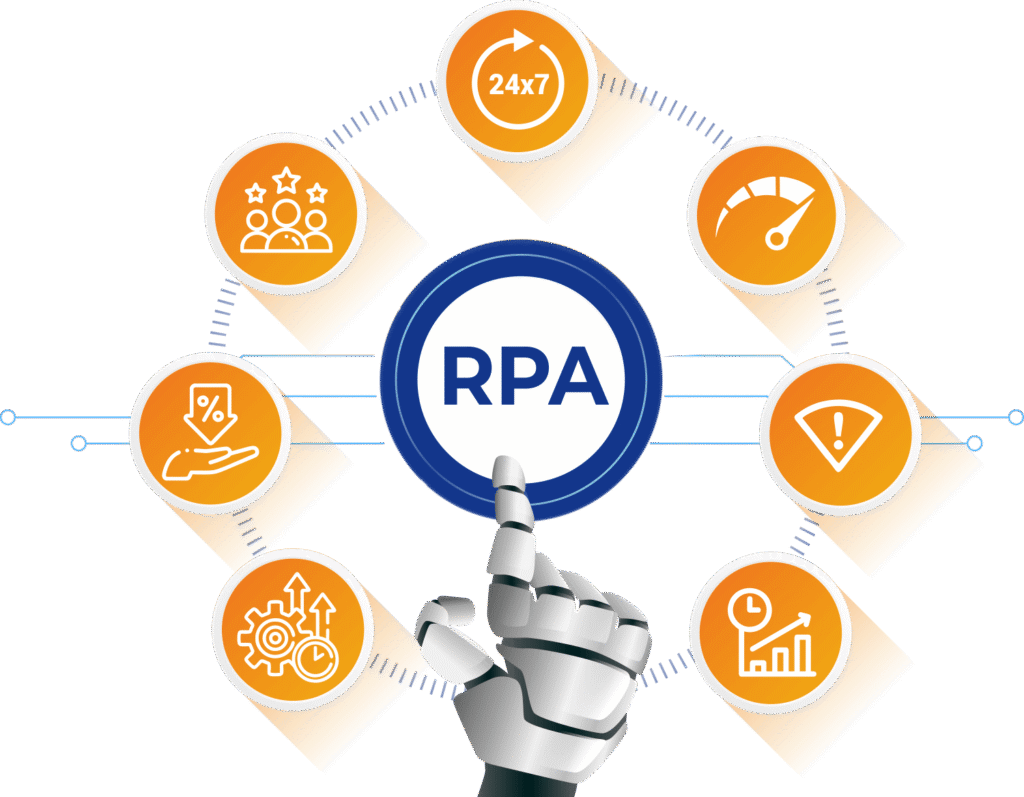
RPA is the ideal choice when processes are repetitive, rule-driven, and involve structured data. It is widely used in finance, HR, and operations for tasks like payroll processing, claims handling, and data migration. Businesses looking for quick wins and immediate ROI often start with RPA because it is easy to implement and requires minimal disruption to existing systems. It is particularly effective for automating legacy systems where APIs may not be available.
When to Use AI –
AI is better suited for scenarios that require decision-making, pattern recognition, or handling unstructured data. For example, AI can analyze customer sentiment from emails, detect anomalies in financial transactions, or provide intelligent recommendations in e-commerce platforms. While AI implementation requires more time, data, and expertise, it delivers long-term value by continuously improving and adapting to new inputs.

AI and RPA: Better Together –
Rather than choosing one over the other, many organizations are combining AI and RPA to create intelligent automation. In this approach, AI handles complex tasks such as understanding data and making decisions, while RPA executes the actions based on those insights. For example, AI can extract information from invoices using optical character recognition (OCR), and RPA can then input that data into accounting systems. This combination enhances efficiency and expands the scope of automation beyond simple tasks.
Conclusion –
The question of whether AI or RPA is better does not have a one-size-fits-all answer. RPA is best for automating repetitive, rule-based processes quickly and cost-effectively, while AI excels in handling complex, data-driven tasks that require intelligence and adaptability. The right strategy depends on your business needs, the complexity of your processes, and your long-term goals. In many cases, the most effective approach is not choosing between AI and RPA, but leveraging both to build a smarter and more scalable automation ecosystem.