Understanding the Shift: Why Skills Matter More Than Ever –
The rapid advancement of artificial intelligence is transforming how work is done across industries. Tasks that were once manual or repetitive are increasingly being automated, while new roles are emerging that require a blend of technical and human-centric abilities. This shift means that job security is no longer tied to a single profession but to one’s ability to adapt and evolve. Employees must recognize that continuous learning is not optional but essential. Organizations are also prioritizing skills over traditional qualifications, focusing on what individuals can do rather than just what they have studied. As AI continues to reshape workflows, those who remain static risk becoming obsolete. At the same time, opportunities are expanding for individuals willing to upskill and reskill. The challenge lies in identifying which skills truly matter in this changing landscape. Understanding this shift is the first step toward staying relevant. It requires a mindset that embraces change rather than resists it.
Key takeaways:
- AI is transforming job roles and skill requirements
- Continuous learning is becoming essential
- Skills are gaining importance over degrees
- Adaptability is critical for long-term relevance
Technical Literacy: Not Just for Engineers –
In an AI-driven world, having a basic understanding of technology is becoming a fundamental requirement across all professions. This does not mean everyone needs to become a programmer, but it does mean being comfortable with digital tools, data, and AI systems. Knowing how AI works at a basic level helps individuals make better decisions and collaborate effectively with technical teams. For example, understanding concepts like data analysis, automation, and machine learning can significantly enhance productivity. Employees who can interpret data and use AI tools effectively will have a clear advantage. Technical literacy also reduces fear and resistance to new technologies. It empowers individuals to see AI as a tool rather than a threat. Organizations are increasingly investing in digital training programs to bridge this gap. Building technical awareness is no longer optional—it is a core professional skill.
Important skills include:
- Basic understanding of AI and data concepts
- Familiarity with digital tools and platforms
- Ability to interpret and use data
- Comfort with automation technologies
Human Skills: The Irreplaceable Advantage –
While AI excels at processing data and performing repetitive tasks, it still lacks the depth of human understanding, empathy, and creativity. This makes human skills more valuable than ever. Abilities such as critical thinking, emotional intelligence, communication, and problem-solving cannot be easily replicated by machines. These skills enable individuals to navigate complex situations, build relationships, and make ethical decisions. In leadership roles, empathy and interpersonal skills are crucial for managing teams effectively. Creativity also plays a key role in innovation, allowing organizations to stay competitive. As routine tasks become automated, jobs will increasingly focus on areas where human input is essential. Developing these skills ensures that individuals remain indispensable in the workplace. The future of work will not be human versus machine, but human enhanced by machine.
Core human skills:
- Critical thinking and decision-making
- Emotional intelligence and empathy
- Strong communication abilities
- Creativity and innovation
Adaptability and Lifelong Learning –
One of the most important skills in an AI-driven world is the ability to adapt. Technology is evolving at a rapid pace, and the skills required today may not be sufficient tomorrow. This makes lifelong learning a necessity rather than a choice. Individuals must be willing to continuously update their knowledge and explore new areas. This includes learning new tools, understanding emerging trends, and staying informed about industry changes. Adaptability also involves being open to change and willing to step out of one’s comfort zone. Those who embrace learning opportunities are more likely to thrive in uncertain environments. Organizations are also encouraging a culture of continuous development through training and upskilling programs. The ability to learn, unlearn, and relearn is becoming a defining trait of successful professionals.
Ways to stay adaptable:
- Engage in continuous learning and training
- Stay updated with industry trends
- Be open to change and new roles
- Develop a growth mindset
Collaboration Between Humans and AI –
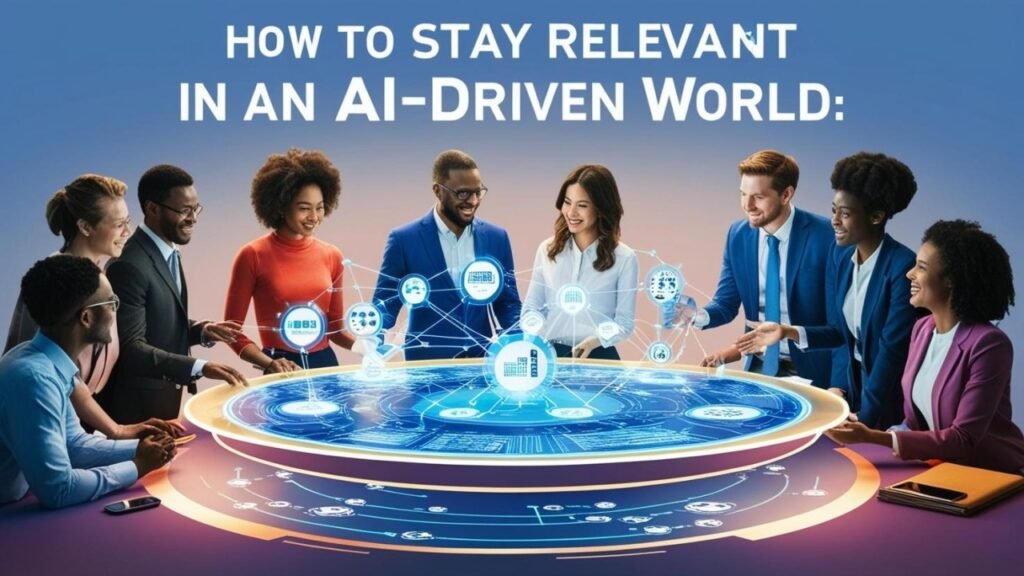
The future workplace will be defined by collaboration between humans and machines. Instead of replacing humans, AI is more likely to augment their capabilities. This means individuals must learn how to work alongside AI systems effectively. Understanding when to rely on AI and when to apply human judgment is a critical skill. Collaboration also involves interpreting AI outputs and making informed decisions based on them. Teams will increasingly consist of both human members and intelligent systems working together toward common goals. This requires a shift in mindset, viewing AI as a partner rather than a competitor. Organizations that successfully integrate human and machine collaboration will have a significant advantage. Employees who can navigate this relationship will be highly valued.
Key collaboration skills:
- Ability to work with AI tools and systems
- Interpreting and validating AI-generated insights
- Combining human judgment with machine efficiency
- Maintaining ethical oversight of AI decisions
Conclusion –
Staying relevant in an AI-driven world is not about competing with machines but about evolving alongside them. The combination of technical literacy, human-centric skills, adaptability, and the ability to collaborate with AI will define future success. As technology continues to reshape industries, those who invest in continuous learning and skill development will be better positioned to thrive. The future belongs to individuals who can balance innovation with human insight, using AI as a tool to enhance rather than replace their capabilities.