Why Every Business Will Need an Internal AI Assistant
Why Every Business Will Need an Internal AI Assistant
Artificial Intelligence is no longer a futuristic concept reserved for large technology companies. Businesses across industries are now integrating AI into daily operations to improve efficiency, automate repetitive tasks, and support faster decision-making. While many organizations currently rely on public AI tools for general productivity, the next major shift in digital transformation will be the adoption of internal AI assistants specifically designed for business operations.
An internal AI assistant is a company-specific AI system trained or configured to support employees, manage workflows, access internal knowledge, automate processes, and improve operational efficiency. Unlike public AI platforms that provide generic responses, internal AI assistants are tailored to a company’s data, systems, policies, and business objectives.
As organizations continue to generate massive amounts of information and face increasing pressure to operate more efficiently, internal AI assistants are quickly becoming a necessity rather than an optional innovation.
The Changing Nature of Modern Business Operations –
Modern businesses operate in highly complex environments. Employees work with multiple software platforms, communication tools, customer databases, cloud systems, project management applications, and reporting dashboards every day. Managing this growing digital ecosystem often creates inefficiencies, delays, and information overload.
Many employees spend a significant portion of their workday searching for information, responding to repetitive requests, creating reports, or performing administrative tasks. These inefficiencies reduce productivity and prevent teams from focusing on strategic work.
Internal AI assistants are designed to solve these challenges by acting as intelligent digital support systems that can instantly retrieve information, automate repetitive tasks, and assist employees in real time.
What Is an Internal AI Assistant?
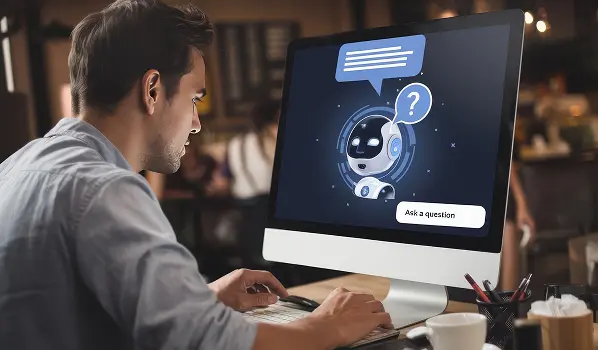
An internal AI assistant is a secure AI-powered system integrated into an organization’s infrastructure and workflows. It can interact with internal databases, company documentation, enterprise software, customer records, and communication platforms to provide contextual support to employees.
For example, an employee could ask the assistant:
“Show me the latest sales report for the healthcare sector.”
Or:
“Generate a summary of all unresolved customer support tickets from this week.”
Instead of manually searching through multiple systems, the AI assistant retrieves and organizes the information instantly.
These systems can also perform tasks such as scheduling meetings, generating reports, analyzing business data, answering HR questions, supporting IT troubleshooting, and automating routine workflows.
How Internal AI Assistants Support Different Business Departments –
The value of an internal AI assistant extends across multiple departments within an organization. Instead of functioning as a single-purpose tool, these systems can support a wide range of operational activities, improve collaboration, and reduce manual workloads across the business.
| Department | How Internal AI Assistants Help | Business Impact |
|---|---|---|
| IT Operations | Automates troubleshooting, monitors systems, analyzes logs, and generates scripts | Faster issue resolution and improved operational efficiency |
| Customer Support | Retrieves customer history, drafts responses, and summarizes support tickets | Improved customer experience and reduced response times |
| Human Resources | Answers employee queries, supports onboarding, and manages policy information | Faster HR support and better employee engagement |
| Sales & Marketing | Generates campaign insights, summarizes leads, and analyzes customer behavior | Improved targeting and better sales decision-making |
| Finance | Assists with reporting, invoice tracking, and financial data analysis | Increased accuracy and reduced administrative workload |
| Project Management | Tracks tasks, summarizes meetings, and monitors project timelines | Better collaboration and improved productivity |
| Executive Leadership | Generates business summaries and performance insights | Faster strategic decision-making |
This growing cross-functional impact is one of the primary reasons businesses are beginning to view internal AI assistants as long-term operational assets rather than experimental technologies.
Why Businesses Are Moving Toward Internal AI Systems –
Public AI tools are useful for general-purpose tasks, but they are not always suitable for enterprise environments where data privacy, security, and operational accuracy are critical. Businesses need AI systems that understand internal processes and can securely access company-specific information.
An internal AI assistant provides organizations with greater control over:
- Data security
- Workflow integration
- Access permissions
- Business context
- Compliance requirements
- Knowledge management
This level of customization allows companies to use AI more effectively while maintaining operational security and governance standards.
Improving Employee Productivity –
One of the biggest reasons businesses will adopt internal AI assistants is productivity improvement. Employees often lose valuable time performing repetitive administrative work or searching for information across disconnected systems.
An internal AI assistant can reduce these inefficiencies by providing instant answers and automating routine tasks. Instead of spending hours creating reports, summarizing meetings, or searching through documentation, employees can receive accurate information within seconds.
This allows teams to focus on higher-value activities such as innovation, customer engagement, and strategic planning.
AI assistants also reduce the learning curve for new employees by helping them navigate internal systems, policies, and processes more efficiently. In large organizations, this can significantly improve onboarding and training experiences.
Transforming Customer Support Operations –
Customer support is another area where internal AI assistants are expected to have a major impact. Support teams often handle repetitive customer inquiries, search through knowledge bases, and manage large ticket volumes.
An internal AI assistant can help support agents by:
- Retrieving customer histories instantly
- Suggesting solutions based on previous cases
- Generating response drafts
- Summarizing conversations
- Escalating critical issues automatically
This not only improves response times but also enhances customer satisfaction by enabling faster and more accurate support experiences.
In some cases, businesses may combine internal AI assistants with customer-facing chatbots to create fully integrated support ecosystems.
Enhancing Decision-Making With AI –
Businesses generate enormous amounts of operational data every day, but transforming that data into actionable insights remains a challenge. Internal AI assistants can help leaders analyze information more efficiently and make faster decisions.
Executives and managers can use AI assistants to:
- Generate performance summaries
- Analyze trends
- Compare operational metrics
- Forecast business outcomes
- Identify potential risks
Because the assistant understands the organization’s internal context, the insights become more relevant and actionable than generic AI-generated recommendations.
This capability is especially valuable in industries where rapid decision-making directly impacts competitiveness and profitability.
AI Assistants in IT and Technical Operations –
IT departments are increasingly adopting AI-powered systems to manage infrastructure, monitor performance, and automate operational workflows. Internal AI assistants can support technical teams by simplifying complex administrative and troubleshooting tasks.
For example, IT teams can use AI assistants to:
- Analyze server logs
- Generate automation scripts
- Monitor system alerts
- Troubleshoot technical issues
- Document infrastructure changes
- Provide internal technical support
In DevOps and cloud environments, AI assistants can also accelerate deployment processes and improve operational visibility.
As IT ecosystems become more complex, AI-driven operational support will become increasingly important for maintaining efficiency and reliability.
Security and Data Privacy Advantages –
One of the major concerns surrounding public AI platforms is data privacy. Many organizations hesitate to share sensitive business information with external AI services due to compliance, security, and confidentiality risks.
Internal AI assistants address these concerns by operating within secure enterprise environments. Organizations can control:
- User access permissions
- Data storage policies
- Security protocols
- Compliance requirements
- AI training data sources
This enables businesses to leverage AI capabilities without compromising sensitive information.
Industries such as healthcare, finance, legal services, and government sectors are particularly likely to adopt internal AI assistants because of strict regulatory and privacy requirements.
The Competitive Advantage of AI-Driven Businesses –
Businesses that adopt internal AI assistants early may gain a significant competitive advantage. AI-driven organizations can operate faster, automate more processes, reduce operational costs, and improve employee efficiency.
As competitors increasingly integrate AI into daily workflows, companies without internal AI capabilities may struggle to keep pace with evolving operational standards.
Much like email, cloud computing, and enterprise software became essential business technologies over time, internal AI assistants are likely to become a standard component of future workplaces.
Organizations that delay adoption may eventually face productivity gaps compared to AI-enabled competitors.
Challenges Businesses Must Prepare For –
Although internal AI assistants offer significant benefits, implementation also comes with challenges. Businesses must carefully plan AI adoption strategies to avoid operational and security issues.
One challenge is ensuring data accuracy. AI systems can sometimes generate incorrect or misleading outputs, making human oversight essential.
Another concern is employee adaptation. Some workers may initially resist AI-driven workflows due to fears about job displacement or changing responsibilities. Companies will need to provide training and communicate how AI is intended to support rather than replace employees.
Integration complexity is another factor. Building an effective internal AI assistant often requires connecting multiple enterprise systems, databases, and workflows. Organizations may need dedicated AI teams or technology partners to manage implementation successfully.
The Future of Internal AI Assistants –
The future workplace will likely include AI assistants as standard digital collaborators across departments. Employees may interact with AI systems throughout the workday to retrieve information, automate tasks, generate reports, and support decision-making.
Future internal AI assistants may evolve into highly advanced enterprise platforms capable of understanding company operations at a deeper level. These systems could eventually coordinate workflows across departments, monitor business performance proactively, and provide predictive operational recommendations.
As AI technology continues to mature, internal assistants may become as fundamental to business operations as enterprise resource planning systems and cloud infrastructure are today.
Conclusion –
Internal AI assistants are rapidly emerging as one of the most important technologies in modern business environments. As organizations face increasing operational complexity, growing data volumes, and rising productivity demands, AI-powered internal support systems offer a practical solution for improving efficiency and decision-making.
From customer support and IT operations to analytics and workflow automation, internal AI assistants can help businesses streamline operations while maintaining security and compliance.
The organizations that successfully integrate AI into their internal processes will likely gain stronger operational agility, faster decision-making capabilities, and a significant competitive advantage in the years ahead.
In the near future, having an internal AI assistant may no longer be considered an innovation. It may simply become a standard requirement for running a modern business efficiently.