Physical Address
304 North Cardinal St.
Dorchester Center, MA 02124
Physical Address
304 North Cardinal St.
Dorchester Center, MA 02124

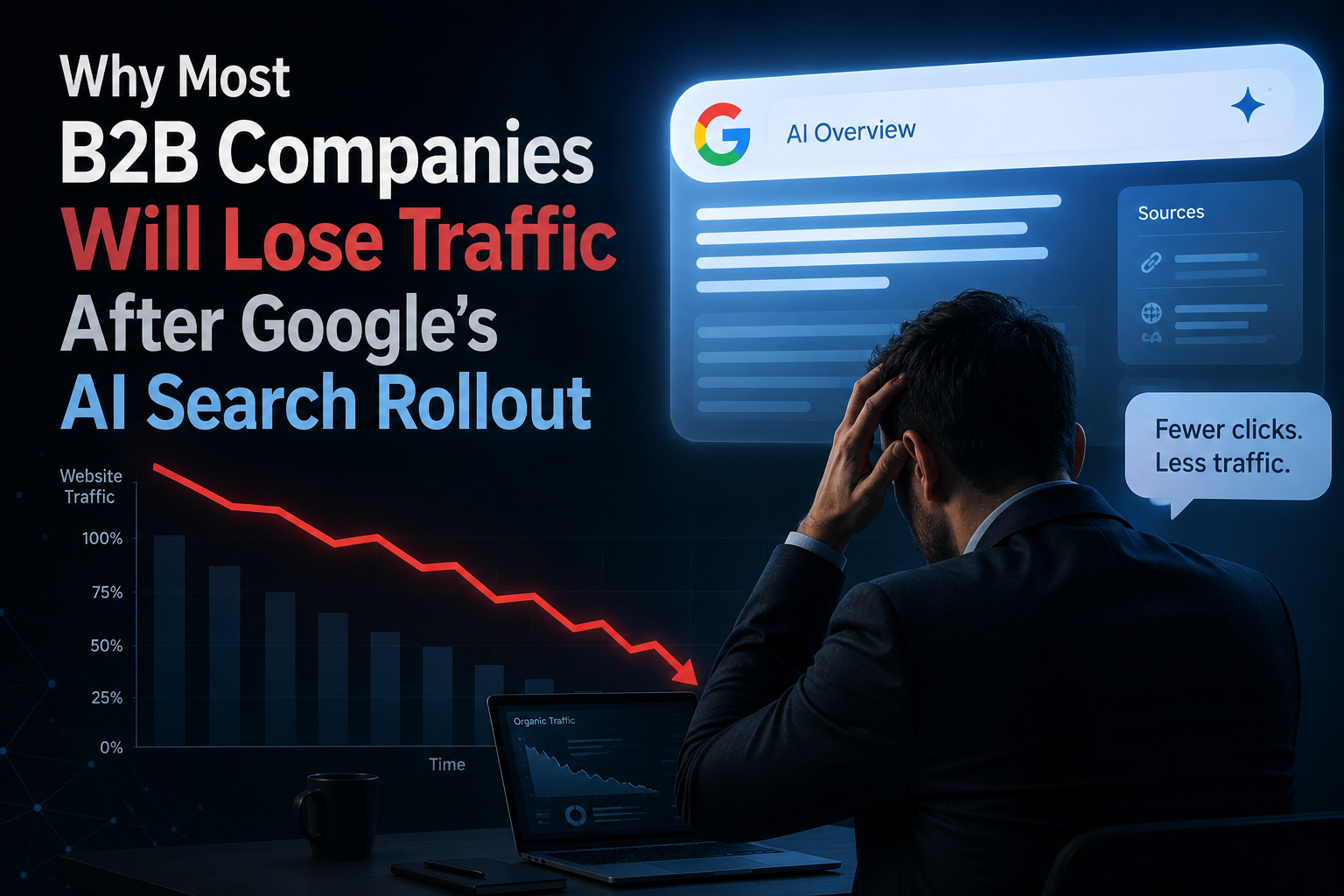
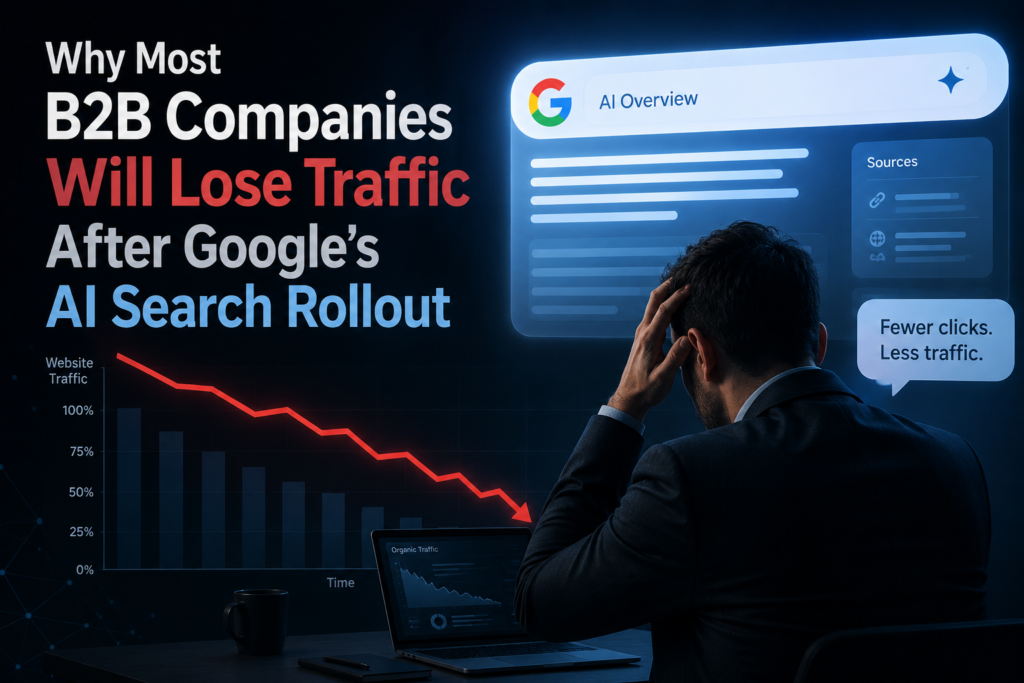
Google’s AI-powered search experience is fundamentally changing how users discover information online. Instead of showing a long list of websites for users to click through, Google now increasingly provides direct AI-generated answers at the top of search results. For B2B companies that rely heavily on organic traffic, this change could significantly reduce website visits over the next few years. Buyers searching for software comparisons, industry insights, technical solutions, or service recommendations may get summarized answers instantly without needing to visit external websites. This creates a major challenge for businesses whose marketing strategy depends on SEO-driven traffic generation. Many B2B brands spent years building keyword-focused blogs designed to rank on Google, but AI search is reducing the importance of traditional rankings. Informational queries that once generated thousands of monthly visitors may now produce fewer clicks because the answer already appears within the search engine itself. As AI search evolves, websites offering generic or repetitive content will become less visible. Companies that fail to adapt their content strategy may experience declining lead generation, reduced authority, and weaker digital visibility across competitive markets.
For years, B2B marketers focused heavily on producing large volumes of SEO-friendly content targeting high-volume keywords. This strategy worked because Google rewarded websites that consistently published optimized articles. However, AI search systems are now capable of summarizing common information from multiple sources instantly. As a result, blogs that simply repeat widely available advice no longer provide unique value. Thousands of B2B companies currently publish nearly identical content around topics such as digital transformation, SaaS trends, cloud computing, automation, and lead generation. AI systems can easily aggregate this information into concise answers, reducing the need for users to visit the original source. The companies most at risk are those relying on outsourced, low-quality, or AI-generated articles without unique expertise or research. Search engines are beginning to prioritize authority, firsthand insights, original data, and trusted industry perspectives. Businesses that continue publishing keyword-heavy but shallow content may experience dramatic declines in organic reach. In the AI search era, content quality alone is no longer enough; differentiation and expertise are becoming essential for maintaining visibility and credibility.
The modern B2B buyer is becoming more independent, research-driven, and digitally informed. Decision-makers no longer rely solely on vendor websites for information because AI search tools can provide quick overviews, comparisons, and recommendations instantly. Enterprise buyers now spend more time researching anonymously before ever contacting a sales team. This means many early-stage discovery searches may never result in direct website visits. Instead, users gather information from AI-generated summaries, LinkedIn discussions, industry communities, podcasts, analyst reports, and trusted creator content. The traditional B2B marketing funnel is becoming fragmented and non-linear. Buyers often interact with multiple touchpoints before considering a vendor seriously. Companies that depend entirely on Google traffic for lead generation face increasing vulnerability because search itself is changing into an answer engine rather than a traffic distribution platform. To stay relevant, brands must focus on building trust and authority across multiple digital channels. Businesses that invest only in traditional SEO while ignoring brand positioning and audience relationships may struggle to maintain long-term growth in this evolving landscape.
As AI search continues to reshape online discovery, authority and trust will become the most important assets for B2B companies. Search engines increasingly evaluate whether a business demonstrates real expertise, industry recognition, and credibility. Brands with strong reputations are more likely to be referenced within AI-generated answers, while unknown or low-authority websites may disappear from visibility altogether. This creates a major competitive advantage for businesses investing in thought leadership, executive branding, original research, and expert-driven content. Companies that consistently publish valuable insights, proprietary data, case studies, and industry analysis will stand out more than those relying on generic SEO tactics. Additionally, buyers themselves are becoming more skeptical of automated content and aggressive marketing. They want authentic expertise from real professionals who understand industry challenges deeply. Building authority now requires long-term investment in content quality, community engagement, social proof, and brand reputation. Businesses that establish trust across multiple platforms will remain discoverable even as search algorithms evolve. In contrast, companies chasing short-term SEO tactics may gradually lose relevance in AI-powered search ecosystems.
The companies that survive Google’s AI search transformation will not be the ones producing the most content, but the ones creating the most valuable and differentiated content. B2B marketing is entering a new era where visibility depends on expertise, brand authority, and audience trust rather than simply ranking for keywords. Businesses must move beyond traditional SEO strategies and adopt broader digital influence models. This includes investing in research-driven content, webinars, podcasts, newsletters, community engagement, and executive personal branding. Companies should also prioritize creating content that AI systems cannot easily replicate, such as proprietary insights, real-world experiences, technical analysis, and unique perspectives. Traffic from search engines may continue declining for many informational queries, but strong brands will still attract high-quality buyers through trust and recognition. The future belongs to businesses that become respected industry voices rather than content factories. Organizations that adapt early will build stronger resilience against changing search algorithms, while those ignoring the AI shift risk losing both visibility and market relevance over time.
Google’s AI search rollout represents one of the biggest disruptions in digital marketing history, especially for B2B companies heavily dependent on organic search traffic. Traditional SEO strategies built around keyword-focused blog production are becoming less effective as AI-generated answers reduce the need for users to click external websites. At the same time, buyer behavior is evolving toward faster research, trusted expert insights, and multi-channel discovery. Businesses that continue relying on generic content and outdated SEO tactics may face declining visibility, reduced leads, and weaker market influence. However, companies that adapt by building authority, trust, originality, and strong brand positioning can still thrive in the AI-driven future. The next generation of successful B2B marketing will belong to brands that educate, influence, and establish genuine expertise rather than simply chase search rankings.