Introduction
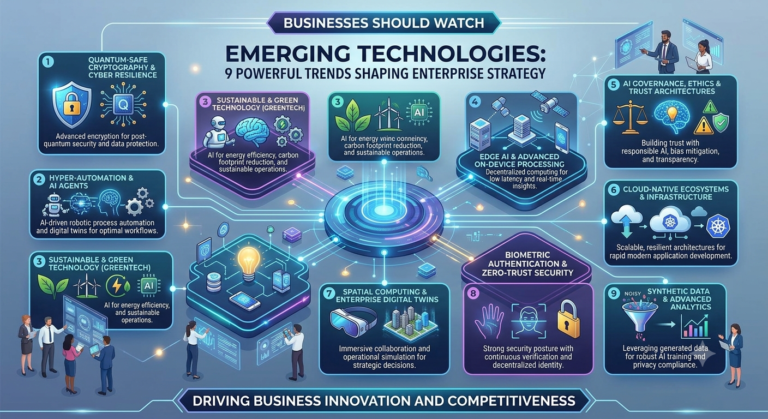
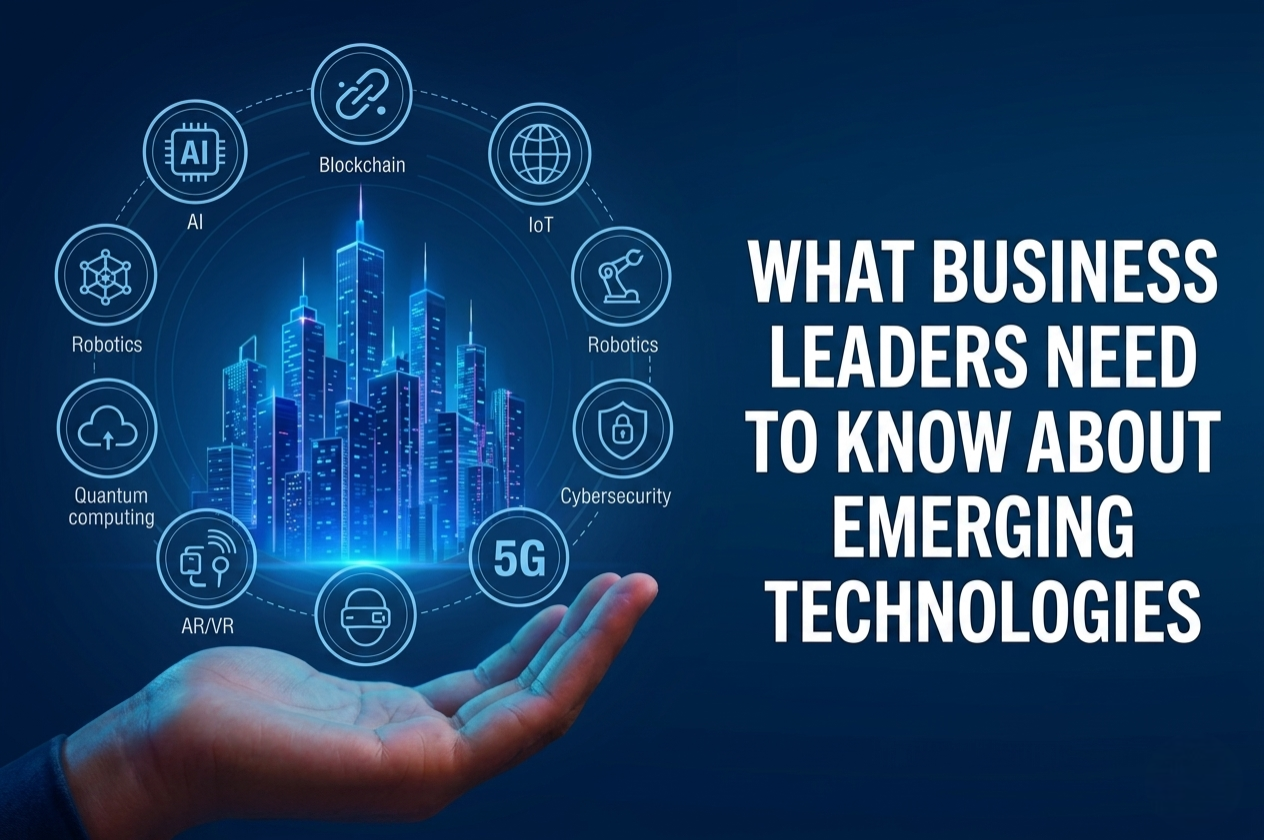
Emerging technologies are reshaping industries faster than ever before. From artificial intelligence and automation to cloud computing and advanced cybersecurity systems, businesses are entering a new era of digital transformation. In 2026, technology is no longer viewed as just an operational support function — it has become a major driver of growth, innovation, customer experience, and competitive advantage.
For business leaders, understanding emerging technologies is no longer optional. Organizations that successfully adapt to technological changes are improving efficiency, reducing operational costs, making faster decisions, and delivering better customer experiences. At the same time, companies that fail to evolve risk losing relevance in increasingly competitive markets.
However, adopting new technologies requires more than simply investing in tools or software. Leaders must understand how these technologies impact business models, workforce strategies, cybersecurity, customer expectations, and long-term growth. Strategic technology adoption is now one of the most important responsibilities for modern executives and decision-makers.
The Growing Importance of Emerging Technologies in Business
Technology is influencing every aspect of business operations. Whether it is marketing, customer service, sales, HR, finance, logistics, or product development, emerging technologies are creating new opportunities for organizations to operate more intelligently and efficiently.
Modern consumers and enterprise clients expect faster services, personalized experiences, and seamless digital interactions. Businesses that can meet these expectations through technology gain a significant competitive advantage. This is why organizations across industries are prioritizing digital transformation initiatives.
Emerging technologies are helping businesses:
- Automate repetitive tasks
- Improve operational efficiency
- Analyze large volumes of data
- Enhance customer experiences
- Strengthen cybersecurity
- Accelerate innovation
- Support remote and hybrid work models
Business leaders must recognize that technology adoption is not simply an IT initiative — it is a core business strategy.
Artificial Intelligence Is Becoming a Business Necessity
Artificial intelligence is one of the most transformative technologies influencing businesses in 2026. AI is no longer limited to large technology companies; organizations of all sizes are integrating AI into their daily operations to improve productivity and decision-making.
AI-powered systems can analyze data, automate workflows, predict trends, personalize customer interactions, and improve operational efficiency. Businesses are using AI for customer support, marketing automation, sales forecasting, fraud detection, workforce planning, and predictive analytics.
For business leaders, the key challenge is understanding how AI can create measurable business value rather than adopting it purely because it is trending.
Some of the most impactful AI applications include:
- AI-powered customer service chatbots
- Predictive business analytics
- Intelligent process automation
- AI-driven recruitment tools
- Personalized marketing campaigns
- Supply chain optimization
- Cybersecurity threat detection
Leaders must also understand the ethical implications of AI, including data privacy, algorithmic bias, and transparency in automated decision-making.
Automation Is Redefining Workplace Productivity
Automation technologies are changing how businesses operate by reducing manual workloads and improving efficiency. Organizations are increasingly using robotic process automation (RPA), workflow automation tools, and AI-driven systems to streamline repetitive business processes.
Automation allows employees to focus more on strategic and creative work instead of spending time on repetitive administrative tasks. This shift improves productivity while also reducing operational costs.
Business leaders should understand that automation is not simply about replacing employees. Instead, it is about enabling teams to work more effectively and efficiently.
Areas where automation is creating major impact include:
- Finance and accounting operations
- HR onboarding and payroll
- Customer service management
- IT infrastructure monitoring
- Sales and CRM workflows
- Inventory and logistics management
Companies that successfully combine automation with employee upskilling often achieve stronger long-term results.
Cybersecurity Must Be a Leadership Priority
As businesses become more digitally connected, cybersecurity risks continue to increase. Cyberattacks, ransomware, phishing scams, and data breaches are becoming more sophisticated and expensive for organizations worldwide.
In many companies, cybersecurity was previously viewed as solely an IT department responsibility. However, in 2026, cybersecurity has become a major business leadership concern because cyber incidents can damage reputation, disrupt operations, and create significant financial losses.
Business leaders need to prioritize:
- Data protection strategies
- Employee cybersecurity training
- Zero-trust security frameworks
- Cloud security measures
- Regulatory compliance
- Incident response planning
Organizations that fail to invest in cybersecurity may face severe operational and reputational consequences.
Strong cybersecurity leadership is now essential for maintaining customer trust and business continuity.
Cloud Computing Continues to Drive Digital Transformation
Cloud computing remains one of the most important technologies supporting business scalability and flexibility. Companies are increasingly moving their operations, applications, and data to cloud-based environments to improve collaboration, accessibility, and operational efficiency.
Cloud technology allows businesses to scale resources quickly while reducing infrastructure costs. It also supports remote work environments and global collaboration.
Business leaders should understand the benefits of cloud adoption, including:
- Reduced infrastructure expenses
- Better scalability
- Improved business continuity
- Enhanced remote accessibility
- Faster software deployment
- Real-time collaboration
At the same time, organizations must carefully manage cloud security, vendor selection, and compliance requirements.
Data Analytics Is Becoming Central to Business Strategy
Modern businesses generate enormous amounts of data every day. However, the real value lies in turning that data into actionable insights. Emerging analytics technologies are helping organizations make smarter, faster, and more accurate business decisions.
Business leaders are increasingly relying on real-time analytics to understand customer behavior, market trends, operational performance, and financial forecasting.
Advanced data analytics enables businesses to:
- Improve strategic planning
- Personalize customer experiences
- Predict market trends
- Optimize pricing strategies
- Improve operational efficiency
- Measure business performance more accurately
Companies that effectively use data-driven decision-making often outperform competitors that rely primarily on intuition or outdated reporting systems.
The Workforce Is Changing Alongside Technology
Emerging technologies are significantly transforming workforce structures and employee expectations. Remote work, hybrid collaboration, AI-driven workflows, and digital communication tools are changing how teams operate.
Business leaders must prepare employees for technological changes by investing in continuous learning and workforce development. Technology adoption without employee readiness often leads to resistance and reduced productivity.
Important workforce priorities include:
- Digital skills training
- AI literacy programs
- Leadership development
- Change management strategies
- Employee adaptability
- Cross-functional collaboration
Organizations that prioritize employee development alongside technology adoption create more resilient and future-ready workforces.
Businesses Must Balance Innovation With Ethics
While emerging technologies create enormous opportunities, they also introduce ethical and regulatory challenges. AI systems, data collection practices, automation, and digital surveillance raise concerns around privacy, fairness, transparency, and accountability.
Customers, employees, and regulators are paying closer attention to how companies use technology. Businesses that fail to operate responsibly may face legal risks and reputational damage.
Business leaders should establish clear policies around:
- Ethical AI usage
- Responsible data collection
- Consumer privacy protection
- Transparency in automation
- Regulatory compliance
- Fair decision-making practices
Responsible innovation is becoming a critical part of long-term business sustainability.
Technology Investments Should Align With Business Goals
One of the biggest mistakes organizations make is adopting technology without a clear strategic purpose. Not every emerging technology is suitable for every business. Leaders must focus on technologies that solve specific operational challenges or support measurable business outcomes.
Before investing in new technology, business leaders should evaluate:
- Business needs and objectives
- Return on investment (ROI)
- Employee readiness
- Scalability potential
- Integration capabilities
- Long-term operational impact
Strategic technology adoption helps organizations avoid unnecessary spending and ensures sustainable growth.
The Future Belongs to Digitally Adaptive Businesses
Businesses that succeed in the coming years will be those that embrace continuous innovation and adaptability. Technology will continue evolving rapidly, and organizations must remain flexible enough to respond to changing market conditions, customer expectations, and industry disruptions.
Digital transformation is no longer a one-time initiative. It is an ongoing process that requires continuous improvement, experimentation, and strategic leadership.
Leaders who encourage innovation, support learning cultures, and make technology-driven decisions will position their organizations for long-term success.
Conclusion
Emerging technologies are fundamentally reshaping how businesses operate, compete, and grow. Artificial intelligence, automation, cloud computing, cybersecurity, and data analytics are no longer future concepts — they are actively transforming industries today.
For business leaders, understanding these technologies is essential for making informed strategic decisions and maintaining competitive advantage. However, successful technology adoption requires more than purchasing software or implementing automation tools. It requires strong leadership, workforce readiness, ethical responsibility, and a clear long-term vision.
Organizations that embrace innovation while balancing human collaboration, security, and business strategy will be better prepared to navigate the future of business. As technology continues to evolve, leaders who stay informed and adaptable will be the ones who drive sustainable growth and long-term success in the digital era.