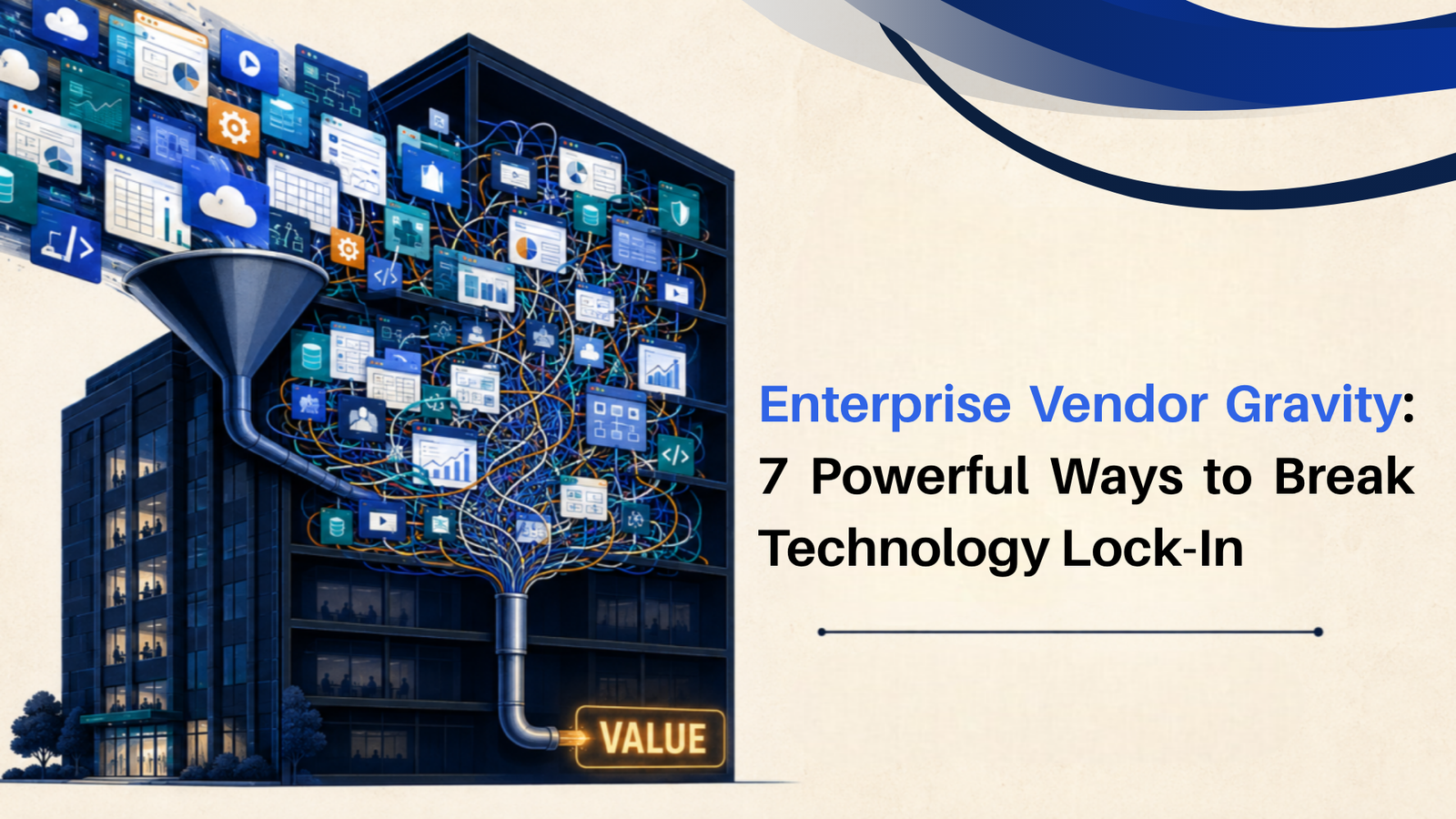
Enterprise technology markets are built around a paradox. Companies consistently look for technology that is better, faster, more cost-effective, and more innovative. Yet once a vendor becomes deeply embedded in their operations, replacing it can become increasingly difficult—even when better alternatives emerge. This phenomenon can be understood as Enterprise Vendor Gravity: the organizational force that keeps businesses attached to established technology ecosystems.
The challenge is rarely limited to the software itself. Employees know the existing platform, processes have been designed around it, integrations connect to it, historical data resides within it, and security and legal teams have already approved it. Over time, an organization stops simply using a product and starts operating within an ecosystem.
That creates a critical distinction between product value and ecosystem value. An incumbent platform may no longer be the most advanced solution available, but everything surrounding it can make changing vendors expensive, disruptive, and risky. Understanding this dynamic is essential for enterprises that want to balance stability with innovation.
What Is Enterprise Vendor Gravity?
Enterprise Vendor Gravity describes the tendency of organizations to remain dependent on established technology vendors because the effort and risk associated with moving away can outweigh the perceived benefits of switching.
Imagine an enterprise CRM platform that has been used for a decade. Thousands of employees may have been trained on it, while sales processes, reporting, customer workflows, marketing integrations, and forecasting systems have evolved around its data and architecture.
Replacing that CRM is therefore not simply a software purchase. It could involve:
- Migrating and validating historical data
- Rebuilding integrations and workflows
- Retraining employees
- Managing operational disruption
- Reassessing security and compliance
- Coordinating multiple departments
The challenger isn’t just competing against the incumbent’s product. It is competing against the cost of organizational movement.
The Real Cost of Enterprise Technology Switching –
Traditional switching costs are often viewed through a financial lens: implementation fees, migration expenses, or contract termination costs.
Modern enterprise switching costs are much broader.
Technical Switching Costs :
Migration can involve data extraction, integration changes, system configuration, testing, and validation. The complexity increases when the incumbent platform is connected to numerous business-critical systems.
Operational Switching Costs :
Changing technology often means changing how people work. Existing processes may need to be redesigned, documented, tested, and adopted across departments.
Human Switching Costs :
Employees develop familiarity with the tools they use every day. A new platform can introduce training requirements and temporary productivity losses, even if it ultimately provides better capabilities.
Strategic Switching Costs :
A migration also consumes organizational attention. IT teams, business leaders, finance, security, and operations may all need to contribute resources that could otherwise support growth initiatives.
This creates a difficult calculation: Is the long-term benefit of switching large enough to justify the short-term disruption?
How Technology Ecosystems Strengthen Vendor Lock-In –
As businesses adopt more tools from the same ecosystem, their data, workflows, and integrations become increasingly connected. This makes switching one platform more difficult and gives established vendors a stronger advantage.
Over time, replacing one solution can disrupt multiple systems and teams.
Enterprise vendor gravity becomes especially powerful when organizations adopt multiple products from the same technology ecosystem.
A company might begin with one application and gradually add other services for analytics, marketing, customer service, collaboration, identity, infrastructure, or AI.
Each additional product can create another connection to the ecosystem.
Eventually, the organization isn’t deciding whether to replace one application. It is considering whether changing one component could affect an entire network of connected systems.
This gives broad technology providers an important advantage. Their competitive strength may not come from every individual product being superior. Instead, the value comes from how effectively their products work together.
For enterprises, the key question becomes whether this integration represents strategic value or accidental dependency.
Why Procurement Often Favors the Incumbent –
On paper, enterprise procurement should compare vendors according to capabilities, pricing, security, scalability, and business requirements.
In reality, incumbent vendors have another advantage: institutional familiarity.
Security teams already understand the platform. Legal teams know the contract structure. IT teams know the architecture. Finance understands the budgeting process. Employees know the workflows.
A new vendor requires much of this knowledge to be established again.
That creates an invisible advantage that may not appear in an RFP.
The incumbent isn’t necessarily winning because it offers the best technology. It may be winning because the organization already knows how to operate with it.
Why Better Technology Still Struggles to Win –
This is one of the biggest challenges for emerging enterprise technology companies.
A challenger may offer:
- Better functionality
- Lower costs
- More advanced technology
- Greater flexibility
- A more modern user experience
Yet the enterprise may still choose the incumbent.
Why?
Because product superiority doesn’t automatically overcome switching friction.
The challenger must demonstrate more than “Our technology is better.”
It must answer a harder question:
“How can we move from the existing environment without creating unacceptable business risk?”
That is why successful enterprise challengers increasingly need to demonstrate migration support, interoperability, data portability, implementation expertise, and employee adoption—not just product features.
AI Could Increase Vendor Gravity –
AI introduces another layer to the enterprise technology ecosystem.
Organizations are increasingly incorporating AI into systems they already use rather than treating AI as an entirely separate technology layer. This can make existing platforms even more valuable because they already have access to organizational data, workflows, permissions, and identity systems.
For example, an AI capability embedded inside an enterprise platform may be attractive because it can work within existing processes and controls. A standalone AI product might perform better in a specific task but require additional integration, security reviews, data connections, and governance.
This means the enterprise AI competition may not be determined solely by model performance.
It may also depend on:
- Access to enterprise data
- Workflow integration
- Identity and permissions
- Security and compliance
- Ease of deployment
- Existing technology relationships
AI could therefore strengthen ecosystem lock-in rather than eliminate it.
The Human Side of Technology Lock-In –
Technology decisions aren’t purely technical.
Employees build habits around the tools they use every day. Workflows, shortcuts, reporting practices, internal terminology, and informal processes can become deeply connected to existing systems.
These dependencies rarely appear in procurement spreadsheets.
Yet they can have a major influence on whether a migration succeeds.
Employees may resist a new platform not because they believe it is inferior, but because they understand how disruptive the transition could be to their daily work.
For enterprise leaders, this means successful technology transformation requires more than technical migration. It requires change management, communication, training, and adoption planning.
When Vendor Consolidation Makes Sense –
Vendor consolidation isn’t inherently bad.
In many cases, reducing the number of technology providers can create genuine advantages. A smaller vendor portfolio can simplify security management, procurement, integration, support, and governance.
The problem begins when consolidation stops being an intentional strategy and becomes an unconscious dependency.
Organizations should periodically ask:
- Which technology platforms are genuinely strategic?
- Which vendors are easily replaceable?
- Where have switching costs become unusually high?
- Are integrations creating value or limiting flexibility?
- Is the current platform supporting innovation?
- Are we staying because the vendor is the best choice—or because changing feels too difficult?
These questions help distinguish strategic ecosystem management from technological inertia.
How Enterprises Can Reduce Vendor Gravity –
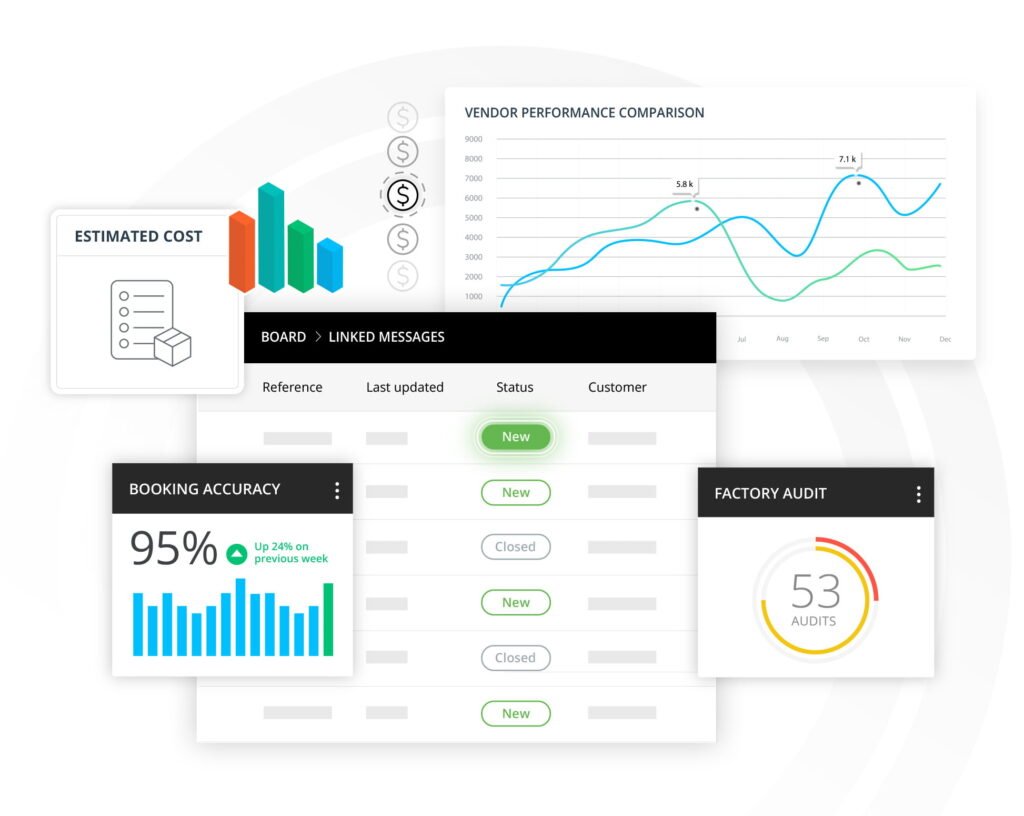
Enterprises can reduce vendor gravity by regularly reviewing technology dependencies and evaluating the true cost of staying with an incumbent. Prioritizing interoperability and data portability can also make future transitions easier.
The goal isn’t to constantly switch vendors, but to ensure technology choices remain strategic, flexible, and aligned with business needs.
The answer isn’t to constantly replace technology.
Frequent switching can create its own operational problems.
Instead, enterprises should design technology environments that preserve choice where practical.
Evaluate the Cost of Staying :
Don’t compare only the cost of switching with the current subscription price.
Consider whether the existing platform is limiting innovation, increasing complexity, or making it harder to adopt emerging technologies.
Prioritize Interoperability :
Open integrations and well-defined interfaces can make it easier to connect alternative technologies when business requirements change.
Maintain Data Portability :
Organizations should understand where critical data resides, how it can be accessed, and what would be required to migrate it.
Review Vendor Dependencies Regularly :
Technology ecosystems should be reassessed periodically rather than only when a contract is about to expire.
Measure Ecosystem Value :
Integration and consolidation can create real value. The goal isn’t maximum vendor diversity; it is maintaining the right balance between integration, efficiency, flexibility, and strategic control.
What This Means for Technology Vendors –
Enterprise Vendor Gravity also changes how technology companies should compete.
For established vendors, durable relationships should increasingly be based on genuine ecosystem value rather than making customers feel trapped.
For challengers, reducing migration friction can become a major competitive advantage.
The strongest enterprise technology propositions may therefore combine product capabilities with:
- Simple implementation
- Strong interoperability
- Data portability
- Migration assistance
- Flexible integration
- Employee adoption support
The easier it is for customers to change, the more important it becomes for vendors to continuously earn their position.
That can ultimately create healthier technology ecosystems.
The Future of Enterprise Technology Competition –
Enterprise Vendor Gravity helps explain why technological disruption often takes longer than expected.
A new product can be dramatically better and still struggle to replace an established platform because enterprises don’t purchase technology in isolation. They purchase it within a network of people, processes, data, contracts, integrations, and organizational knowledge.
The incumbent benefits from all of these relationships simultaneously.
As AI, cloud platforms, enterprise applications, and integrated technology ecosystems continue to evolve, this dynamic will become increasingly important.
The next technology battle may therefore be less about which product is best in isolation and more about which ecosystem creates the greatest long-term business value while preserving strategic flexibility.
Conclusion –
Enterprise Vendor Gravity is not simply a technology problem. It is an organizational and economic force created by accumulated dependencies.
The goal shouldn’t be to eliminate every vendor relationship or constantly switch platforms. Instead, enterprises should understand why they remain with their current providers and determine whether those relationships continue to create genuine strategic value.
For technology buyers, that means evaluating the cost of staying alongside the cost of leaving. For technology vendors, it means creating value through interoperability, integration, innovation, and customer success rather than relying solely on switching barriers.
Ultimately, the most strategically agile enterprises are not those with the fewest vendors. They are those that continue to choose their technology ecosystem deliberately.
Frequently Asked Questions –
Enterprise Vendor Gravity is the tendency of organizations to remain with established technology vendors because switching becomes increasingly difficult due to technical, operational, financial, and organizational dependencies.
Vendor lock-in generally describes the difficulty of leaving a vendor. Vendor gravity is a broader concept that includes the organizational forces—such as familiarity, integrations, employee habits, and institutional knowledge—that encourage companies to stay.
Switching can involve data migration, integration changes, employee training, workflow redesign, security reviews, implementation costs, and temporary productivity disruption.
No. Consolidation can simplify security, procurement, integration, and support. It becomes problematic when organizations continue with a vendor primarily because changing has become difficult rather than because the ecosystem still provides strategic value.
AI can strengthen existing vendor relationships when AI capabilities are embedded into platforms that already have access to enterprise data, workflows, permissions, and security controls.