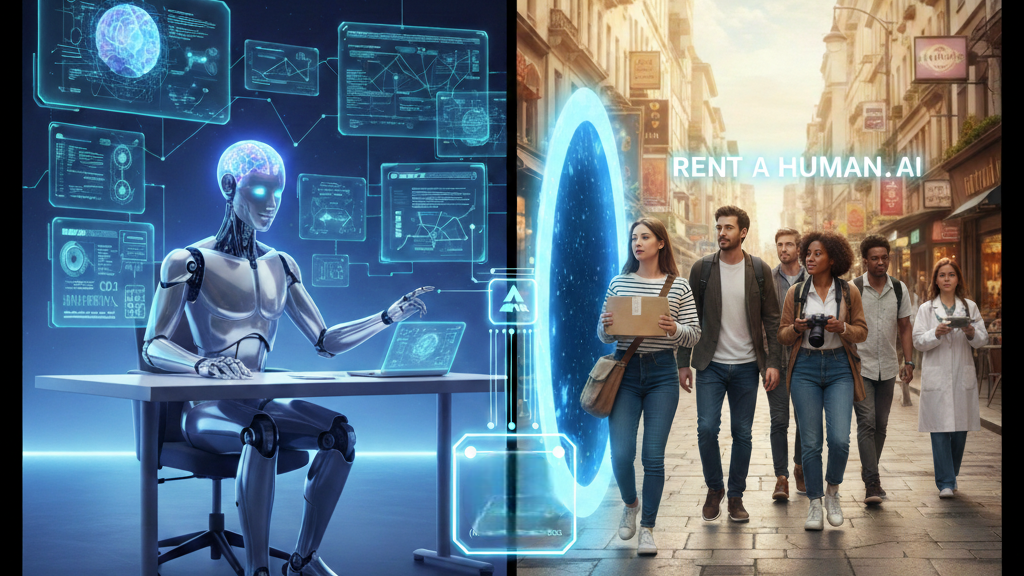
AI Employees are changing the question businesses need to ask about artificial intelligence. Instead of simply asking whether AI will replace employees, organizations are beginning to consider what happens when AI becomes an active participant in the workforce. The distinction matters. Traditional software waits for instructions, while generative AI can create content, analyse information, summarize documents and answer questions. AI agents take this evolution further by pursuing defined objectives, making decisions within boundaries, interacting with business systems and completing multi-step workflows with less human intervention.
For B2B organizations, this could lead to a fundamentally different operating model. Instead of having employees who simply use AI tools, companies may have humans working alongside specialized digital agents responsible for sales research, marketing operations, HR administration, IT monitoring, customer support, reporting and other recurring activities. The concept of an AI Employee therefore becomes less about science fiction and more about organizational design: if an AI system can perform a meaningful part of a job, how should a company structure, manage, measure and govern that work?
This shift is particularly relevant to enterprises because so much knowledge work involves repetitive processes, structured information and recurring decisions. Sales teams research accounts and update CRM systems. Marketing teams analyse campaigns and monitor competitors. HR teams answer policy questions and manage onboarding. IT teams monitor infrastructure and investigate alerts. These activities still require human oversight, but many contain components that increasingly capable AI agents can support or execute. The result could be a workplace where digital specialists operate continuously in the background, augmenting human employees rather than simply waiting for someone to open another application.
AI Employees Are Creating a Hybrid Workforce
Imagine joining an enterprise where your digital workspace includes more than an email address, laptop and employee ID. Alongside your human colleagues, you might have access to a collection of specialized AI agents.
A sales agent could research an account before a meeting, monitor relevant company developments and prepare a briefing. A marketing agent could analyse campaign performance and recommend areas for attention. An HR agent could answer routine policy questions and coordinate parts of onboarding. An IT agent could monitor systems, identify unusual activity and resolve certain categories of technical issues.
Collectively, these agents could perform work that previously consumed substantial amounts of human time.
This introduces a new dimension to productivity. Historically, organizations have often thought about workforce capacity through headcount. More sales activity meant hiring more salespeople. More customer support meant adding representatives. More marketing work meant expanding the team.
AI agents introduce another variable: computational capacity.
Organizations may increasingly be able to expand research, monitoring, analysis and information processing without increasing human headcount at the same rate. That does not necessarily mean fewer employees. Instead, it could allow existing employees to focus on more complex and strategically valuable work.
The distinction between automation and augmentation is particularly important:
- Automation removes humans from specific tasks or processes where appropriate.
- Augmentation gives employees additional intelligence or execution capacity.
- Human oversight keeps people responsible for decisions where judgment, context or accountability matters.
- Agentic workflows allow AI systems to perform multiple connected actions rather than simply respond to individual prompts.
The future enterprise will likely use all four approaches. Organizations that treat every AI initiative purely as a headcount-reduction exercise may overlook the larger opportunity: redesigning work around the combination of human judgment and machine execution.
AI Employees Could Become Persistent Digital Specialists
One of the most important characteristics of AI agents is their potential persistence.
Human employees naturally work in cycles. They attend meetings, respond to customers, switch between priorities and eventually leave for the day. A digital agent can potentially monitor a defined process continuously.
That changes the economics of certain workflows.
An agent monitoring a sales account, for example, could identify a relevant business development, assess whether it appears commercially significant and notify the appropriate salesperson. An IT agent could continuously monitor designated systems and escalate defined anomalies. A customer-support agent could process routine requests while escalating exceptions to human representatives.
This creates an important shift from on-demand software toward continuous digital work.
Instead of an employee repeatedly asking a system to perform a task, the agent may be responsible for monitoring a workflow and acting when predetermined conditions are met.
For enterprise leaders, this raises an important question: Which business processes would benefit most from continuous intelligence rather than occasional human interaction?
AI Employees Could Transform B2B Sales
B2B sales is one of the clearest areas where AI Employees could create leverage.
Sales representatives often spend significant time on activities such as:
- Account research
- Meeting preparation
- Lead prioritization
- CRM updates
- Opportunity summaries
- Follow-up drafting
- Sales forecasting
- Monitoring account developments
These activities are necessary, but they do not always represent the highest-value use of a salesperson’s attention.
An AI sales agent could potentially assemble an account briefing before a strategic meeting by organizing relevant information available to it. It could help identify organizational changes, business developments or other signals that deserve a salesperson’s attention. It could also turn sales communications into structured summaries and ask the salesperson to confirm information before updating systems.
The bigger opportunity may be continuity.
A human salesperson cannot monitor every target account every hour. A digital agent potentially can. If a target organization announces a major business development or changes its strategic direction, an agent could flag the event and suggest why it might matter.
The salesperson remains responsible for the relationship and commercial judgment. The AI Employee becomes a persistent intelligence layer around the relationship.
Sales Management Will Change Too
This could also change how sales leaders measure productivity.
Traditional sales management often emphasizes activity metrics such as calls, emails, meetings and opportunities. As AI takes over portions of administrative and research work, those metrics may become less meaningful on their own.
Leaders may increasingly need to consider:
- Quality of opportunities created
- Effectiveness of human-AI collaboration
- Time spent on strategic customer engagement
- Quality of account intelligence
- Revenue generated from AI-assisted workflows
- How effectively salespeople use available digital capabilities
The objective is not necessarily to make salespeople perform more activities. It is to enable them to spend more time on activities where human judgment creates differentiated value.
AI Employees Will Reshape Marketing Operations
Marketing has used automation for years, but traditional automation generally follows predefined rules. A form submission triggers a workflow. A lead reaches a score and enters a sequence. A customer takes an action and receives a predetermined message.
AI agents introduce the possibility of more context-sensitive workflows.
A marketing agent could monitor campaign performance, identify unusual changes, analyse customer segments and surface areas that deserve attention. Another agent could monitor publicly available competitive information and identify changes in positioning or messaging.
Content workflows could also become increasingly agentic.
One system could help transform research into content formats, while another evaluates whether the material aligns with brand guidelines, audience requirements or campaign objectives. The marketer remains responsible for strategy, editing, positioning and final decisions.
That human role may become more important, not less.
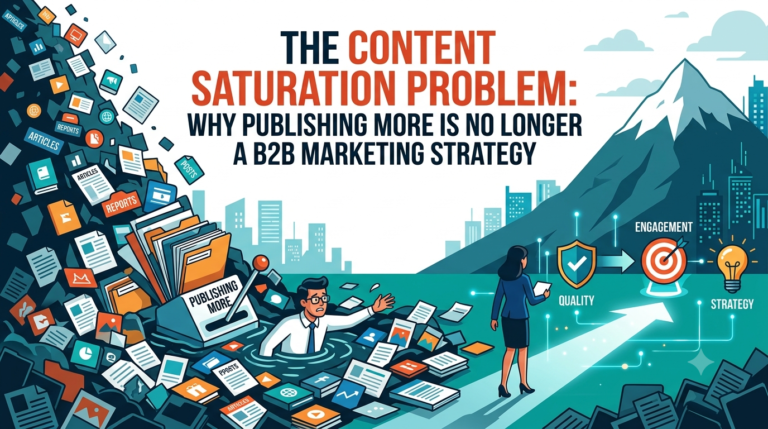
If AI makes it easy for every company to generate blog posts, emails, landing pages and social content, content volume will become less distinctive. The competitive advantage will increasingly come from:
- Original insights
- Customer understanding
- Strategic positioning
- Strong brand judgment
- Creative direction
- Effective interpretation of market signals
AI can increase the amount of material a marketing team can produce. Human judgment determines whether that material actually matters.
AI Employees Could Give HR a New Strategic Role
HR could experience one of the most significant organizational changes because the function may eventually be responsible for understanding both the human and digital workforce.
Traditionally, HR manages recruitment, onboarding, learning, performance, policies, compensation, engagement and workforce planning.
An AI-enabled enterprise adds new questions:
- Which tasks should remain human?
- Which tasks should be augmented?
- Which processes can be automated?
- What new skills will employees need?
- How should digital agents be governed?
- Who owns an AI Employee?
- How should AI-assisted performance be evaluated?
This moves AI workforce management beyond a purely technical discussion.
If an enterprise deploys specialized AI agents across sales, finance, customer service and IT, someone needs to understand their responsibilities, boundaries, performance and risks. These are organizational design questions as much as technology questions.
Responsible AI Matters Even More in HR
AI adoption within HR also requires particular care because employee information and employment decisions can be sensitive.
AI may assist with tasks such as summarizing information or organizing workforce data, but organizations need clear governance around how those systems are used and reviewed.
AI literacy should therefore extend beyond knowing how to write effective prompts. Employees and leaders need to understand when an AI recommendation can be trusted, when it requires verification and when a human decision-maker must remain accountable.
AI Employees Will Make IT and Security More Important
If AI agents become active participants in enterprise workflows, IT will become a critical part of the digital workforce architecture.
An AI agent that can access a CRM, read customer information, send communications or modify systems is more than a chatbot. It is a software actor operating within the organization’s technology environment.
That changes the access-control question.
Instead of asking only which employees can access which systems, enterprises will increasingly need to ask:
Which humans and AI agents can access which systems, under what conditions, with what permissions and for how long?
For example:
- A research agent may need read-only access.
- A customer-service agent may need permission to update designated tickets.
- An IT operations agent may require elevated privileges within tightly controlled boundaries.
- A marketing agent may be restricted from publishing content without approval.
Identity, permissions, monitoring and auditability therefore become essential components of an enterprise AI strategy.
Who Manages the AI Employees?
This could become one of the defining management questions of the AI era.
When a human employee makes a mistake, organizations have established mechanisms for investigation, training, correction and accountability. But if an AI agent repeatedly produces poor recommendations or takes an inappropriate action, responsibility can become less obvious.
Is the owner responsible? The IT team? The developer? The business department? The technology provider?
The answer cannot simply be that “the AI made a mistake.”
Organizations remain responsible for the systems they choose to deploy. Every AI Employee therefore needs clear ownership.
An owner should understand:
- What the agent is designed to accomplish
- What information it can access
- What actions it can take
- What performance standards apply
- When human approval is required
- How exceptions are escalated
- How errors are investigated
- When the agent should be modified, restricted or retired
This could eventually create new roles around AI operations, agent governance, digital workforce architecture and human-AI operations.
The precise job titles may change, but the underlying requirement will remain: digital work needs management.
AI Employees Will Redefine Job Design
Perhaps the biggest impact of AI agents will not be the disappearance of individual jobs. It will be the redesign of work itself.
Consider a salesperson who previously divided their time between research, outreach, administration and customer conversations. If AI handles more research and administrative work, the salesperson could potentially devote more time to strategic conversations and relationship building.
A marketer could spend less time manually producing assets and more time interpreting customer behaviour.
An HR professional could spend less time answering repetitive policy questions and more time designing employee experiences.
An IT professional could spend less time responding to routine alerts and more time building resilient systems.
The objective should therefore not simply be to do the same job faster.
Organizations should ask whether AI allows them to redefine the job entirely.
This distinction matters because simply adding AI tools to inefficient processes will not necessarily create meaningful transformation.
If a salesperson still has to manually enter information into multiple disconnected systems, an AI chatbot does not solve the underlying workflow problem. If a marketing team still faces unnecessary approval bottlenecks, generating content faster may have limited impact. If HR information remains fragmented across disconnected repositories, an AI assistant could potentially produce faster answers without solving the quality of the underlying information.
The greatest value comes when companies redesign the process around the technology.
The Rise of the Human-AI Manager
Management may evolve alongside the workforce.
Today’s manager typically manages people. Tomorrow’s manager could manage a combination of people and AI Employees.
A sales leader might oversee account executives alongside digital agents responsible for research, forecasting and account monitoring. A marketing leader might manage creative professionals alongside agents supporting analytics and content operations. An IT leader could oversee engineers alongside systems handling defined monitoring and incident-response activities.
The manager’s responsibilities could therefore expand to include:
- Setting objectives for humans and AI agents
- Establishing operational boundaries
- Evaluating performance
- Monitoring exceptions
- Managing human-AI collaboration
- Ensuring AI activity supports business strategy
Machines do not need motivation in the same way people do. But they do require configuration, supervision, monitoring and governance.
Humans, meanwhile, need context, trust, development opportunities and clarity about how their roles are evolving.
The manager increasingly becomes the bridge between organizational goals and the hybrid workforce.
AI Employees Will Change Performance Management
Performance measurement could also become more complicated.
Suppose an employee produces twice as much work because an AI agent handles a significant portion of the underlying execution. Should the employee receive credit for that output?
In many cases, yes—but organizations will need better frameworks for understanding how the output was produced.
Performance management may increasingly consider not only what employees accomplish but also how effectively they use the digital capabilities available to them.
This raises another challenge: employees may not have equal access to the same AI capabilities.
Organizations will therefore need to think carefully about whether performance comparisons are being made between individuals operating with comparable resources and workflows.
The goal should be to reward business outcomes and effective collaboration rather than simply counting manually completed activities.
The AI Workforce Is Not Simply About Replacing Humans
The simplistic narrative is that AI agents will take jobs.
A more useful way to think about the transition is that AI will change the composition of work.
Some tasks may disappear. Some jobs may become smaller. Others may expand. New responsibilities will emerge. Many employees may spend less time executing repetitive processes and more time making decisions, solving problems and managing exceptions.
The transition will not necessarily be painless.
Employees may feel threatened when AI adoption is communicated primarily as a cost-cutting exercise. Organizations may also discover that repetitive tasks sometimes provide employees with valuable context and learning opportunities.
For example, a junior salesperson may historically have learned about customers by manually researching accounts. If an AI Employee performs that research instantly, the company still needs to provide another way for that employee to develop market and customer understanding.
Automation therefore needs to be accompanied by intentional learning and reskilling.
The strongest organizations will treat AI as a workforce transformation, not simply a software deployment.
They will:
- Map jobs to individual tasks.
- Identify where AI creates genuine leverage.
- Redesign workflows.
- Reskill employees.
- Establish governance.
- Define accountability.
- Measure outcomes rather than activity alone.
As machines become better at execution, human strengths such as judgment, creativity, empathy, negotiation, leadership, strategic thinking and ethical reasoning may become increasingly valuable.
The Future Company May Not Have a Traditional AI Department
The most interesting outcome may be that AI eventually stops being treated as a separate technology category.
Today, organizations often discuss their “AI strategy” as a distinct initiative. But if digital agents become embedded throughout the enterprise, AI could simply become part of how departments operate.
Sales could have AI Employees. Marketing could have AI Employees. HR could have AI Employees. IT, finance and customer service could do the same.
The question would no longer be:
“Does our company use AI?”
Instead, it would become:
“How effectively do our human and digital workforce operate together?”
That requires organizations to think beyond purchasing AI software.
They need to understand the architecture of work itself:
- Which decisions should remain human?
- Which processes can be delegated?
- What information should agents access?
- Who owns each agent?
- How should performance be measured?
- What happens when an agent makes an error?
- How should conflicting AI recommendations be handled?
- How can employees challenge or review AI-generated decisions?
- What skills will the workforce need as roles evolve?
These questions may ultimately matter more than which individual AI model or software platform a company chooses.
Conclusion
AI Employees are likely to become less about replacing humans and more about redefining how organizations distribute work.
The future workplace could be a hybrid environment where human employees and specialized AI agents operate together. Digital agents may continuously monitor processes, analyse information, perform defined tasks and prepare recommendations, while humans focus on judgment, relationships, creativity, leadership and strategic decisions.
For enterprises, the real opportunity is not simply to automate as many tasks as possible. It is to redesign work intelligently.
Organizations that approach AI as a workforce transformation will be better positioned to rethink job design, management, productivity, governance and employee development. Those that simply add AI tools to existing processes may achieve incremental efficiency without realizing the deeper organizational opportunity.
Frequently Asked Questions
AI Employees are AI-powered digital agents designed to perform defined business tasks or workflows with varying levels of autonomy. They can support activities such as research, analysis, customer service, reporting, monitoring and administration.
Not necessarily. AI Employees are more likely to automate certain tasks while changing the responsibilities associated with many jobs. Organizations may use them to augment employees and allow people to focus on higher-value activities.
An AI assistant generally responds to user requests. An AI Employee or agent can be designed to pursue defined objectives, interact with business systems and complete multi-step workflows within established boundaries.
AI Employees can potentially support many enterprise functions, including sales, marketing, HR, IT, finance, customer service and operations. The most suitable use cases typically involve structured information, repeatable workflows and clearly defined boundaries.
AI Employees can support account research, meeting preparation, lead prioritization, CRM workflows, opportunity analysis and monitoring of relevant account developments. This can allow salespeople to focus more heavily on customer relationships and strategic decisions.