Physical Address
304 North Cardinal St.
Dorchester Center, MA 02124
Physical Address
304 North Cardinal St.
Dorchester Center, MA 02124
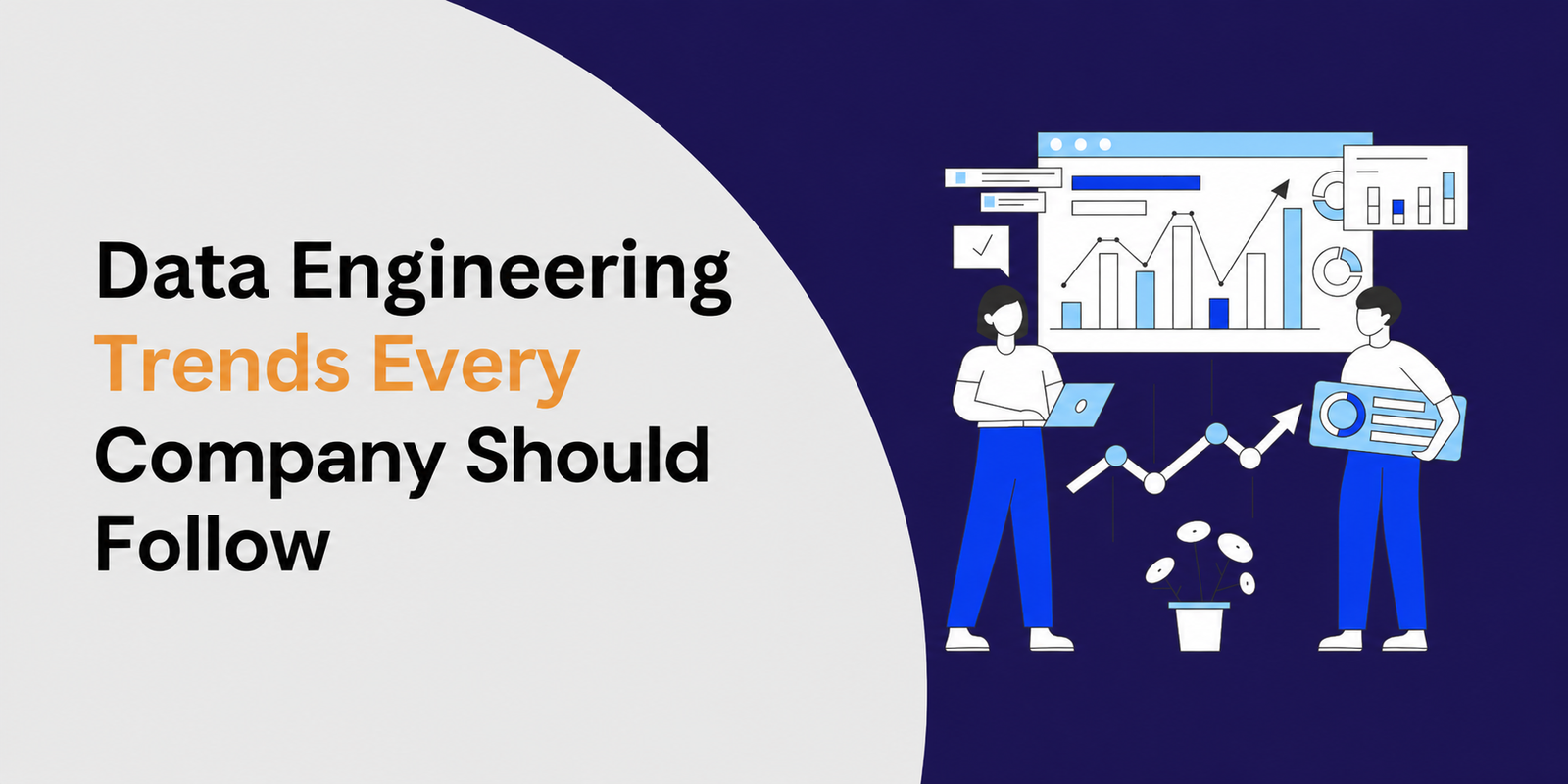
Data has become one of the most valuable assets for modern businesses. Organizations across industries are generating massive amounts of information every day through websites, mobile applications, IoT devices, cloud platforms, customer interactions, and enterprise systems. However, collecting data alone is not enough. Businesses need strong data engineering strategies to process, manage, store, and analyze this information effectively.
Data engineering plays a critical role in building the infrastructure and pipelines that enable organizations to transform raw data into meaningful business insights. As technology continues to evolve rapidly, companies must stay updated with the latest data engineering trends to remain competitive, improve operational efficiency, and support data-driven decision-making.
Modern businesses are increasingly investing in advanced data architectures, cloud-native platforms, real-time analytics, and AI-driven automation to handle growing data demands. These innovations are reshaping the future of data engineering and creating new opportunities for organizations worldwide.
In this article, we will explore the most important data engineering trends every company should follow to build scalable, secure, and future-ready data ecosystems.
In today’s digital economy, businesses rely heavily on data to understand customer behavior, optimize operations, predict market trends, and drive innovation. Data engineers are responsible for designing systems that ensure data is collected, cleaned, transformed, and delivered efficiently for analytics and business intelligence purposes.
Without proper data engineering practices, organizations often struggle with:
As companies continue adopting AI, machine learning, and automation technologies, the demand for reliable and scalable data infrastructure is increasing significantly.
One of the biggest trends transforming the data engineering landscape is the rapid adoption of cloud-native technologies. Traditional on-premise data systems often lack flexibility, scalability, and cost efficiency. Cloud platforms provide businesses with the ability to process and store massive amounts of data more efficiently.
Organizations are increasingly using cloud services such as:
Cloud-native data engineering allows businesses to scale infrastructure dynamically based on workload requirements. It also reduces maintenance complexity and enables faster deployment of data solutions.
Major cloud providers continue to introduce advanced tools that simplify data integration, storage, and analytics processes, making cloud adoption a top priority for modern enterprises.
Businesses today need faster insights to make informed decisions in real time. Traditional batch processing methods are no longer sufficient for industries that depend on immediate data analysis, such as finance, healthcare, eCommerce, logistics, and cybersecurity.
Real-time data processing enables organizations to analyze and respond to events as they happen. Streaming technologies continuously process incoming data from multiple sources, allowing businesses to monitor operations instantly.
Common use cases for real-time analytics include:
Companies are increasingly investing in event-driven architectures and streaming platforms to improve responsiveness and operational agility.
The emergence of data lakehouse architecture is another major trend in modern data engineering. Traditionally, organizations used separate systems for structured and unstructured data processing. Data warehouses handled structured business data, while data lakes stored raw and unstructured information.
A data lakehouse combines the flexibility of data lakes with the performance and management capabilities of data warehouses. This unified approach simplifies data management while supporting advanced analytics and AI workloads.
Benefits of data lakehouse architecture include:
Many organizations are adopting lakehouse solutions to create more efficient and centralized data ecosystems.
Artificial Intelligence (AI) and Machine Learning (ML) are increasingly influencing data engineering practices. Modern data platforms are becoming more intelligent through automation and predictive capabilities.
AI-powered data engineering tools can automate tasks such as:
Machine learning models also help businesses process large datasets more efficiently and uncover hidden patterns within data.
As AI adoption grows, data engineers are expected to build systems that can support scalable machine learning operations and advanced analytics environments.
DataOps is becoming an essential trend for organizations aiming to improve collaboration, speed, and reliability in data operations. Inspired by DevOps principles, DataOps focuses on automating and streamlining data workflows throughout the data lifecycle.
DataOps practices help businesses:
Automation is a key component of DataOps. Companies are increasingly using orchestration tools and automated monitoring systems to manage complex data pipelines more efficiently.
By adopting DataOps methodologies, organizations can reduce delays and ensure faster access to reliable business insights.
As businesses collect more customer and operational data, regulatory requirements around data privacy and security are becoming stricter. Organizations must ensure that their data engineering practices comply with industry regulations and governance standards.
Modern data governance focuses on:
Companies are investing heavily in governance frameworks to maintain transparency and protect sensitive information.
Strong governance strategies are especially important for industries handling confidential data such as healthcare, banking, insurance, and government sectors.
Data mesh is emerging as a decentralized approach to data management. Traditional centralized data architectures often struggle to scale as organizations grow. Data mesh addresses this challenge by distributing data ownership across business domains.
Instead of relying solely on centralized data teams, domain-specific teams manage their own data products while following standardized governance principles.
Advantages of data mesh include:
This trend is gaining popularity among large enterprises handling complex and distributed data environments.
Data quality has become a major concern for organizations relying heavily on analytics and AI systems. Poor-quality data can lead to inaccurate reports, flawed business decisions, and reduced customer trust.
Modern data engineering strategies now emphasize data observability, which involves monitoring data health, reliability, and system performance continuously.
Key areas of focus include:
Businesses are adopting advanced monitoring tools that provide real-time visibility into data workflows and infrastructure health.
Another growing trend is the rise of low-code and no-code platforms in data engineering. These tools allow non-technical users and business teams to create workflows, automate tasks, and manage data pipelines with minimal coding expertise.
Low-code platforms help organizations:
Although technical expertise is still necessary for complex systems, low-code tools are helping businesses democratize access to data engineering capabilities.
As global awareness around environmental sustainability increases, organizations are focusing on reducing the environmental impact of their data infrastructure.
Data centers and large-scale processing systems consume significant amounts of energy. Companies are now optimizing data operations to improve energy efficiency and reduce carbon emissions.
Green data engineering practices include:
Sustainability is becoming an important consideration for organizations aiming to align technology operations with environmental goals.
Despite rapid technological advancements, companies still face several challenges in managing modern data ecosystems.
Common challenges include:
Organizations need skilled professionals, modern tools, and strategic planning to overcome these challenges successfully.
The future of data engineering will be shaped by automation, AI-driven infrastructure, real-time analytics, and decentralized architectures. Businesses will continue investing in scalable cloud ecosystems and intelligent platforms that simplify complex data operations.
Emerging technologies such as generative AI, edge computing, and advanced automation will further transform how data systems are designed and managed.
Future data engineering environments are expected to become:
Organizations that adapt to these changes early will gain stronger competitive advantages in the data-driven economy.
Data engineering has become a foundational component of modern business success. As organizations generate and rely on increasing amounts of data, the need for scalable, efficient, and intelligent data systems continues to grow.
From cloud-native infrastructure and real-time analytics to AI-driven automation and data governance, the latest data engineering trends are reshaping how businesses manage and utilize information. Companies that embrace these innovations can improve operational efficiency, accelerate decision-making, and unlock greater business value from their data assets.
Staying updated with evolving data engineering practices is no longer optional. Businesses that invest in modern data architectures, automation, and governance strategies today will be better prepared to handle future technological challenges and opportunities.
As the digital landscape continues to evolve, data engineering will remain at the center of business transformation, innovation, and long-term growth.