Physical Address
304 North Cardinal St.
Dorchester Center, MA 02124
Physical Address
304 North Cardinal St.
Dorchester Center, MA 02124

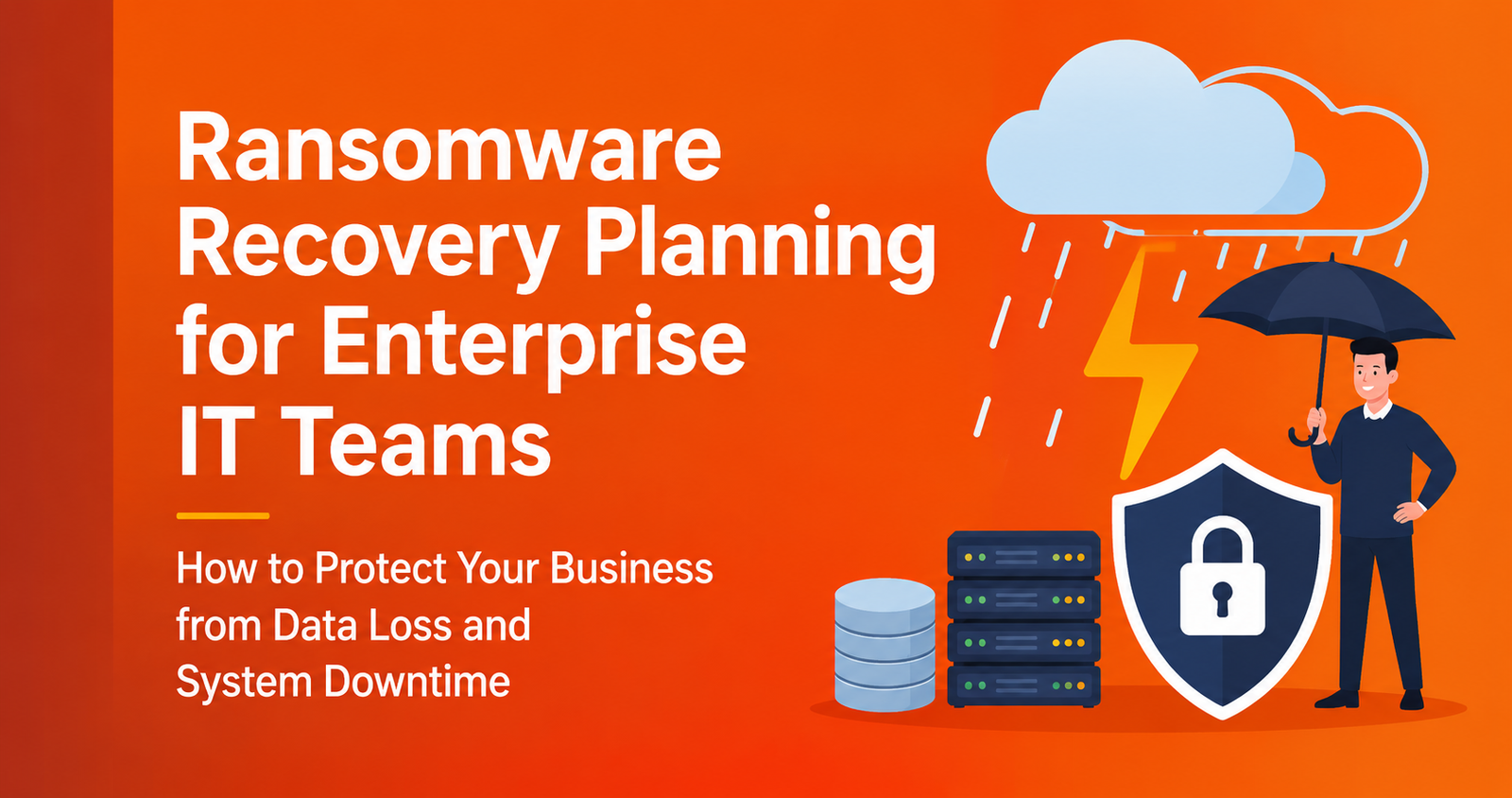
Ransomware attacks have become one of the most serious cybersecurity threats facing modern enterprises. Organizations across industries are increasingly targeted by cybercriminals who encrypt critical business data and demand payment in exchange for restoring access. These attacks can disrupt operations, damage brand reputation, cause financial losses, and expose sensitive customer and business information.
As enterprise infrastructures become more connected through cloud computing, remote work environments, IoT devices, and digital applications, the risk of ransomware incidents continues to grow. Traditional security measures alone are no longer enough to protect organizations from sophisticated cyberattacks. Businesses must now focus not only on prevention but also on recovery planning to ensure operational continuity during and after an attack.
A well-structured ransomware recovery plan helps enterprise IT teams respond quickly, minimize downtime, protect critical data, and restore business operations efficiently. Recovery planning is now considered a core component of enterprise cybersecurity and business continuity strategies.
Ransomware is a type of malicious software that encrypts files, systems, or entire networks, making them inaccessible until a ransom payment is made. Attackers often demand cryptocurrency payments and may threaten to leak stolen data if organizations refuse to comply.
Modern ransomware attacks have evolved significantly over the years. Cybercriminal groups now use advanced tactics such as double extortion, where data is both encrypted and stolen before ransom demands are issued. Some attackers also target backups and disaster recovery systems to make recovery more difficult.
Ransomware attacks commonly spread through phishing emails, malicious downloads, software vulnerabilities, compromised credentials, and insecure remote access systems. Once inside a network, attackers can move laterally across systems and target critical infrastructure components.
Many organizations focus heavily on preventing cyberattacks but fail to prepare adequately for recovery scenarios. Even organizations with strong cybersecurity defenses can become victims of ransomware due to evolving attack techniques and human error.
A ransomware recovery plan ensures that enterprise IT teams can respond quickly and systematically during a security incident. Without a clear recovery strategy, organizations may experience prolonged downtime, data loss, financial damage, and operational disruption.
Effective recovery planning helps enterprises:
Recovery planning also improves organizational resilience by ensuring that critical business functions can continue even during major cybersecurity incidents.
The first step in ransomware recovery planning is identifying critical assets, systems, applications, and data that are essential to business operations. Enterprise IT teams must understand which systems are most valuable and most vulnerable to attack.
Risk assessments help organizations evaluate potential attack vectors, infrastructure weaknesses, and operational dependencies. This process allows businesses to prioritize security controls and recovery efforts based on business impact.
Critical areas commonly assessed include:
Understanding these dependencies is essential for building an effective recovery strategy.
Reliable backups are one of the most important defenses against ransomware attacks. Organizations should maintain secure, isolated, and regularly tested backups to ensure data can be restored without paying ransom demands.
Modern backup strategies often follow the “3-2-1” rule:
Offline and immutable backups are becoming increasingly important because many ransomware variants attempt to encrypt or delete connected backup systems.
Enterprise IT teams should also ensure that backup processes are automated, encrypted, and continuously monitored. Regular backup testing is essential to confirm that recovery processes work effectively during real incidents.
When a ransomware attack occurs, rapid incident response is critical for minimizing damage and preventing further spread across the network. Enterprise IT teams must have clearly defined procedures for detecting, isolating, and containing infected systems.
Incident response plans should include communication protocols, escalation procedures, and predefined roles for IT staff, security teams, leadership, and legal departments.
Key incident response actions may include:
Quick containment helps reduce the impact of ransomware and protects unaffected systems from infection.
When a ransomware attack occurs, rapid incident response is critical for minimizing damage and preventing further spread across the network. Enterprise IT teams must have clearly defined procedures for detecting, isolating, and containing infected systems.
Incident response plans should include communication protocols, escalation procedures, and predefined roles for IT staff, security teams, leadership, and legal departments.
Key incident response actions may include:
Quick containment helps reduce the impact of ransomware and protects unaffected systems from infection.
Ransomware recovery planning should be closely aligned with disaster recovery (DR) and business continuity (BC) strategies. Organizations must ensure that critical operations can continue while affected systems are being restored.
Disaster recovery plans define how systems, applications, and infrastructure will be recovered after an incident. Business continuity plans focus on maintaining essential business functions during operational disruptions.
Enterprises should prioritize recovery based on system importance and operational impact. Mission-critical systems such as healthcare platforms, financial systems, customer portals, and communication tools often require faster restoration timelines.
Recovery objectives typically include:
These strategies help organizations maintain operational resilience during major cyber incidents.
Human error remains one of the leading causes of ransomware infections. Employees who unknowingly click malicious links or open infected attachments can provide attackers with access to enterprise systems.
Security awareness training is essential for reducing ransomware risks and improving organizational preparedness. Employees should understand how ransomware attacks work and how to recognize suspicious activities.
Training programs should cover:
Regular cybersecurity training significantly improves organizational resilience against ransomware threats.
As enterprises increasingly adopt cloud platforms and hybrid infrastructures, ransomware recovery planning must extend beyond traditional on-premises systems. Cloud workloads, SaaS applications, and remote collaboration tools can also become targets for attackers.
Organizations should implement strong cloud security controls, including identity management, access restrictions, encryption, and continuous monitoring. Cloud backup and disaster recovery solutions are also becoming important components of enterprise ransomware recovery strategies.
Modern cloud security approaches often include:
These technologies improve visibility and accelerate ransomware detection and recovery.
A ransomware recovery plan is only effective if it is regularly tested and updated. Many organizations discover weaknesses in their recovery processes only after a real attack occurs.
Enterprise IT teams should conduct regular recovery simulations, tabletop exercises, and disaster recovery drills to validate response procedures and identify improvement areas.
Testing helps organizations:
Continuous testing ensures that recovery plans remain effective as infrastructure, applications, and threat landscapes evolve.
Despite careful planning, ransomware recovery remains a complex process for many enterprises. One major challenge is the increasing sophistication of ransomware groups that use advanced evasion techniques and target backup systems directly.
Another challenge involves maintaining visibility across complex hybrid and multi-cloud environments. Organizations often struggle to identify the full scope of an attack and determine which systems have been compromised.
Additional challenges may include:
Addressing these challenges requires continuous investment in cybersecurity technologies, staff training, and operational resilience strategies.
The future of ransomware recovery planning will increasingly rely on automation, artificial intelligence, and predictive cybersecurity technologies. AI-powered security systems can analyze network behavior, detect anomalies, and respond to threats faster than traditional manual approaches.
Enterprises are also adopting cyber resilience strategies that focus on maintaining operations during attacks rather than relying solely on prevention. This shift emphasizes rapid recovery, infrastructure redundancy, and continuous operational availability.
Emerging trends shaping ransomware recovery include:
As ransomware attacks continue evolving, enterprise recovery planning will become even more critical for protecting business continuity and organizational reputation.
Ransomware attacks have become a major threat to enterprise operations, data security, and business continuity. Modern cybercriminals are using increasingly advanced tactics that can disrupt critical infrastructure, compromise sensitive information, and cause significant financial damage.
A comprehensive ransomware recovery plan enables enterprise IT teams to respond quickly, contain attacks effectively, restore operations efficiently, and minimize long-term business impact. Strong backup strategies, incident response planning, employee training, disaster recovery processes, and cloud security measures are all essential components of an effective recovery framework.
While preventing ransomware attacks remains important, organizations must also prioritize resilience and recovery preparedness. Enterprises that invest in proactive recovery planning, cybersecurity awareness, and modern security technologies will be better positioned to withstand evolving ransomware threats and maintain operational stability in an increasingly complex digital landscape.