Physical Address
304 North Cardinal St.
Dorchester Center, MA 02124
Physical Address
304 North Cardinal St.
Dorchester Center, MA 02124
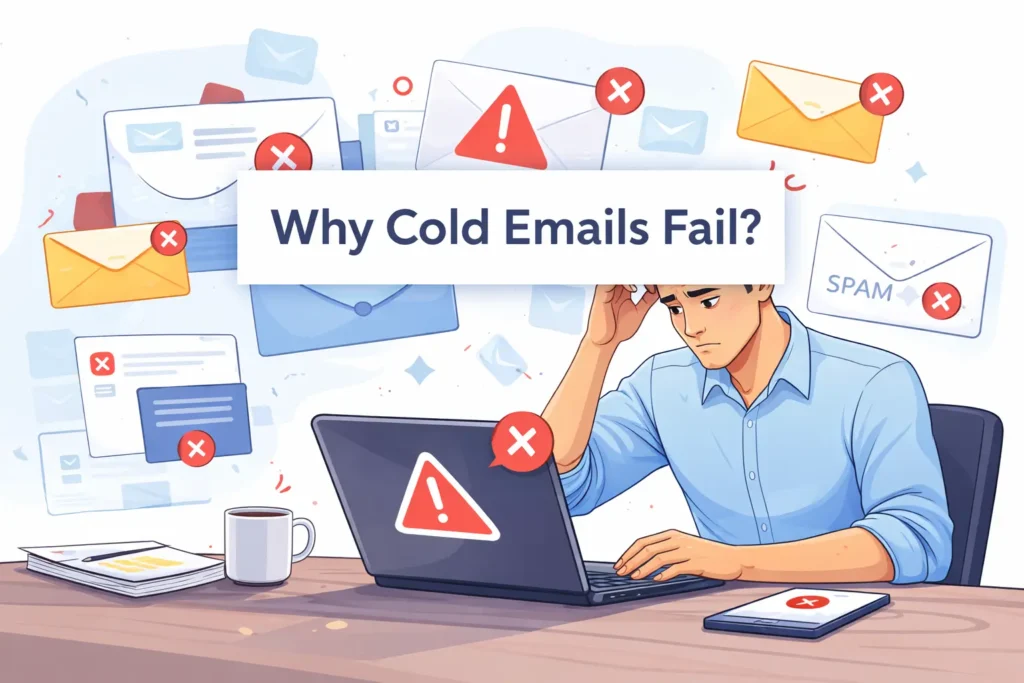
Cold emailing remains one of the most effective strategies for B2B lead generation, sales outreach, and business development. Despite the growth of social media marketing, paid advertising, and automated prospecting platforms, email continues to deliver strong returns when executed correctly. However, the harsh reality is that most cold emails fail to generate responses, meetings, or conversions.
Every day, professionals receive dozens of unsolicited emails competing for attention in crowded inboxes. Generic messaging, poor targeting, weak subject lines, and overly sales-focused communication often cause recipients to ignore or delete outreach emails immediately. As inbox competition increases, businesses can no longer rely on outdated mass-email tactics.
High-converting cold emails succeed because they focus on relevance, personalization, clarity, and value. Instead of sounding like promotional advertisements, effective cold emails create genuine interest and establish meaningful connections. Understanding the difference between failed outreach and successful prospecting is essential for organizations aiming to improve response rates and generate quality leads.
One of the primary reasons cold emails fail is the lack of personalization. Many businesses still send bulk emails using generic templates that fail to address the recipient’s specific needs, challenges, or industry context. Prospects can easily recognize mass outreach, and such emails rarely build trust or engagement.
Another common issue is poor subject lines. The subject line is the first impression of the email, and if it appears overly promotional, misleading, or irrelevant, recipients are unlikely to open the message. Subject lines filled with aggressive sales language or excessive capitalization often trigger spam filters or immediate rejection.
Many cold emails also fail because they focus too much on the sender instead of the prospect. Businesses frequently spend several paragraphs describing their company, achievements, and services without explaining how they can solve the recipient’s problem. Modern buyers are more interested in outcomes and value than company introductions.
Lengthy and complicated messaging is another major problem. Decision-makers are busy, and they rarely spend time reading long, unfocused emails. When emails contain excessive information, multiple calls-to-action, or unclear objectives, recipients lose interest quickly.
Timing and targeting also contribute to poor performance. Sending irrelevant offers to the wrong audience reduces engagement and damages brand credibility. Even well-written emails can fail if they are directed toward individuals who are not decision-makers or who have no need for the offered solution.

Successful cold emails work because they align with human psychology and communication behavior. People respond positively to messages that feel relevant, concise, and valuable. High-converting emails respect the recipient’s time while addressing a specific business challenge or opportunity.
Trust plays a critical role in email engagement. Prospects are more likely to respond when the email demonstrates credibility through personalization, social proof, or industry understanding. Emails that sound natural and conversational tend to perform better than highly formal or robotic messaging.
Curiosity is another important factor. Effective subject lines and opening sentences encourage recipients to continue reading without appearing manipulative. Instead of aggressively selling, successful emails create interest by highlighting potential value or relevant insights.
Additionally, recipients are more responsive when the message clearly explains how the proposed solution can improve efficiency, reduce costs, increase revenue, or solve a pressing problem.
High-performing cold emails begin with strong research. Sales professionals take time to understand the prospect’s company, role, industry trends, and business challenges before reaching out. This research enables highly personalized communication that feels relevant rather than automated.
Effective emails also maintain a concise structure. They quickly introduce the reason for the outreach, identify a pain point or opportunity, and present a clear value proposition within a few short paragraphs. Simplicity improves readability and increases the likelihood of receiving a response.
Another important difference is the focus on the recipient rather than the sender. Instead of saying, “We are a leading company offering advanced solutions,” successful emails explain specific outcomes such as improving operational efficiency, reducing manual workload, or increasing lead conversion rates.
High-converting emails also use clear and low-pressure calls-to-action. Rather than demanding immediate commitments, they encourage simple next steps such as scheduling a short call, sharing feedback, or exploring a relevant idea.
| Failed Cold Emails | High-Converting Cold Emails |
|---|---|
| Generic mass messaging | Personalized communication |
| Focus on company achievements | Focus on prospect challenges |
| Long and complicated content | Short and clear messaging |
| Aggressive sales language | Conversational and professional tone |
| Weak or spam-like subject lines | Relevant and curiosity-driven subject lines |
| Multiple confusing CTAs | Single clear CTA |
| Poor audience targeting | Well-researched prospect targeting |
| No value proposition | Outcome-focused messaging |
Personalization has become one of the most important elements of successful email prospecting. Modern buyers expect businesses to understand their specific needs rather than sending generic promotional messages.
Effective personalization goes beyond simply adding the recipient’s first name. It includes referencing recent company developments, industry challenges, job responsibilities, or relevant business goals. This approach demonstrates genuine effort and increases credibility.
For example, mentioning a recent company expansion, funding announcement, hiring initiative, or published article can significantly improve engagement. Prospects are more likely to respond when they feel the message was written specifically for them.
However, personalization should remain natural and professional. Overusing personal details or sounding overly familiar can reduce trust instead of building it.
Subject lines strongly influence open rates and overall campaign performance. Even the most valuable email content becomes ineffective if recipients never open the message.
Successful subject lines are typically short, relevant, and curiosity-driven. They avoid spam-triggering words such as “guaranteed,” “free offer,” or “limited-time deal.” Instead, they focus on relevance and value.
Examples of effective subject line approaches include:
A well-crafted subject line creates enough interest to encourage recipients to open the email without feeling misled.

Many cold email campaigns fail because businesses stop after sending a single email. In reality, decision-makers are often busy and may overlook initial outreach even if the offer is relevant.
Professional follow-up sequences improve visibility and increase response rates. Effective follow-ups remain polite, concise, and value-driven rather than repetitive or aggressive.
Each follow-up should provide additional context, insights, or relevance instead of simply asking whether the recipient saw the previous email. Consistent but respectful communication demonstrates professionalism and persistence.
Businesses looking to improve email conversion rates should focus on several core best practices. First, audience segmentation is essential. Emails should target clearly defined industries, job roles, or business categories to ensure relevance.
Second, keeping messages concise significantly improves readability. Most successful cold emails are brief and focused on one core objective.
Third, businesses should emphasize measurable value. Prospects are more interested in business outcomes than product features.
Testing and optimization are also important. A/B testing subject lines, messaging styles, CTAs, and sending times helps identify what resonates best with target audiences.
Finally, businesses should continuously monitor email deliverability, response rates, and engagement metrics to improve campaign performance over time.
Most cold emails fail because they prioritize mass outreach over meaningful communication. Generic messaging, poor targeting, and overly promotional language prevent businesses from building trust and engagement with prospects.
High-converting cold emails succeed because they focus on personalization, relevance, clarity, and value. They respect the recipient’s time, address real business challenges, and encourage simple next steps without excessive pressure.
As competition in inboxes continues to grow, businesses must move beyond outdated cold emailing tactics and adopt a more strategic, customer-focused approach. Organizations that invest in thoughtful prospect research, concise messaging, and relationship-driven communication will achieve stronger engagement, higher response rates, and better sales results.