Physical Address
304 North Cardinal St.
Dorchester Center, MA 02124
Physical Address
304 North Cardinal St.
Dorchester Center, MA 02124
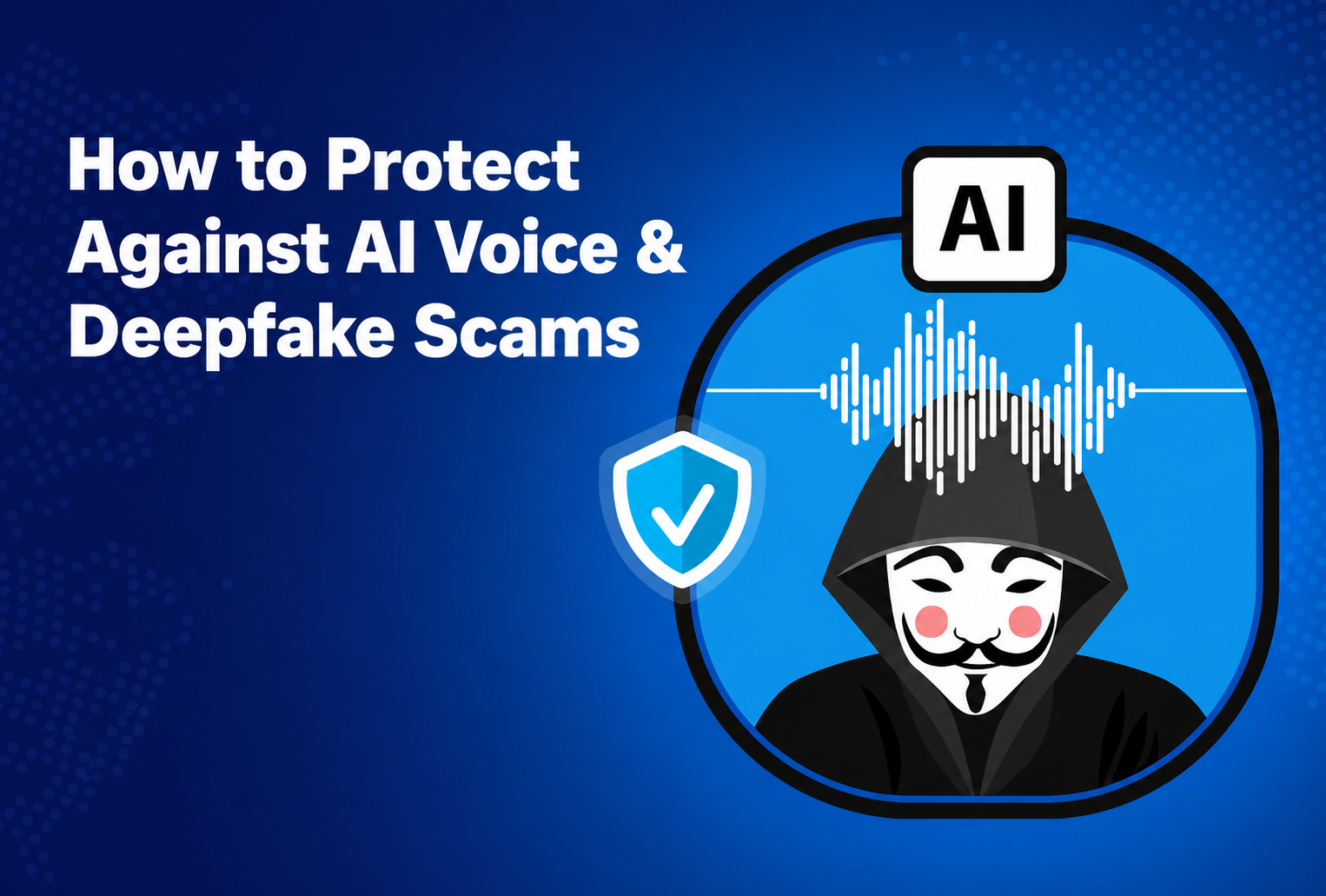
AI voice cloning and deepfake technologies have advanced rapidly, making scams more convincing than ever. Fraudsters can now mimic a person’s voice, create realistic video impersonations, and manipulate conversations in real time. These scams are no longer limited to celebrities or high-profile targets—they are affecting businesses, employees, and everyday individuals.
Understanding how these scams work and how to defend against them is essential in today’s digital environment.
AI voice scams use machine learning models to replicate a person’s voice using just a few seconds of audio. Deepfake scams go a step further by generating realistic videos or audio-visual content that appears authentic.
These scams are often used for:
The realism of these attacks makes them difficult to detect using traditional methods.
Unlike traditional phishing emails, AI-driven scams rely on trust and familiarity. Hearing a known voice or seeing a familiar face lowers suspicion and increases the likelihood of compliance.
Key risks include:
The psychological element makes these attacks particularly effective.
While these scams are sophisticated, there are still warning signs to watch for:
Even if the voice or video seems real, context and behavior often reveal the scam.
Always confirm unusual requests through a second communication channel. For example, if you receive a voice call requesting sensitive action, verify it via email, text, or a direct call to the known contact.
MFA adds an extra layer of security beyond passwords. Even if attackers gain access through deception, additional verification steps can prevent unauthorized actions.
Organizations should implement strict verification processes for sensitive actions such as financial transfers or data sharing.
For example:
The more audio and video content available online, the easier it is for attackers to create deepfakes.
Consider:
Advanced security tools can analyze audio and video for signs of manipulation. While not perfect, they provide an additional layer of defense against deepfake attacks.
Human awareness is one of the strongest defenses. Regular training helps employees recognize suspicious behavior and respond appropriately.
Focus on:
Individuals should also take precautions in their daily lives:
A simple verification step can prevent major losses.
Governments and tech companies are working to combat deepfake threats through regulations and improved detection systems. However, technology alone cannot eliminate the risk.
A combined approach is needed:
As AI continues to evolve, so will the sophistication of scams. Future security strategies will rely on real-time detection, behavioral analysis, and identity verification systems.
Organizations that proactively adapt will be better prepared to handle these emerging threats.
AI voice and deepfake scams represent a new era of cyber threats where seeing and hearing are no longer reliable indicators of truth. The key to protection lies in awareness, verification, and strong security practices.
By staying vigilant, implementing proper safeguards, and educating users, both individuals and organizations can significantly reduce their risk. In a world where digital deception is becoming more advanced, trust must always be verified—not assumed.