Physical Address
304 North Cardinal St.
Dorchester Center, MA 02124
Physical Address
304 North Cardinal St.
Dorchester Center, MA 02124

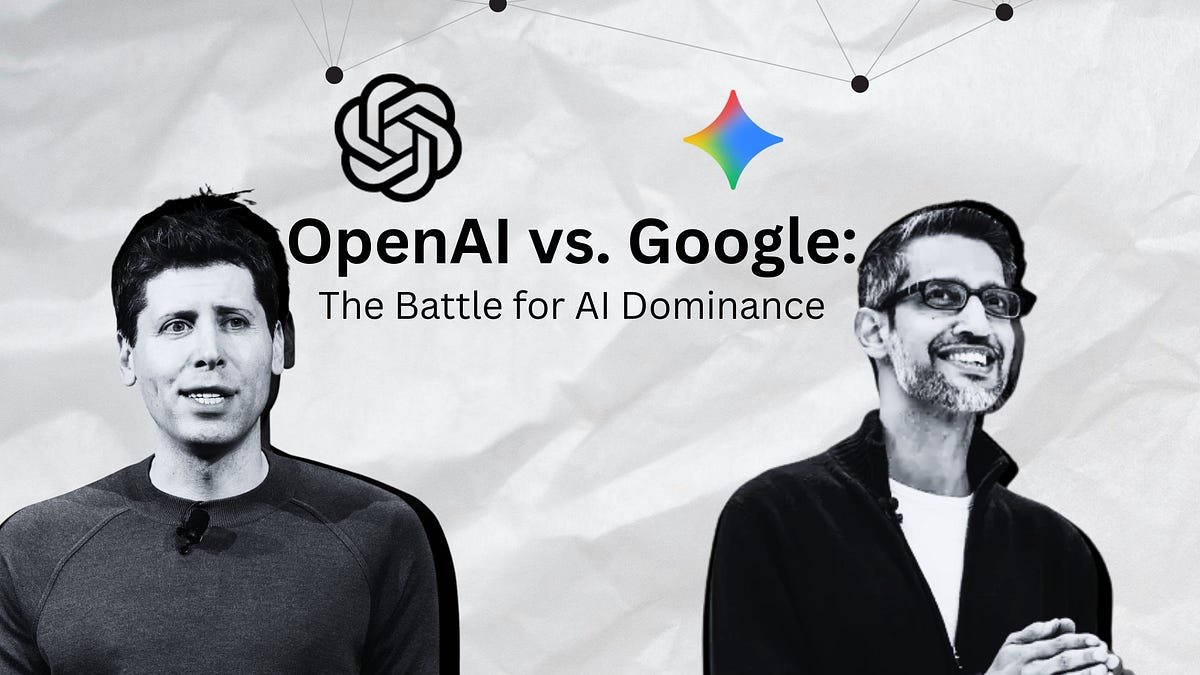
The AI race reached a new peak in late 2025 when OpenAI released GPT-5.2 shortly after Google introduced its latest Gemini models. What followed was not just a product competition, but a full-scale technological battle between two of the most influential AI ecosystems in the world. Both systems bring groundbreaking capabilities—but they excel in very different areas.
So the real question is not simply “who is better,” but who is winning where.
Google’s Gemini 3 Pro set a high benchmark with strong multimodal capabilities and deep integration across its ecosystem. This prompted OpenAI to accelerate the release of GPT-5.2 under what was internally described as a “code red” response.
This rapid back-and-forth highlights how competitive and fast-moving the AI industry has become. Each release is no longer incremental—it’s strategic.
GPT-5.2 is designed primarily for precision, reasoning, and professional use cases. It focuses on delivering reliable outputs for complex tasks.
In enterprise environments, GPT-5.2 stands out because it produces structured, production-ready outputs rather than just creative responses.
Google’s AI models, especially Gemini 3 Pro, are built around multimodal intelligence and ecosystem integration.
This makes Google AI more versatile for real-time, interactive, and consumer-focused applications.
GPT-5.2 has a slight edge in structured reasoning and analytical tasks. It achieves near state-of-the-art scores in professional benchmarks and complex workflows.
Google AI, while strong, sometimes prioritizes speed and multimodal capabilities over deep precision.
This is where Google clearly leads. Gemini models can process video, images, and audio seamlessly in a single workflow, making them ideal for content creation and real-time applications.
GPT-5.2 supports multimodal input but is still more text-focused in comparison.
GPT-5.2 is widely considered better for production-level coding. It generates cleaner, more secure, and deployable code.
Google AI excels in generating visually appealing interfaces and prototypes but may require refinement for production systems.
Google has a major advantage here. Its AI is embedded across:
This makes Gemini more accessible for everyday users.
GPT-5.2, on the other hand, is deeply integrated into developer tools, APIs, and enterprise platforms.
Google AI tends to be more accessible with free or lower-cost entry points, while GPT-5.2 is positioned as a premium tool for professionals and enterprises.
Benchmarks show that both models are extremely close in performance, often with negligible differences in high-level reasoning tasks.
Instead of a single winner, what we’re seeing is specialization:
The AI race is far from over. Both companies are rapidly iterating, and future versions will likely blur the current differences.
Key trends to watch:
So, who is winning the AI race?
The honest answer: both—and in different ways.
GPT-5.2 leads when accuracy, reasoning, and professional output matter most. Google AI leads when versatility, scale, and real-world integration are the priority.
For businesses and professionals, the smartest strategy isn’t choosing one over the other—it’s leveraging both where they perform best.