Physical Address
304 North Cardinal St.
Dorchester Center, MA 02124
Physical Address
304 North Cardinal St.
Dorchester Center, MA 02124

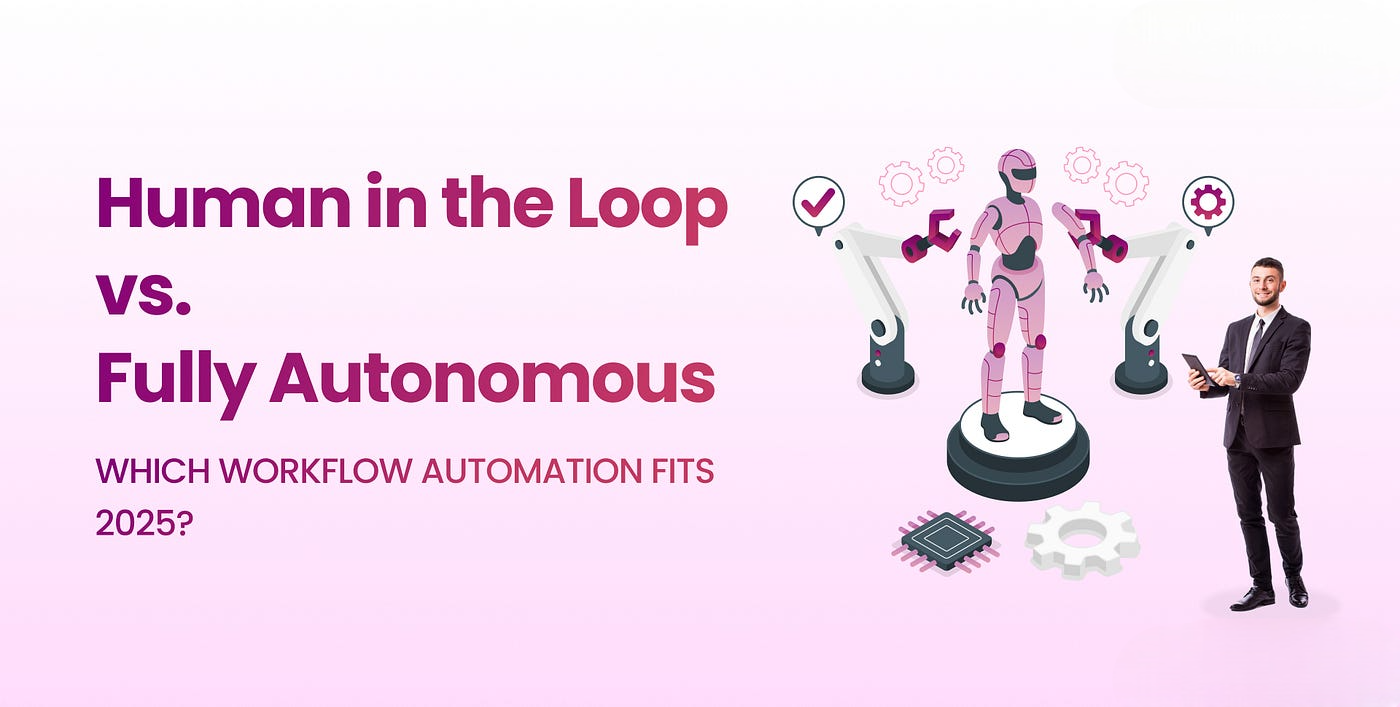
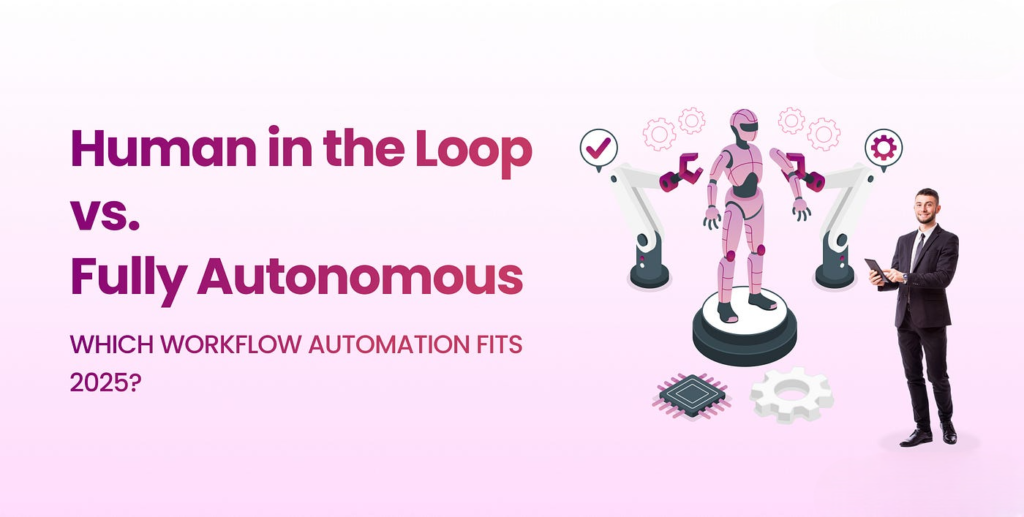
Artificial Intelligence is rapidly reshaping how organizations operate, make decisions, and automate workflows. However, a major design question continues to define modern AI systems in 2025: Should humans stay in the loop, or should AI operate fully autonomously?
This debate—Human-in-the-Loop (HITL) AI vs Fully Autonomous Systems—is not just technical. It directly impacts safety, trust, efficiency, compliance, and business outcomes. As AI becomes more powerful, organizations are carefully balancing control with automation.
Human-in-the-Loop AI refers to systems where humans actively participate in the decision-making process of AI models. Instead of allowing AI to act independently, humans review, validate, or guide outputs at critical stages.
In simple terms, AI assists—but humans approve.
This model is widely used in industries where accuracy, accountability, and safety are essential.
For example, in medical diagnosis systems, AI may suggest possible conditions, but doctors make the final decision.
Fully autonomous AI systems operate without human intervention once deployed. These systems can analyze data, make decisions, and execute actions independently based on predefined goals and learned behavior.
Unlike HITL systems, autonomy is the core principle here.
These systems are designed to “think and act” within defined boundaries.
For example, an autonomous cybersecurity system can detect threats and block malicious traffic instantly without waiting for human approval.
Understanding the distinction between these two models is critical for choosing the right architecture.
Despite advancements in AI autonomy, HITL systems remain critical in several domains where mistakes can have serious consequences.
In these cases, human judgment provides ethical reasoning, context awareness, and accountability that AI alone may lack.
Autonomous AI systems shine in environments where speed, scale, and repetition are more important than human judgment.
In these scenarios, delay caused by human intervention can lead to inefficiency or even system failure.
In 2025, the industry is increasingly moving toward a hybrid model, combining both HITL and autonomous approaches.
This model allows AI to operate independently in low-risk scenarios while escalating critical decisions to humans.
This balance provides both efficiency and safety.
While autonomy is powerful, it introduces significant challenges that organizations must carefully manage.
Some major concerns include:
Because of these risks, most enterprises are cautious about moving to full autonomy without safeguards.
The future is not about choosing one approach over the other—it is about intelligent combination.
We are moving toward systems that:
This creates a dynamic decision ecosystem rather than a fixed operational model.
The debate between Human-in-the-Loop AI and Fully Autonomous Systems is shaping the future of artificial intelligence. While HITL ensures safety, accountability, and control, autonomous systems deliver speed, efficiency, and scalability.
In reality, the most effective AI strategies in 2025 are not extreme—they are balanced. Organizations are increasingly adopting hybrid models that combine human intelligence with machine autonomy.
As AI continues to evolve, the goal is not to remove humans from the loop entirely, but to redefine their role—from operators to supervisors, strategists, and decision architects in an AI-driven world.