Physical Address
304 North Cardinal St.
Dorchester Center, MA 02124
Physical Address
304 North Cardinal St.
Dorchester Center, MA 02124
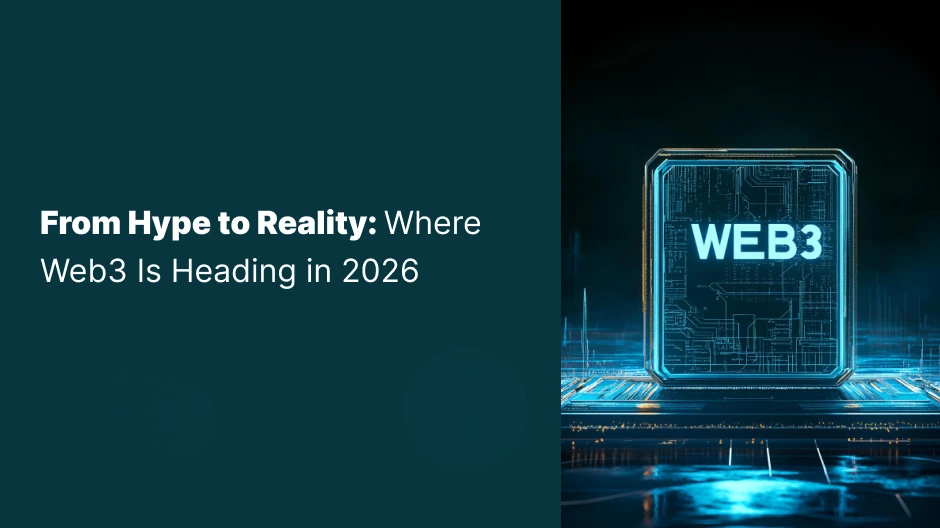
Web3 was once one of the most hyped concepts in the technology world, promising a fully decentralized internet powered by blockchain and user ownership of data. In its early stages, it attracted massive attention from developers, investors, and startups. However, as the technology matured, expectations began to shift from hype-driven speculation to real-world utility.
In 2026, Web3 is no longer just a buzzword. Platforms like Ethereum have evolved beyond experimental use cases and are now focusing on scalable applications. Businesses are gradually adopting blockchain-based systems where they actually solve practical problems rather than exist as theoretical ideas.
During its early phase, Web3 was heavily associated with cryptocurrencies, NFTs, and decentralized finance. While these areas still exist, the industry has matured significantly. The unrealistic promises of completely replacing traditional systems have been replaced with a more grounded approach.
Today, Web3 technologies are being used where decentralization actually adds value—such as transparency, ownership, and secure data sharing. Instead of trying to rebuild the entire internet, developers are integrating blockchain into specific systems where it makes sense.
In 2026, Web3 is being used in practical and impactful ways across multiple industries. Enterprises are no longer experimenting blindly; they are implementing blockchain solutions where they improve efficiency and trust.
Some key applications include:
These use cases show that Web3 is becoming more utility-driven rather than investment-driven.
Despite progress, Web3 still faces several challenges that prevent full-scale adoption. One major issue is scalability, as blockchain networks often struggle with high transaction volumes. Another challenge is user experience, as many Web3 platforms are still complex for non-technical users.
Regulatory uncertainty also continues to slow down adoption in some regions. Governments are still defining clear frameworks for blockchain-based systems and digital assets.
Other challenges include:
These barriers need to be addressed for Web3 to reach its full potential.
Developers and technology companies are now focusing on building meaningful Web3 solutions rather than experimental prototypes. The emphasis has shifted toward scalability, usability, and real-world integration.
Large organizations are exploring hybrid systems that combine traditional databases with blockchain features. This approach allows them to benefit from decentralization without completely replacing existing infrastructure.
Developers working in this space are also focusing more on security, optimization, and interoperability between different blockchain networks.
The future of Web3 is likely to be more integrated and less visible to end users. Instead of being a separate ecosystem, it may become a layer within existing applications. Users may interact with blockchain features without even realizing it.
We can expect more collaboration between traditional tech companies and blockchain platforms like Ethereum as the technology continues to evolve. The focus will be on solving real problems rather than promoting ideology.
Web3 is gradually becoming a practical technology layer rather than a revolutionary replacement for the internet.
Web3 in 2026 has clearly transitioned from hype to reality. While it may not have replaced the internet as once predicted, it has found meaningful use cases in industries that require transparency, security, and decentralization.
The journey of Web3 shows how technology evolves—from excitement and speculation to practical adoption. For developers and businesses, the key now is not to follow hype, but to focus on real value creation.