Physical Address
304 North Cardinal St.
Dorchester Center, MA 02124
Physical Address
304 North Cardinal St.
Dorchester Center, MA 02124
Introduction
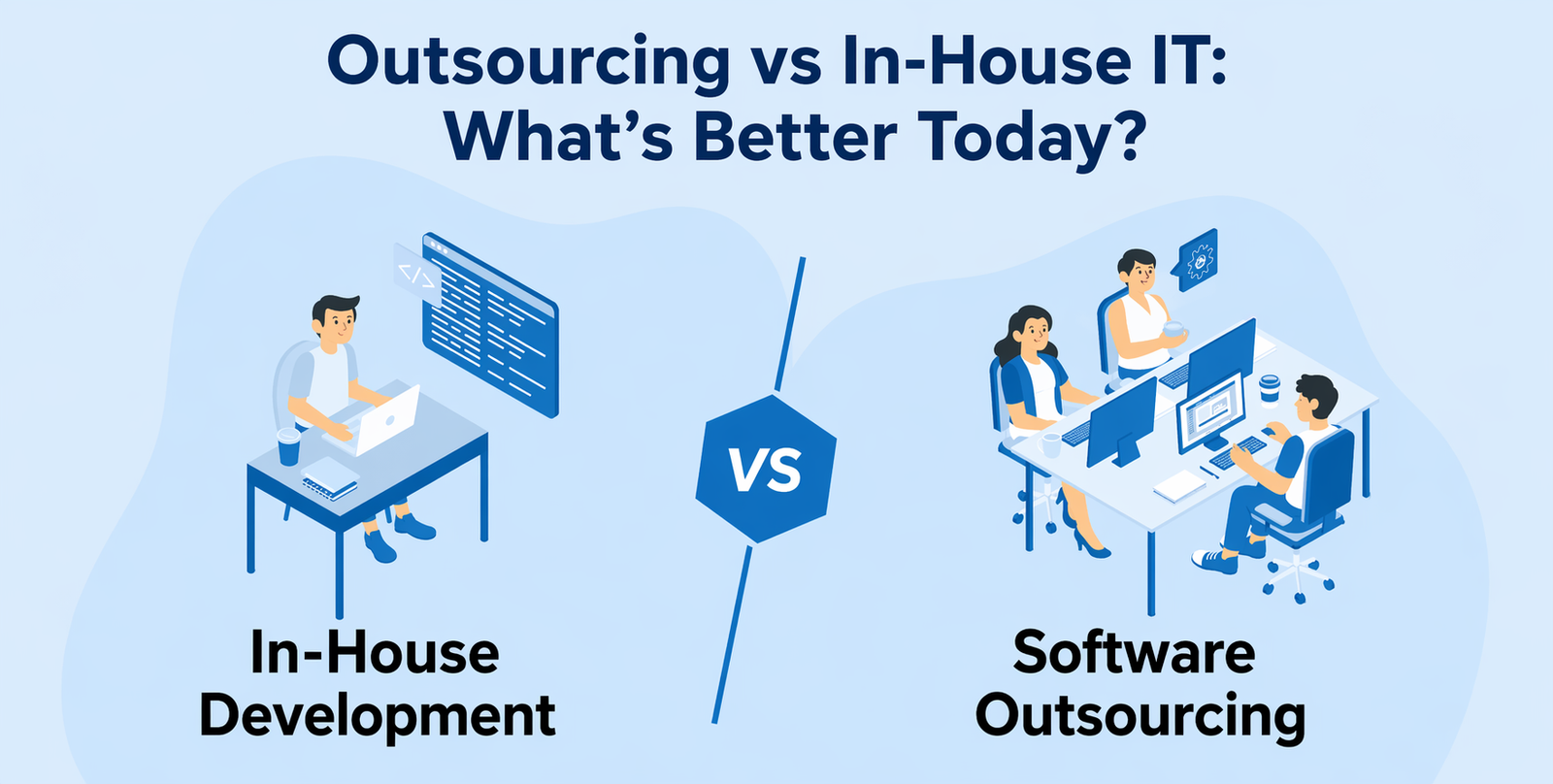
In today’s fast-evolving digital landscape, businesses are constantly evaluating how to manage their IT operations effectively. One of the most important strategic decisions organizations face is whether to rely on in-house IT teams or opt for outsourcing IT services. Both approaches offer distinct advantages and challenges, and the right choice often depends on business goals, budget, and long-term vision.
As technology becomes more complex and critical to business success, this decision is no longer purely operational—it is strategic. Companies must weigh factors such as scalability, expertise, cost efficiency, and control to determine what works best in the current environment.
Understanding In-House IT
In-house IT refers to maintaining an internal team responsible for managing the organization’s technology infrastructure, applications, and support systems. This model gives businesses direct control over their IT operations and allows teams to align closely with company objectives.
Having an in-house team enables better communication and faster response times since the team is fully integrated into the organization. It also ensures that sensitive data and systems are managed internally, which can be critical for industries with strict compliance requirements.
Key advantages of in-house IT include:
However, building and maintaining an in-house IT team requires significant investment in hiring, training, and infrastructure, which can be challenging for small and mid-sized businesses.
Understanding IT Outsourcing
IT outsourcing involves delegating technology-related tasks or entire functions to external service providers. These providers may handle everything from infrastructure management and cybersecurity to software development and technical support.
Outsourcing has gained popularity due to its cost-effectiveness and access to specialized expertise. Instead of building an internal team, businesses can leverage experienced professionals and advanced tools provided by vendors.
Common benefits of outsourcing include:
Outsourcing also allows companies to focus on their core business activities while leaving IT management to experts.
Cost Considerations
Cost is often a primary factor when deciding between outsourcing and in-house IT. In-house teams involve fixed costs such as salaries, benefits, training, and infrastructure investments. These costs can add up quickly, especially when scaling operations.
Outsourcing, on the other hand, typically operates on a flexible pricing model, allowing businesses to pay only for the services they use. This can be particularly beneficial for startups and growing companies that need to manage budgets carefully.
However, it is important to consider hidden costs in outsourcing, such as vendor management, communication challenges, and potential service quality issues. A detailed cost-benefit analysis is essential to make an informed decision.
Control and Flexibility
Control is a major advantage of in-house IT. Organizations can directly manage priorities, workflows, and security protocols without relying on external parties. This level of control is especially important for businesses handling sensitive data or operating in regulated industries.
Outsourcing, while flexible, often involves some loss of control. Businesses must rely on service-level agreements (SLAs) and vendor performance to ensure quality and reliability. Clear communication and well-defined contracts are crucial to maintaining control in outsourced environments.
Scalability and Innovation
Scalability is where outsourcing often has a clear edge. External providers can quickly scale resources up or down based on business needs, making it easier to handle growth or seasonal demand fluctuations.
In-house teams may struggle to scale at the same pace due to hiring constraints and budget limitations. However, they can drive innovation more effectively when deeply integrated with business processes and long-term strategy.
A balanced approach can help organizations achieve both scalability and innovation by combining internal expertise with external support.
Security and Risk Management
Security remains a critical concern in both models. In-house IT teams provide greater visibility and control over security measures, which can reduce risks related to data breaches and compliance violations.
Outsourcing providers often have advanced security tools and expertise, but sharing sensitive data with third parties introduces potential risks. Businesses must carefully evaluate vendors, ensure compliance with regulations, and implement strong security agreements.
Key security considerations include:
The Hybrid Approach: A Modern Solution
Many organizations today are adopting a hybrid IT model, combining the strengths of both in-house and outsourced approaches. In this model, core functions and sensitive operations are managed internally, while specialized or resource-intensive tasks are outsourced.
For example, a company may keep its cybersecurity strategy and critical systems in-house while outsourcing cloud management or application development. This approach provides flexibility, cost efficiency, and access to expertise without sacrificing control.
Choosing the Right Approach
There is no one-size-fits-all answer when it comes to outsourcing vs in-house IT. The right choice depends on several factors, including:
Organizations must evaluate their priorities and capabilities to determine the most suitable approach.
Conclusion
The debate between outsourcing and in-house IT is not about which option is universally better—it is about what works best for a specific organization in today’s context. In-house IT offers control, alignment, and security, while outsourcing provides scalability, cost efficiency, and access to specialized expertise.
As technology continues to evolve, many businesses are finding value in a hybrid approach that combines the best of both worlds. By strategically balancing internal capabilities with external support, organizations can build a resilient, scalable, and efficient IT ecosystem.
Ultimately, the key to success lies in aligning IT strategy with business objectives, ensuring that technology serves as a driver of growth and innovation rather than a limitation.