Understanding Artificial Intelligence
Artificial Intelligence (AI) is a broad field of computer science focused on creating machines that can perform tasks requiring human intelligence. AI enables systems to think, learn, solve problems, and make decisions. It is the foundation on which machine learning and deep learning are built. AI technologies are widely used in modern industries, from healthcare to entertainment. The main purpose of AI is to improve efficiency, automation, and decision-making processes. AI systems can operate using programmed rules or by learning from data. Over the years, AI has evolved rapidly due to advancements in computing power and data availability. Businesses use AI to enhance customer experiences and reduce manual work. AI is considered one of the most transformative technologies of the modern era. It continues to influence how people interact with technology every day.
Key Points:
- AI stands for Artificial Intelligence.
- AI mimics human intelligence in machines.
- It includes reasoning, problem-solving, and decision-making.
- AI can be rule-based or data-driven.
- Virtual assistants and chatbots are examples of AI.
- AI is used in healthcare, finance, marketing, and robotics.
What Is Machine Learning?
Machine Learning (ML) is a subset of AI that allows computers to learn from data instead of relying entirely on fixed programming. ML systems use algorithms to identify patterns and improve performance over time. The more data the system receives, the more accurate it becomes. Machine learning is widely used in online recommendations, fraud detection, search engines, and customer analytics. Unlike traditional AI systems, machine learning focuses mainly on learning through experience. Companies use ML to understand customer behavior and make smarter business decisions. ML models require training datasets to function effectively. These systems can predict outcomes and automate complex tasks with minimal human intervention. Machine learning has become one of the most important technologies in the digital economy. Its flexibility and ability to process large amounts of information make it highly valuable across industries.
Key Points:
- ML helps systems learn from data automatically.
- It improves accuracy through training and experience.
What Is Deep Learning?
Deep Learning (DL) is an advanced form of machine learning that uses artificial neural networks inspired by the human brain. These neural networks contain multiple layers that process information in a highly complex way. Deep learning is especially useful for analyzing images, videos, speech, and large datasets. Unlike traditional machine learning, deep learning can automatically identify important features without much human assistance. Technologies such as facial recognition, language translation, and self-driving cars depend heavily on deep learning. Deep learning models require powerful computers and large amounts of data for training. Although DL systems are more resource-intensive, they often produce more accurate results. In recent years, deep learning has driven major breakthroughs in AI applications. It is now considered one of the most advanced technologies in modern computing. Deep learning continues to influence industries and scientific research worldwide.
Key Points:
- DL is a specialized branch of machine learning.
- It uses multi-layer neural networks.
- DL powers advanced technologies like self-driving cars.
Key Differences Between AI, ML, and DL
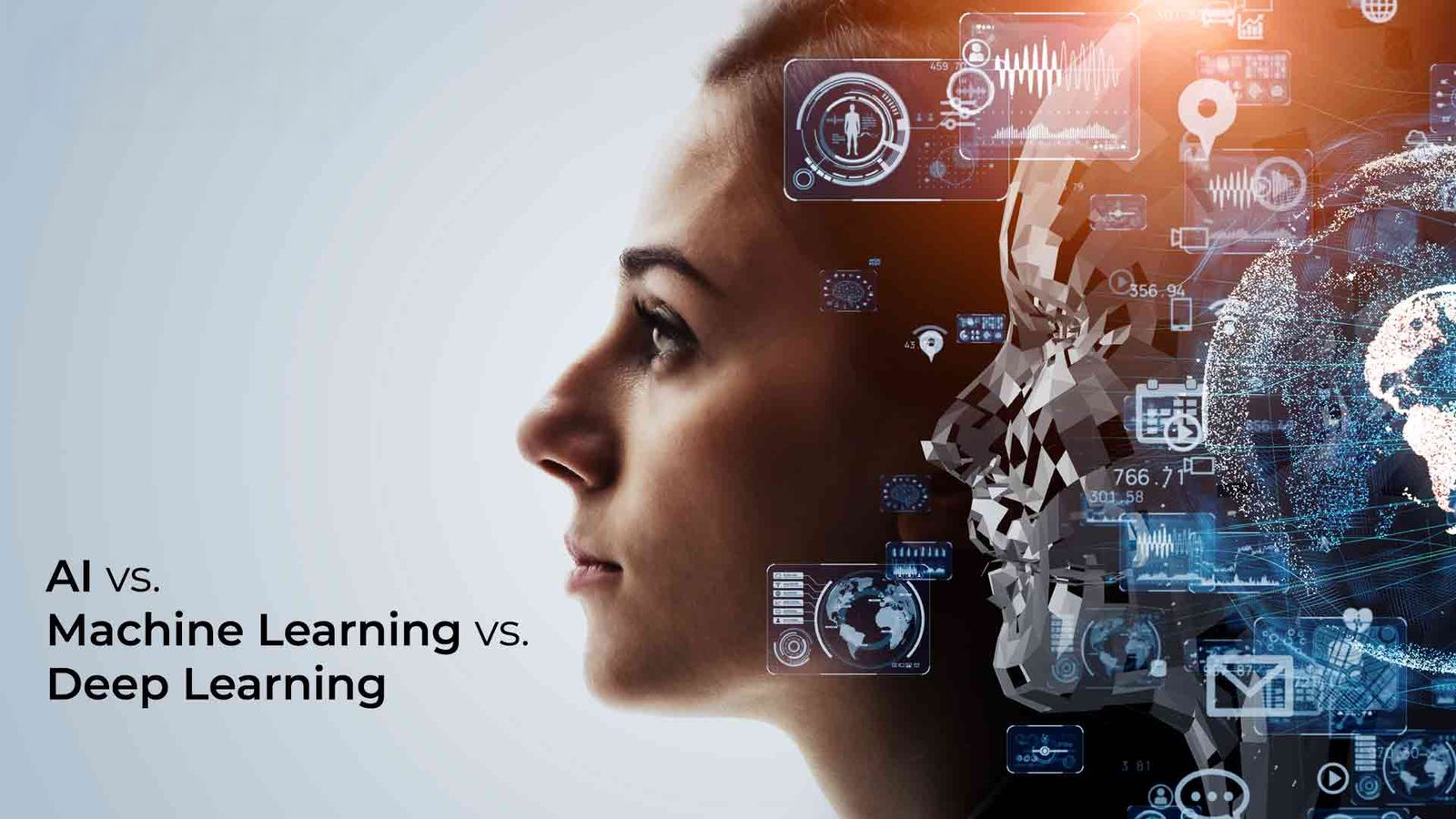
Although AI, machine learning, and deep learning are closely related, they differ in their purpose and complexity. AI is the broad concept of machines performing intelligent tasks. Machine learning is a subset of AI focused on learning from data. Deep learning is a more advanced subset of machine learning that uses neural networks for complex analysis. AI can function with predefined rules, while ML and DL depend more on learning from data. Machine learning often requires human guidance for selecting important data features, whereas deep learning automates much of this process. Deep learning systems generally provide higher accuracy but need more computing power and larger datasets. Understanding these differences helps businesses and developers choose the right technology for different tasks. Together, these technologies are transforming industries and shaping the future of automation.
Comparison Table
| Feature | Artificial Intelligence | Machine Learning | Deep Learning |
|---|---|---|---|
| Definition | Broad concept of intelligent machines | AI system that learns from data | Advanced ML using neural networks |
| Human Involvement | Higher | Moderate | Lower |
| Data Requirement | Moderate | High | Very High |
| Complexity | Basic to advanced | Moderate | Highly advanced |
| Examples | Chatbots, virtual assistants | Recommendations, fraud detection | Facial recognition, self-driving cars |
Real-World Applications and Future Impact
AI, machine learning, and deep learning are transforming modern industries and changing how people interact with technology. In healthcare, AI systems help doctors diagnose diseases and analyze medical images more efficiently. Machine learning improves marketing strategies by predicting customer behavior and preferences. Deep learning powers advanced systems such as voice assistants and facial recognition tools. Financial institutions use these technologies to detect fraud and manage risks. Educational platforms use AI to personalize learning experiences for students. In transportation, deep learning supports autonomous vehicle systems. As these technologies continue to evolve, businesses are becoming more dependent on automation and data analysis. However, concerns regarding privacy, ethics, and job displacement are also increasing. Despite these challenges, AI-related technologies are expected to play a major role in shaping the future economy and society.
Applications Table
| Technology | Common Applications |
|---|---|
| AI | Chatbots, virtual assistants, robotics |
| Machine Learning | Recommendation systems, fraud detection |
| Deep Learning | Speech recognition, autonomous vehicles |
Conclusion
Artificial Intelligence, Machine Learning, and Deep Learning are interconnected technologies that are driving innovation across the world. AI serves as the broader concept of intelligent systems, while machine learning focuses on learning from data. Deep learning further advances this process through complex neural networks capable of solving highly sophisticated problems. Although these technologies differ in complexity and functionality, they all contribute to automation, smarter decision-making, and improved efficiency. From healthcare and finance to transportation and education, AI-based technologies continue to influence modern life.