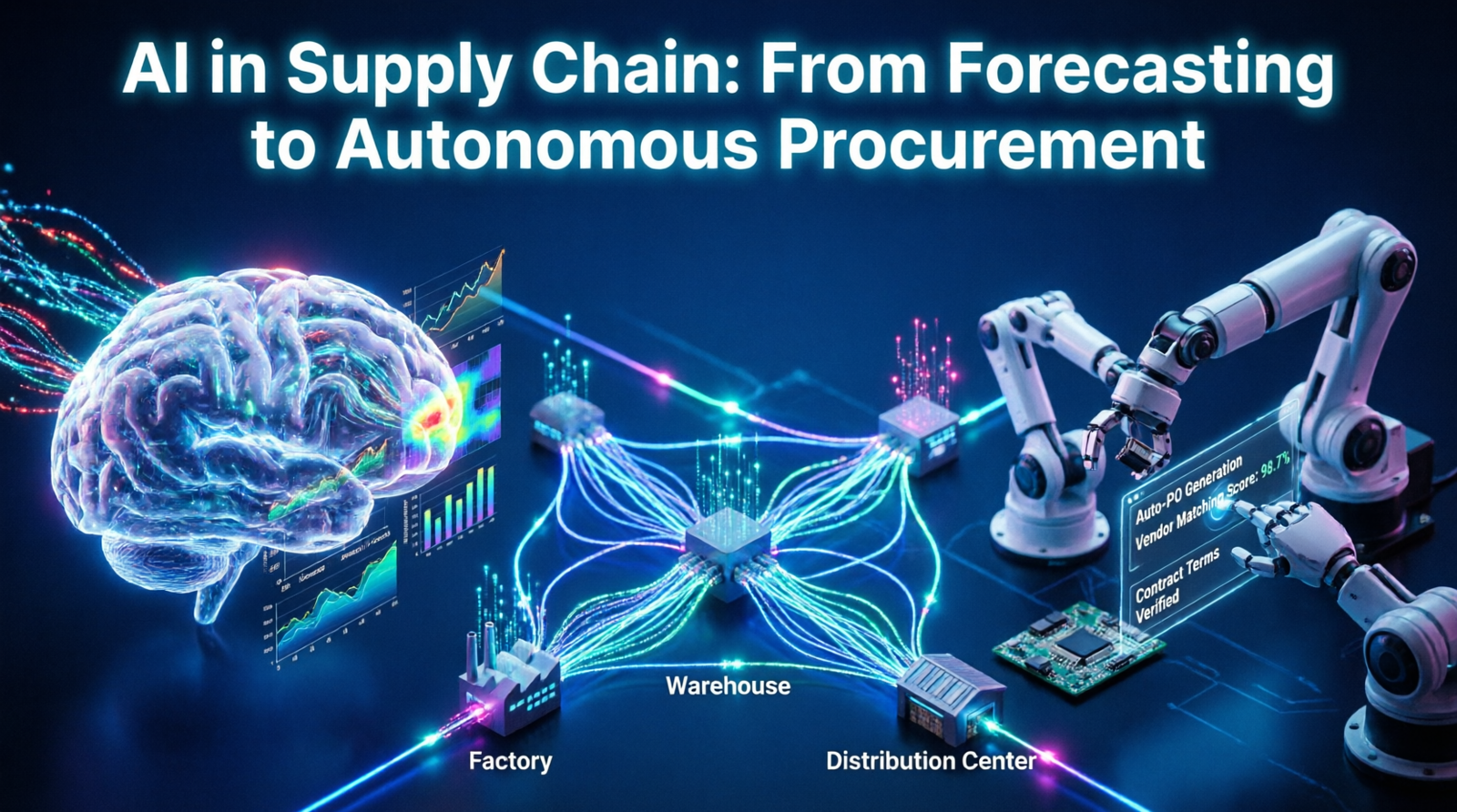
Transforming Demand Forecasting with AI –
Artificial Intelligence is redefining how businesses predict demand, replacing traditional spreadsheet-based planning with data-driven intelligence. Modern supply chains generate vast amounts of data—from sales history to market signals—and AI systems can process these inputs in real time. This allows companies to move from reactive to proactive planning. Machine learning models continuously learn from patterns, improving forecast accuracy over time. Unlike static models, AI adapts to seasonality, disruptions, and evolving customer behavior. Businesses can now anticipate demand spikes and avoid costly stockouts or overstocking.
- Uses historical and real-time data for accurate predictions
- Identifies hidden demand patterns and trends
- Reduces forecasting errors significantly
- Enables real-time demand sensing
- Helps businesses respond quickly to market changes
Intelligent Inventory Management –
AI-driven inventory systems ensure optimal stock levels across warehouses and distribution centers. By analyzing demand forecasts alongside supply constraints, AI determines the ideal inventory mix. This minimizes carrying costs while maintaining service levels. Smart systems can automatically trigger replenishment orders when stock falls below thresholds. They also factor in lead times, supplier reliability, and logistics delays. This level of intelligence reduces waste and improves operational efficiency. Over time, businesses achieve a balance between supply and demand with minimal manual intervention.
- Optimizes stock levels across multiple locations
- Reduces excess inventory and holding costs
- Prevents stockouts and lost sales
- Automates replenishment decisions
- Improves warehouse efficiency and turnover rates
AI-Driven Logistics and Route Optimization –
Logistics is one of the most complex and cost-intensive parts of the supply chain. AI simplifies this by optimizing routes, delivery schedules, and transportation modes. Using real-time traffic data, weather updates, and fuel costs, AI systems calculate the most efficient delivery routes. This leads to faster deliveries and reduced operational costs. AI also improves fleet utilization and reduces carbon emissions. Companies can dynamically adjust routes based on unexpected disruptions, ensuring reliability. The result is a more agile and responsive logistics network.
- Optimizes delivery routes in real time
- Reduces transportation and fuel costs
- Enhances on-time delivery performance
- Improves fleet utilization
- Supports sustainability through reduced emission
Autonomous Procurement and Supplier Management –
AI is transforming procurement from a manual process into an autonomous function. Intelligent systems can evaluate suppliers, compare prices, and make purchasing decisions automatically. These systems analyze supplier performance, risk factors, and market conditions to select the best options. AI can also negotiate contracts using predefined rules and historical data. This reduces procurement cycle times and eliminates human bias. Additionally, AI enhances supplier collaboration by providing insights into performance and demand forecasts. Over time, procurement becomes faster, smarter, and more strategic.
- Automates supplier selection and evaluation
- Reduces procurement cycle time
- Enhances negotiation through data insights
- Monitors supplier performance continuously
- Minimizes risks in sourcing decisions
End-to-End Supply Chain Visibility and Decision Intelligence –
One of the biggest advantages of AI is its ability to provide end-to-end visibility across the supply chain. Businesses can monitor every stage—from raw materials to final delivery—in a unified system. AI dashboards provide actionable insights, helping decision-makers identify bottlenecks and inefficiencies. Predictive analytics can flag potential disruptions before they occur. This enables companies to take preventive actions rather than reactive measures. Enhanced visibility leads to better coordination among stakeholders. Ultimately, AI empowers organizations to make faster and more informed decisions.
- Provides real-time visibility across the supply chain
- Detects disruptions before they escalate
- Improves coordination between stakeholders
- Enables data-driven decision-making
- Enhances overall supply chain resilience
Conclusion –
AI is no longer a futuristic concept in supply chain management—it is a present-day competitive advantage. From accurate demand forecasting to fully autonomous procurement, AI is transforming every layer of the supply chain. Businesses that adopt AI-driven solutions can reduce costs, improve efficiency, and respond quickly to market changes. More importantly, they gain the agility needed to thrive in an unpredictable global environment. As AI continues to evolve, supply chains will become increasingly intelligent, automated, and resilient, setting new standards for operational excellence.