Introduction
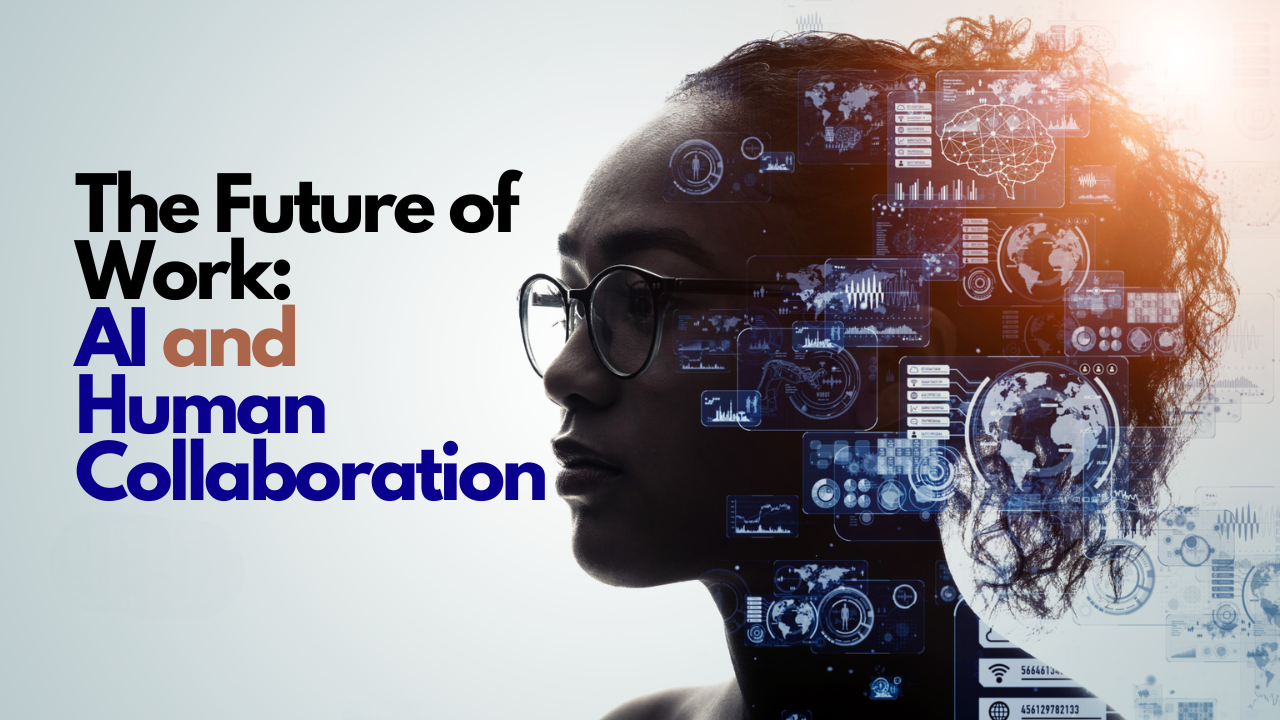
The workplace is undergoing one of the most significant transformations since the advent of the internet. Artificial Intelligence (AI) is no longer limited to automating repetitive tasks or analyzing large datasets. Today, organizations are entering a new era where AI agents can reason, make decisions, execute tasks, and collaborate with human employees in real time.
Unlike traditional automation tools, AI agents are designed to perform complex workflows with minimal supervision. They can understand goals, interact with software systems, process information, and even communicate with users. As enterprises increasingly adopt agentic AI technologies, the future of work is shifting from a model where humans merely use technology to one where humans and AI agents work together as collaborative partners.
This transformation is reshaping business operations, workforce strategies, productivity models, and organizational structures. Rather than replacing humans, AI agents are creating opportunities for employees to focus on higher-value activities while intelligent systems handle routine and data-intensive tasks.
Understanding AI Agents in the Modern Workplace
AI agents are autonomous software systems capable of understanding objectives, planning actions, and executing tasks to achieve specific outcomes. Unlike conventional AI tools that respond to individual prompts, AI agents can perform multi-step workflows, adapt to changing conditions, and interact with various applications and systems.
For example, an AI agent can:
- Analyze customer inquiries
- Retrieve relevant information
- Generate responses
- Update CRM records
- Schedule follow-up meetings
- Escalate complex cases to human representatives
All of these actions can be completed without requiring continuous human intervention.
As these systems become more sophisticated, organizations are beginning to integrate AI agents into everyday business processes across departments including customer service, IT operations, finance, human resources, sales, and marketing.
Moving from Automation to Collaboration
For many years, automation focused on replacing repetitive manual tasks. The next phase of workplace transformation is centered on collaboration rather than replacement.
Human employees bring creativity, emotional intelligence, ethical judgment, strategic thinking, and relationship-building skills. AI agents contribute speed, scalability, pattern recognition, data analysis, and operational efficiency.
Together, they create a powerful partnership.
In this collaborative model:
- AI agents handle routine and repetitive activities.
- Humans focus on innovation and decision-making.
- AI provides recommendations and insights.
- Employees validate and refine outcomes.
- Teams achieve higher productivity with fewer bottlenecks.
This shift allows organizations to create more agile and efficient work environments while empowering employees to contribute at a higher strategic level.
AI Agents as Digital Coworkers
The concept of AI agents as digital coworkers is rapidly gaining traction. Instead of functioning solely as tools, AI agents are increasingly being integrated into teams as virtual collaborators.
Imagine a project team consisting of:
- A project manager
- Business analysts
- Developers
- Designers
- Multiple AI agents
In this scenario, AI agents can assist by:
- Generating project documentation
- Monitoring project progress
- Summarizing meetings
- Tracking deadlines
- Conducting research
- Identifying risks
- Creating reports
Human team members can then focus on strategic planning, stakeholder management, and creative problem-solving.
As AI agents become more capable, enterprises will likely assign them specialized roles similar to those of human employees.
Enhancing Employee Productivity
One of the most immediate benefits of AI-human collaboration is increased productivity.
Knowledge workers spend a significant portion of their time performing administrative and repetitive tasks. Activities such as searching for information, creating reports, scheduling meetings, updating systems, and responding to routine inquiries consume valuable time.
AI agents can automate many of these responsibilities.
Examples include:
Customer Support
AI agents can handle common customer questions, process service requests, and provide instant support, allowing human representatives to focus on complex interactions.
IT Operations
AI-powered agents can monitor systems, identify anomalies, resolve routine incidents, and generate performance reports.
Sales Teams
AI agents can qualify leads, update CRM platforms, generate proposals, and provide sales insights.
Human Resources
AI assistants can manage employee onboarding, answer policy-related questions, schedule interviews, and streamline administrative processes.
By reducing manual workloads, employees gain more time to focus on strategic initiatives and value-generating activities.
The Rise of Agentic AI in Enterprise Operations
A major trend shaping the future of work is the emergence of Agentic AI. Unlike traditional AI systems that require direct user input, agentic AI systems can independently plan and execute tasks based on defined objectives.
For example, a procurement manager may instruct an AI agent to:
“Identify vendors, compare pricing, negotiate contract terms within predefined limits, and present the best options.”
The AI agent can perform the entire workflow while providing updates and seeking approval when necessary.
This capability enables organizations to automate increasingly complex business processes while maintaining human oversight.
Agentic AI is expected to transform areas such as:
- Supply chain management
- Financial operations
- Customer service
- Enterprise IT
- Procurement
- Compliance management
- Business intelligence
As organizations deploy multiple AI agents working together, enterprises will create highly efficient digital workforces capable of operating around the clock.
New Skills for the AI-Augmented Workforce
As AI agents become more prevalent, workforce skill requirements will evolve.
Employees will increasingly need to develop capabilities that complement AI rather than compete with it.
Key future-ready skills include:
- Critical thinking
- Complex problem-solving
- Strategic decision-making
- Emotional intelligence
- Creativity and innovation
- AI literacy
- Data interpretation
- Leadership and collaboration
Organizations will also need professionals who can effectively manage, supervise, and optimize AI systems.
New roles are already beginning to emerge, including:
- AI Operations Manager
- AI Governance Specialist
- Prompt Engineer
- AI Workflow Architect
- Human-AI Collaboration Consultant
- AI Compliance Officer
These roles highlight how AI adoption is creating entirely new career opportunities.
Building Trust Between Humans and AI
For successful collaboration, employees must trust the recommendations and actions of AI agents.
Trust is built through:
- Transparency in AI decision-making
- Explainable AI models
- Clear accountability structures
- Robust security measures
- Ethical AI governance
Organizations should establish policies that define when AI can act autonomously and when human approval is required.
Human oversight remains essential, particularly in areas involving legal, financial, ethical, and strategic decisions.
By implementing responsible AI practices, businesses can foster confidence and encourage widespread adoption across the workforce.
Challenges Organizations Must Address
While the future of human-AI collaboration offers significant benefits, organizations must also address several challenges.
Workforce Resistance
Employees may fear job displacement or uncertainty regarding changing responsibilities. Effective communication and reskilling initiatives are critical for successful adoption.
Data Privacy and Security
AI agents often access large volumes of sensitive information. Organizations must implement strong security controls and governance frameworks.
Bias and Ethical Concerns
AI systems can inadvertently produce biased outcomes if not properly designed and monitored. Continuous evaluation and oversight are essential.
Integration Complexity
Integrating AI agents with existing enterprise systems can be technically challenging and may require modernization efforts.
Organizations that proactively address these challenges will be better positioned to realize the full benefits of AI-driven collaboration.
The Future Workplace: A Human-AI Partnership
The workplace of the future will not be defined by humans versus AI. Instead, it will be characterized by humans and AI working together to achieve better outcomes.
Employees will increasingly rely on AI agents as trusted assistants capable of handling operational tasks, providing recommendations, and supporting decision-making. AI agents will become embedded across business functions, enabling organizations to operate more efficiently and respond more quickly to changing market conditions.
Successful enterprises will be those that create environments where human expertise and machine intelligence complement one another. Rather than viewing AI as a replacement for talent, forward-thinking organizations will leverage it as a force multiplier that enhances human capabilities.
Conclusion
The future of work is being shaped by a new era of collaboration between humans and AI agents. As organizations move beyond traditional automation toward intelligent, autonomous systems, AI agents will become valuable digital coworkers that augment human productivity, accelerate decision-making, and streamline business operations. While challenges related to governance, trust, security, and workforce adaptation remain, the opportunities far outweigh the risks.
Organizations that embrace human-AI collaboration today will be better equipped to drive innovation, improve efficiency, and remain competitive in an increasingly digital economy. The most successful businesses of the future will not be those that replace people with AI, but those that empower people through AI, creating a workplace where human creativity and machine intelligence work together to achieve extraordinary results.