
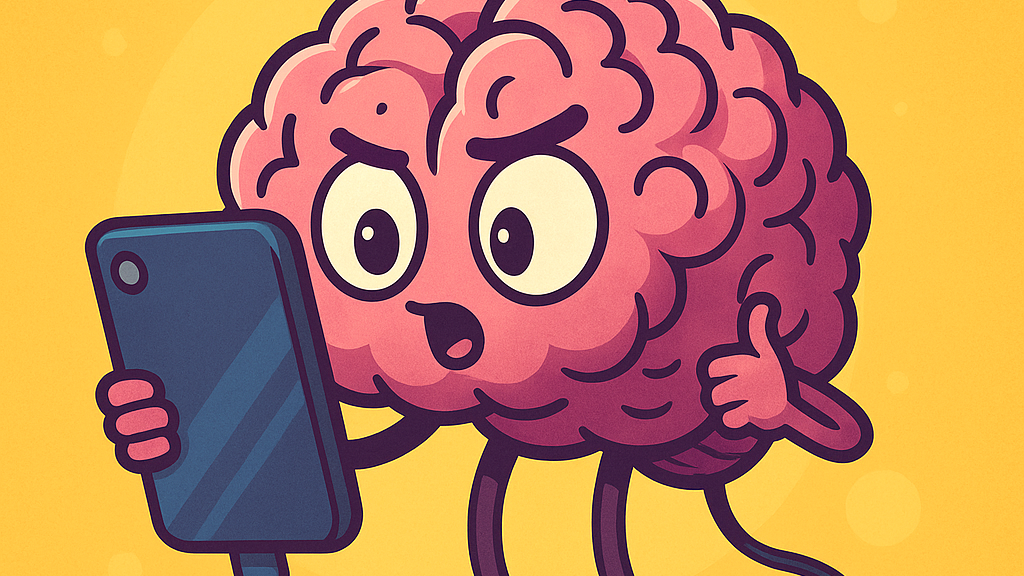
Introduction –
Short-form content has completely changed how people consume digital media. Whether it is Instagram Reels, YouTube Shorts, or TikTok videos, attention is now measured in seconds rather than minutes. In this environment, creators are no longer competing for engagement—they are competing for survival of attention within the first two seconds.
This is where neuromarketing becomes highly relevant. It helps explain how the human brain reacts to content before conscious thinking even begins. Most decisions about whether to watch or skip a video are not logical; they are instinctive. The brain processes visual and emotional signals instantly and decides if something is worth attention.
Understanding what actually triggers this reaction is critical for anyone creating short-form content today.
The Brain’s Instant Filtering System –
The human brain is constantly filtering information to avoid overload. In a fast-scrolling environment, it does not analyze content deeply. Instead, it relies on quick judgment systems that operate automatically.
When a video appears on screen, the brain immediately scans for relevance, novelty, and emotional significance. If nothing stands out within a very short time, the content is ignored without conscious thought.
This means the first two seconds are not just important—they are decisive. There is no time for gradual storytelling or slow introductions. The brain either reacts instantly or moves on.
Why the First 2 Seconds Decide Everything –
In short-form content, attention is not built gradually. It is captured or lost immediately. The brain is not waiting for explanations; it is reacting to signals.
These signals often come from movement, facial expression, tone, or unexpected visuals. If the content feels familiar or predictable, the brain assumes it has already processed it and continues scrolling.
However, if something disrupts expectation or creates curiosity, the brain pauses. That pause is the beginning of engagement. Without it, even the most valuable content never gets consumed.
The Psychology Behind Attention Hooks –
Neuromarketing shows that attention is driven by a combination of emotional and cognitive triggers. One of the strongest forces is curiosity. When the brain encounters incomplete information, it naturally seeks closure. This is why open-ended statements or incomplete ideas perform so well in short-form content.
Another important factor is emotional response. The brain prioritizes content that creates an immediate feeling, whether it is surprise, amusement, tension, or relatability. Emotion signals importance, which increases the likelihood of continued viewing.
Visual novelty also plays a major role. The brain is highly sensitive to change and contrast. Anything that breaks visual expectations is more likely to capture attention instantly.
What Actually Happens in the First Seconds
During the first moments of viewing a video, the brain is not fully engaged in processing meaning. Instead, it is scanning for signals that determine whether the content is worth deeper attention.
This scanning process is extremely fast and mostly subconscious. The viewer is not actively deciding to skip or watch—the decision is being made automatically by the brain based on perceived relevance.
If the content successfully triggers curiosity or emotional interest, the brain shifts from passive scrolling to active viewing. If not, the scroll continues without hesitation.
Common Patterns in High-Performing Content
Most viral short-form videos follow similar psychological patterns even if the topics are completely different. They often begin with a strong statement that challenges expectations or introduces tension.
Some content starts with a direct address to the viewer, creating a sense of personal relevance. Others begin with a surprising visual or situation that immediately breaks routine perception.
Relatability is another powerful pattern. When viewers see something that reflects their own experience, the brain quickly categorizes it as relevant and pays attention.
These patterns are not accidental. They align with how the brain naturally processes information under time pressure.
Why Most Content Fails to Capture Attention
The majority of short-form content fails not because of poor quality, but because it does not interrupt attention. If the opening feels slow, predictable, or unclear, the brain has no reason to stop scrolling.
Another common issue is delayed messaging. Many creators start with introductions or explanations before delivering value. In short-form environments, this approach reduces effectiveness because attention is already lost before meaning appears.
Lack of emotional or visual stimulation is another reason content fails. Without a strong initial trigger, the brain simply categorizes the content as irrelevant.
How Neuromarketing Changes Content Strategy
Neuromarketing shifts the focus from storytelling structure to attention design. Instead of thinking about what to say first, creators must think about what will make the brain stop scrolling.
This changes how content is planned, scripted, and edited. The goal is no longer just communication but interruption followed by engagement.
Content becomes more intentional in its opening seconds. Every visual, word, and motion is designed to create immediate cognitive or emotional response.
This approach makes short-form content more aligned with human perception rather than traditional storytelling logic.
The Role of Emotion in Retention
Emotion is one of the strongest drivers of attention and memory. When content triggers an emotional response quickly, the brain assigns higher importance to it.
In short-form content, emotional activation must happen almost instantly. There is no time for gradual buildup. The emotion must be present in the first moment of exposure.
Once emotion is triggered, the viewer is more likely to continue watching because the brain seeks resolution or continuation of that feeling.
This is why emotionally charged content consistently outperforms neutral or purely informational content in short-form platforms.
Visual Attention and Brain Response
The brain processes visuals much faster than text, which makes first-frame design extremely important in short-form content. Movement, contrast, and human presence are especially powerful because they are processed quickly and signal importance.
The presence of a human face is particularly effective because the brain is biologically programmed to recognize faces immediately. This creates instant familiarity and increases attention probability.
Even small visual elements such as framing, lighting, and composition influence whether the brain decides to continue watching or move on.
The Future of Short-Form Neuromarketing –
As content platforms become more competitive, neuromarketing will play an even greater role in shaping how videos are created. AI tools are already being used to analyze viewer behavior and optimize content performance based on attention data.
In the future, content creation will become more scientific, with decisions guided by behavioral patterns rather than intuition alone. Creators will design content based on how the brain responds in real time.
This will lead to more refined and psychologically optimized content strategies across all short-form platforms.
Conclusion
Neuromarketing reveals a simple truth about short-form content: attention is not earned gradually—it is captured instantly. The first two seconds determine whether a viewer stays or leaves, making them the most critical part of any content strategy.
The brain reacts to emotion, novelty, and visual signals long before it processes meaning. Understanding this behavior allows creators to design content that aligns with natural human perception.
In a world dominated by endless scrolling, success is no longer about what you say—it is about how quickly you can make the brain care.