Physical Address
304 North Cardinal St.
Dorchester Center, MA 02124
Physical Address
304 North Cardinal St.
Dorchester Center, MA 02124

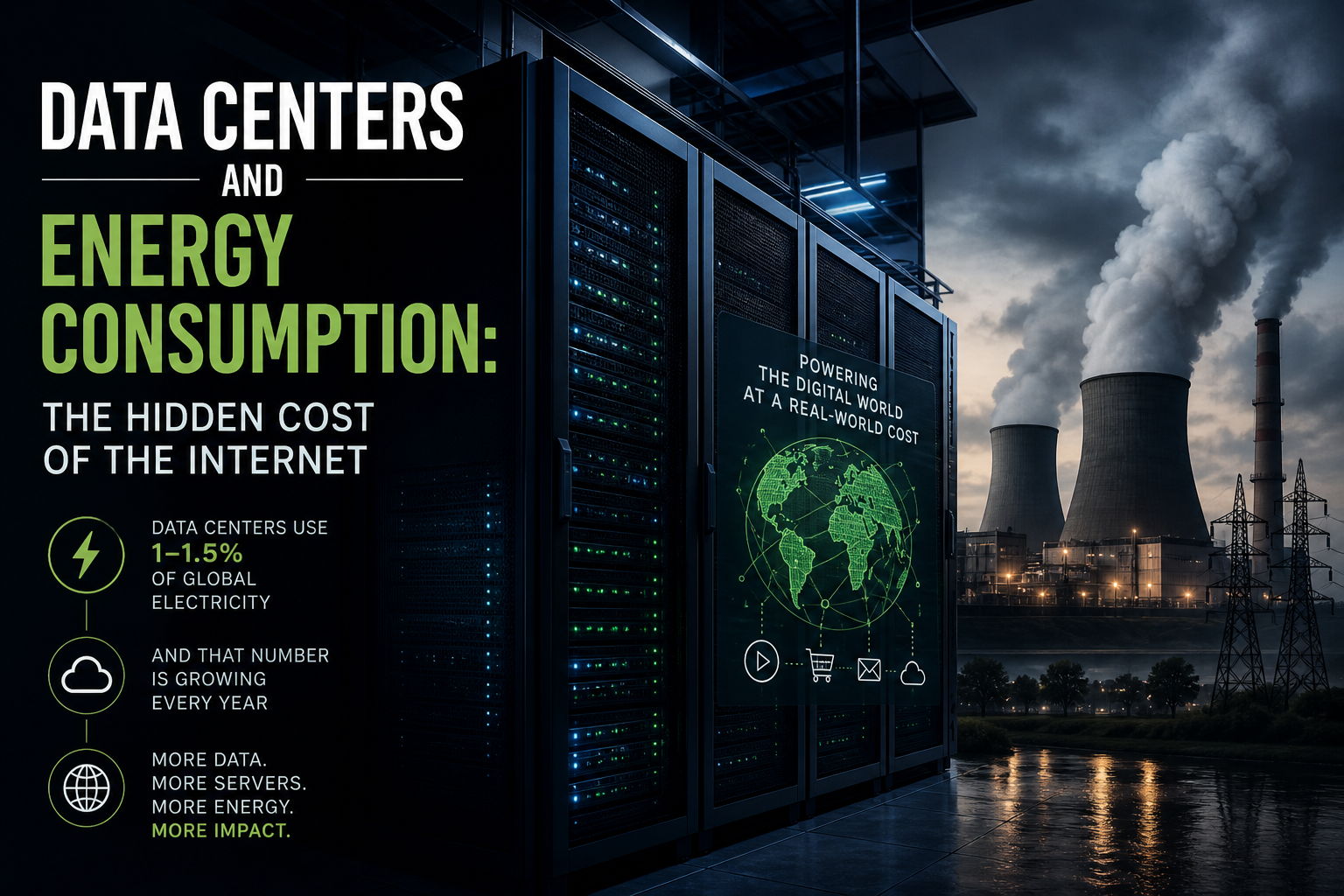
Every time we stream a video, send an email, or use a cloud application, we rely on vast networks of data centers working behind the scenes. These facilities store, process, and distribute enormous amounts of data, forming the backbone of the digital world. Companies like Amazon Web Services and Google operate massive global data center networks to support billions of users. While the internet feels intangible, its physical infrastructure is anything but. Data centers require large buildings filled with servers, networking equipment, and cooling systems. As digital demand grows, so does the need for more such facilities. This expansion is driven by cloud computing, streaming services, AI, and IoT devices. Most users remain unaware of the energy required to keep these systems running continuously. The scale of this infrastructure is increasing rapidly every year. Understanding this hidden layer is essential to grasp its environmental impact.
Data centers are among the most energy-intensive infrastructures in the modern world. They consume electricity not only to run servers but also to maintain optimal temperatures through cooling systems. Globally, data centers account for a significant percentage of total electricity usage, and this number continues to rise. The increasing use of AI models and big data analytics is further accelerating energy demand. High-performance computing requires more powerful hardware, which in turn consumes more energy. Cooling systems can sometimes use nearly as much power as the computing equipment itself. Regions with high concentrations of data centers face additional pressure on local power grids. Companies like Microsoft are investing in energy-efficient designs, but challenges remain. Measuring and managing energy consumption is now a key priority for the tech industry. Without intervention, energy usage could grow unsustainably in the coming years.
The environmental impact of data centers extends beyond electricity consumption. Much of the energy used still comes from non-renewable sources, contributing to carbon emissions. This makes data centers a growing concern in the global fight against climate change. Water usage for cooling is another issue, especially in regions facing water scarcity. Large-scale facilities can strain local resources if not managed responsibly. Companies are increasingly under pressure to adopt sustainable practices and reduce their carbon footprint. Some are committing to carbon neutrality and investing in renewable energy sources. However, the transition is complex and varies by region. Public awareness of the environmental cost of digital services is still relatively low. As demand for online services grows, so does the urgency to address these sustainability challenges. The environmental footprint of the internet is becoming harder to ignore.
To address these challenges, the tech industry is investing in greener and more efficient data center technologies. Companies like Meta are designing facilities that use renewable energy such as solar and wind power. Advanced cooling techniques, including liquid cooling and natural air cooling, are reducing energy consumption. Some data centers are being built in colder climates to take advantage of natural cooling conditions. Artificial intelligence is also being used to optimize energy usage and improve efficiency. Hardware innovations are making servers more power-efficient without compromising performance. Modular data centers are emerging as a flexible and scalable solution. These innovations are helping reduce the environmental impact, but widespread adoption is still ongoing. Cost and infrastructure limitations can slow down implementation. Nevertheless, the shift toward sustainability is gaining momentum across the industry.
As the world becomes increasingly digital, the demand for data centers will continue to rise. Emerging technologies like AI, 5G, and IoT will further increase the need for data processing and storage. Countries like India are experiencing rapid digital growth, leading to increased investment in data infrastructure. The challenge lies in balancing this growth with environmental responsibility. Governments, companies, and consumers all have a role to play in promoting sustainable practices. Policies encouraging renewable energy and efficient design can make a significant difference. Businesses must prioritize long-term sustainability over short-term cost savings. Consumers can also contribute by being mindful of their digital usage. Collaboration across sectors will be essential to address this issue effectively. The future of the internet depends not only on innovation but also on responsible energy management.
Data centers are the unseen engines powering the digital world, but they come with a significant environmental cost. As our reliance on the internet continues to grow, so does the energy required to sustain it. While technological innovations and sustainability efforts are making progress, the challenges remain substantial. The key lies in finding a balance between digital expansion and environmental responsibility. By investing in green technologies, adopting efficient practices, and raising awareness, it is possible to reduce the hidden cost of the internet.