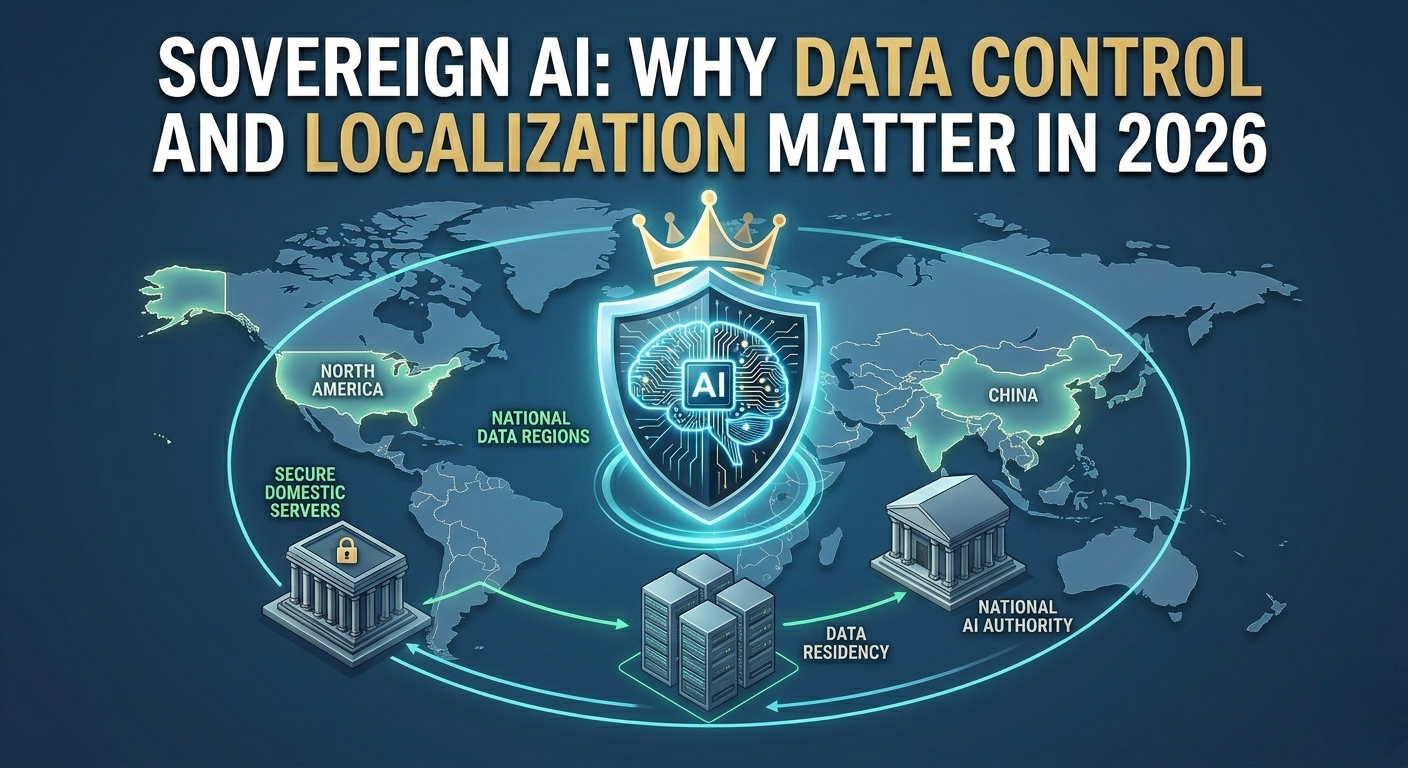
As artificial intelligence becomes deeply embedded in national economies and enterprise systems, the concept of “sovereign AI” is emerging as a strategic priority. Governments and organizations are increasingly focused on controlling how data is stored, processed, and used within their jurisdictions. In 2026, data sovereignty is no longer just a compliance requirement—it is a critical factor shaping trust, security, and competitive advantage in the global AI landscape.
What Is Sovereign AI?
Sovereign AI refers to the development and deployment of artificial intelligence systems that operate under a nation’s legal, regulatory, and cultural frameworks. It emphasizes local control over data, infrastructure, and algorithms to ensure that AI systems align with national interests and policies.
Unlike traditional cloud-based AI models that often rely on globally distributed data centers, sovereign AI prioritizes localized data processing. This approach ensures that sensitive data remains within national borders and is governed by local laws, reducing exposure to foreign regulations and geopolitical risks.
The Growing Importance of Data Localization
Data localization is a cornerstone of sovereign AI. It involves storing and processing data within a specific geographic region, often mandated by government regulations. In 2026, this practice is becoming increasingly important due to rising concerns around data privacy, cybersecurity, and digital independence.
Organizations are recognizing that where data resides directly impacts compliance, latency, and user trust. By keeping data local, businesses can ensure faster processing speeds, better adherence to regional regulations, and improved transparency in how data is handled.
Key Drivers Behind Sovereign AI Adoption
Several factors are accelerating the shift toward sovereign AI across industries and governments. These drivers highlight the strategic importance of data control in the modern digital ecosystem.
- Regulatory Compliance: Stricter data protection laws require organizations to manage data within specific jurisdictions
- National Security: Governments aim to protect sensitive information from external threats
- Data Privacy Concerns: Users demand greater transparency and control over their personal data
- Geopolitical Tensions: Reducing dependency on foreign technology providers
- Economic Growth: Encouraging local innovation and AI ecosystem development
These factors are pushing organizations to rethink their AI strategies and invest in localized infrastructure.
Benefits of Sovereign AI
Adopting sovereign AI offers several advantages that go beyond regulatory compliance. It enables organizations to build more secure, reliable, and trustworthy AI systems.
One major benefit is enhanced data security. By keeping data within controlled environments, organizations can reduce the risk of breaches and unauthorized access. Another key advantage is regulatory alignment, ensuring that AI systems comply with local laws without complex cross-border data management.
Additional benefits include:
- Improved system performance due to reduced latency
- Greater transparency and accountability in AI operations
- Increased trust among customers and stakeholders
- Support for local innovation and talent development
These benefits make sovereign AI a compelling strategy for both public and private sectors.
Challenges in Implementing Sovereign AI
Despite its advantages, implementing sovereign AI comes with significant challenges. Organizations must navigate technical, financial, and operational complexities to achieve true data sovereignty.
- Infrastructure Costs: Building local data centers and AI capabilities can be expensive
- Limited Scalability: Localized systems may lack the flexibility of global cloud platforms
- Interoperability Issues: Difficulty in integrating with global systems and platforms
These challenges require careful planning and collaboration between governments, enterprises, and technology providers.
The Role of Cloud and Edge in Sovereign AI
Cloud computing and edge technologies are playing a crucial role in enabling sovereign AI. Many cloud providers are now offering “sovereign cloud” solutions that allow data to be stored and processed within specific regions while maintaining the benefits of cloud scalability.
Edge computing further enhances this model by processing data closer to its source, reducing latency and improving real-time decision-making. Together, these technologies provide a hybrid approach that balances localization with performance and scalability.
The Future of Sovereign AI in 2026 and Beyond
As we move further into 2026, sovereign AI is expected to become a standard component of digital strategy. Nations will continue to invest in local AI infrastructure, develop region-specific models, and establish regulatory frameworks that prioritize data control.
We may also see the rise of regional AI ecosystems where countries collaborate within trusted networks while maintaining sovereignty over their data. This could lead to a more decentralized and balanced global AI landscape.
Conclusion
Sovereign AI represents a fundamental shift in how data and artificial intelligence are managed in a connected world. By prioritizing data control and localization, organizations and governments can enhance security, ensure compliance, and build trust with users.
While the journey toward sovereign AI presents challenges, its importance in 2026 cannot be overstated. As data becomes the backbone of innovation, controlling and protecting it will define the success of future AI-driven economies.